I spent a very emotional week working with this former Principal with Richmond Ballet and Israel Ballet. During our time together we discussed and explored what it feels like to deal with a frightening cancer diagnosis in one's family, her brave move to Israel to be near her dying mother, and how she has coped over the past 10 months since her passing. Check out this strong woman's story below.
Showing posts with label Los Angeles. Show all posts
Showing posts with label Los Angeles. Show all posts
11.03.2015
Core-ography Explores Coping with Death
While I've been working feverishly in Los Angeles with my 3rd Core-Artist and preparing to present my work at the McCallum Theatre's 18th annual Choreography Festival, I also released our 2nd webisode on our Youtube channel featuring Shira Lanyi.
I spent a very emotional week working with this former Principal with Richmond Ballet and Israel Ballet. During our time together we discussed and explored what it feels like to deal with a frightening cancer diagnosis in one's family, her brave move to Israel to be near her dying mother, and how she has coped over the past 10 months since her passing. Check out this strong woman's story below.
I spent a very emotional week working with this former Principal with Richmond Ballet and Israel Ballet. During our time together we discussed and explored what it feels like to deal with a frightening cancer diagnosis in one's family, her brave move to Israel to be near her dying mother, and how she has coped over the past 10 months since her passing. Check out this strong woman's story below.

12.30.2013
The 12 shows of Nutcracker
 |
| Downtown Ventura, CA |
12 - Shows of Nutcracker - 3 in each city (Rochester, NY; Huntington, WV; Immaculata, PA, Ventura, CA)
 |
| Flying into Los Angeles |
11 -The average time that I woke up every morning for rehearsals or shows
10 - Different beds I slept in (3 friends, 2 hotels, 2 family members, 1 host family, 1 motel, my own)
9 - The earliest school performance I have ever had to perform in
8 - Flights around the country (if you count my flight out of WV that I boarded, but was cancelled on the tarmac due to a failed engine, this could have been #9)
7 - The number of times I was asked "How long is a dancer's career?"
 |
| Frightening WV McDonald's - 40 piece nuggets |
5 - Different partners (this would have been 4 had #1 not happened)
4 - Different versions of the the grand pas de deux over 4 weekends (My brain almost exploded)
3 - Mishaps that were avoided by big smiles and great professionalism - On my opening with Rochester City Ballet, the orchestra fumbled the first 16 counts of the pas de deux. My partner and I gave the orchestra no choice, but to catch up to us. It sounded like they were going to stop and start over. I also had the back of my costume explode open at the beginning of the pas de deux, which couldn't be fixed until the end of my variation. Lastly, the stage in West Virginia was so slippery that I couldn't perform any of the dancing on releve or walk faster than a slow trod to avoid falling.
 |
| Cigarette burns on motel comforter |
2 - Times that I had to reject accommodations after the agreed host families didn't follow through (also of note: using a motel is not an appropriate way to treat a guest artist, especially when there are reviews online speaking of prostitution and drug trade)
1 - Emergency performance of the Snow pas de deux where I learned the choreography an hour prior to the show (due to a performance that was moved because of snowy weather and a guest artist that had another show at the new performance time)
Bonus: Carson Kressley from Queer Eye for the Straight Guy and Dancing with the Stars came to a performance at Chester Valley Dance Academy's show.
 |
| Me and Carson after the show |
10.16.2013
The rules of taking open class
I know that my last blog was a list post, but inspiration has struck and I feel that it is completely necessary to offer you another list. I was taking our morning warm-up class today at the Westside School of Ballet, where I am preparing a performance with Barak Ballet, and I found myself wildly frustrated. The annoyance I felt is actually not uncommon for me. In fact, I find myself needing to stifle my emotions often while taking open class. Most people that don't take open class don't understand what I am referring to. But any professional that has had to suffer through an open class knows exactly what I am talking about.
Open ballet classes are essentially the zoo of dance, but for people. I have taken open class in New York City, Philadelphia, Seattle, Los Angeles, Houston, DC, and beyond. So I have a pretty good take on this. There can be any combination of people taking class, from young students looking for an extra class to middle-age professionals (non-dance professionals) trying to stay in shape. Sometimes, you find tweens in class and, at other times, the dancers may be closer in age to your grandparents. Add a handful of professional dancers trying to stay in shape and you can only imagine the cast of characters that have arrived to partake in the art of ballet. For some reason, "dance-etiquette" is rarely taught in combination with the strict set of exercises that are given from barre to center and jumps . For this reason specifically, I feel that I need to speak up about the horrors faced and the lack of understanding and respect that occurs around the world daily in these classes open to all. When I teach class, I do my best to educate my students about an art that is borne out of respect. So, let's proceed and learn a lesson or two in the etiquette of ballet.
- Traditional ballet was founded by a king to be performed by those in the higher class. Royalty. There were many expectations in place when these royals interacted with each other and those considered to be below them. While things have changed as we have evolved out of this culture, there should still be a great sense of respect for those around you and their relationship to you in class.
- Look around the room. Yes, most everybody has paid an equal sum to partake in class. But each dancer is individual and has come from a different background. If a dancer looks like they really know what they are doing, they are likely professional dancers. They have put in a lot of time and effort, plus they have been highly trained in the rules of ballet. Don't assume that you have an equal standing in class as these professionals. Take a step back and take a lesson in humility. Watch these dancers and learn from them. Dance is an art that is passed on by spoken word and careful, visual observation. The next step down from the professionals are the regulars. They have put in their time at the studio, they have cultivated relationships with teachers, and they have a better understanding of the culture of their specific community. Next on the list are pre-professional students. These students are hopeful to achieve the status of professional. They are still learning the ins and outs of ballet and may not fully grasp the system that is commonly in place during a class. But they are on their way. Lastly, you have the drop-in students that come for fun and health. These dancers aren't necessarily interested in performing professionally or regularlity in attendance, but they stop by here and there to keep in shape and enjoy themselves.
- Show up to class before it begins. This doesn't mean you should walk in the door at the listed time. Arrive at least 10 minutes prior to the scheduled start time to sign in, pay your fee, and change. Here in Los Angeles, it is not uncommon for people to get stuck in heavy traffic and arrive late. This happens. But respect the fact that others showed up on time. If you are late, immediately look for a barre that is unused or the least full. DO NOT stand in front of somebody who has a direct view of themselves in the mirror. They probably arrived early to ensure that they could watch themselves and improve. If there are multiple barres in the room with two people on each side and one barre with 3 people on it, join one of the barres with fewer people on it and stand in the less comfortable spot. Whatever you do, if you are tardy, you should not place yourself somewhere that makes it harder for someone who arrived on time to work properly and effectively.
- It is perfectly fine to have a conversational moment with the teacher or your peers, but only for a short moment. Do not engage in loud, extended, or multiple conversations between combinations with the teacher. Also, if you have a question, by all means ask. But if you find yourself asking a question after nearly every combination, be more attentive and start watching other dancers. If you didn't catch a combination the first time in center, go in the second group. If you don't know how to execute a step properly, watch a dancer that looks like they know what they are doing. Ballet classes are a series of stops and starts to learn combinations, then execute them. Adding more time between the end of a combination and the start of the next one leaves time to get cold and to lose focus.
- Study the list of classes and ask the front desk questions before you enter a class at a level potentially higher than your ability. If you danced for years, but haven't taken class in five years, you should start in an intro or beginner class. Always take a level lower than you think you should before you consider moving up. There are constantly dancers taking the most advanced classes that do not belong in these classes. Not only are they a distraction to those that understand the intricacies of an advanced class, they are putting themselves in danger of potential injury. If you aren't sure where you should be placed, take the lower level classes and ask the teacher what they think after class. Also keep in mind that it takes a student years to progress to an intermediate, then advanced level.
- If you are not a regular or a professional, you should be weary of standing in the front or going first in groups. If you don't know the combination, you should definitely not go in the first group.
- Evenly space yourself in class. Do not stand in front of everybody while only moving forward halfway to the front. I always teach that the best way to respect others is to respect yourself. If you stand to close to a barre or person, you are making it more difficult for yourself to execute the combinations. You are offering yourself less of a chance to succeed. If you respect yourself by giving yourself enough space, you will also be respecting others because they won't be avoiding your limbs while they are dancing. Dance is based on ideals of respect. When you are at barre, if you are going to hit somebody, you need to turn the angle of your body away from the barre to the front and in towards the barre to the back. If you are doing center work, don't stand directly next to somebody. Stagger yourself. This means that one person stands forward and another stands back. If you are going from the corner, stand as close to the corner as possible in a triangle with the point towards the corner you are coming from or a square in two diagonals.
- If a professional or regular moves over, it doesn't necessarily mean that they are making space for you to move over as well. It likely means that you are too close to them and they are trying to gain more space to avoid hitting you.
- If you are not going to or unable to execute the combination in full, absolutely do not stand in front of anybody. It is disrespectful and prevents anybody behind you from fully executing the dance.
- One rule that is very important in ballet class is that you should never step in front of anybody. If somebody is standing in fifth position or B-plus, they are communicating that they are ready to perform. It is rude and disrespectful (and distracting) to step in front of or next to a dancer that has already expressed that they are going to do the combination.
- When a combination is over, it is proper to run forward, first, and to the side, second, as fast as possible to allow the next group of dancers to run into place. This will help you avoid collisions and keep class flowing.
- Most of the time, professionals are in class to stay in shape and improve their abilities. They are not in class as a hobby or to hang out. Think twice before you start talking to them. Chances are, if they don't approach you, they are working very hard and trying to concentrate on improving their art. If you want to start a conversation with one of these dancers, wait until class has ended.
- All dancers enjoy a compliment for executing a step exceptionally. If you absolutely feel the need to express your appreciation or awe, clap for that dancer or say something at the end of class. To constantly walk up to a dancer after each combination because you are impressed with them is a distraction and changes the compliment into a frustration.
- After class, a professional is likely running to rehearsal or a job. Class is a warmup for them. Feel free to engage them in conversation, but be aware that they are probably trying to leave the studio. Make sure that your conversations are appropriate and not asking too much. Don't corner a dancer and remain unaware that they are trying to gracefully exit the conversation. Most dancers are glad to offer helpful advice, but in small pieces.
- If I have one rule that is extremely important to maintain, it would be to remain aware of your spatial awareness. Not to be dramatic, but there is an epidemic of ignorance towards spatial awareness in open classes. Learning how to dance within a certain confined amount of space is just as important as learning how to point your feet, lift your legs, and develop a floating sense in your port de bras. Nearly every professional dancer starts their career in the corps de ballet. Twenty four swans can not exist on a stage without having an acute sense of what is happening around them. Learn how to look around your body while you are dancing. Use your peripheral vision. Don't battements your leg toward a person if they "may be" too close. If there is any chance that you could hit somebody, you are too close. You can practice spatial awareness by dancing in a small, confined room and avoiding hitting the walls with your limbs.
If more dancers understand this set of rules before entering an open class, you will be more likely to enjoy yourself and improve faster. While it is important for many professionals to take open class daily to maintain their technique, it is equally important that anybody who wants to partake has the option as well. Not only do these classes fund schools and companies, but attendance of non-professionals keep numbers up, which allows class to keep happening. Attending ballet classes also develops certain appreciations for those that won't necessarily have a career in dance. These "open-class" dancers come to performances, spread the word to those less educated in dance, and may even be inspired to donate to professional companies to keep them up and running. While it is important that open class remains open to all, it is also important that we begin to educate dancers in the codes of conduct and the finer details that are involved in a ballet class beyond the steps.
Open ballet classes are essentially the zoo of dance, but for people. I have taken open class in New York City, Philadelphia, Seattle, Los Angeles, Houston, DC, and beyond. So I have a pretty good take on this. There can be any combination of people taking class, from young students looking for an extra class to middle-age professionals (non-dance professionals) trying to stay in shape. Sometimes, you find tweens in class and, at other times, the dancers may be closer in age to your grandparents. Add a handful of professional dancers trying to stay in shape and you can only imagine the cast of characters that have arrived to partake in the art of ballet. For some reason, "dance-etiquette" is rarely taught in combination with the strict set of exercises that are given from barre to center and jumps . For this reason specifically, I feel that I need to speak up about the horrors faced and the lack of understanding and respect that occurs around the world daily in these classes open to all. When I teach class, I do my best to educate my students about an art that is borne out of respect. So, let's proceed and learn a lesson or two in the etiquette of ballet.
 |
| King Louis XIV |
- Look around the room. Yes, most everybody has paid an equal sum to partake in class. But each dancer is individual and has come from a different background. If a dancer looks like they really know what they are doing, they are likely professional dancers. They have put in a lot of time and effort, plus they have been highly trained in the rules of ballet. Don't assume that you have an equal standing in class as these professionals. Take a step back and take a lesson in humility. Watch these dancers and learn from them. Dance is an art that is passed on by spoken word and careful, visual observation. The next step down from the professionals are the regulars. They have put in their time at the studio, they have cultivated relationships with teachers, and they have a better understanding of the culture of their specific community. Next on the list are pre-professional students. These students are hopeful to achieve the status of professional. They are still learning the ins and outs of ballet and may not fully grasp the system that is commonly in place during a class. But they are on their way. Lastly, you have the drop-in students that come for fun and health. These dancers aren't necessarily interested in performing professionally or regularlity in attendance, but they stop by here and there to keep in shape and enjoy themselves.
- Show up to class before it begins. This doesn't mean you should walk in the door at the listed time. Arrive at least 10 minutes prior to the scheduled start time to sign in, pay your fee, and change. Here in Los Angeles, it is not uncommon for people to get stuck in heavy traffic and arrive late. This happens. But respect the fact that others showed up on time. If you are late, immediately look for a barre that is unused or the least full. DO NOT stand in front of somebody who has a direct view of themselves in the mirror. They probably arrived early to ensure that they could watch themselves and improve. If there are multiple barres in the room with two people on each side and one barre with 3 people on it, join one of the barres with fewer people on it and stand in the less comfortable spot. Whatever you do, if you are tardy, you should not place yourself somewhere that makes it harder for someone who arrived on time to work properly and effectively.
- It is perfectly fine to have a conversational moment with the teacher or your peers, but only for a short moment. Do not engage in loud, extended, or multiple conversations between combinations with the teacher. Also, if you have a question, by all means ask. But if you find yourself asking a question after nearly every combination, be more attentive and start watching other dancers. If you didn't catch a combination the first time in center, go in the second group. If you don't know how to execute a step properly, watch a dancer that looks like they know what they are doing. Ballet classes are a series of stops and starts to learn combinations, then execute them. Adding more time between the end of a combination and the start of the next one leaves time to get cold and to lose focus.
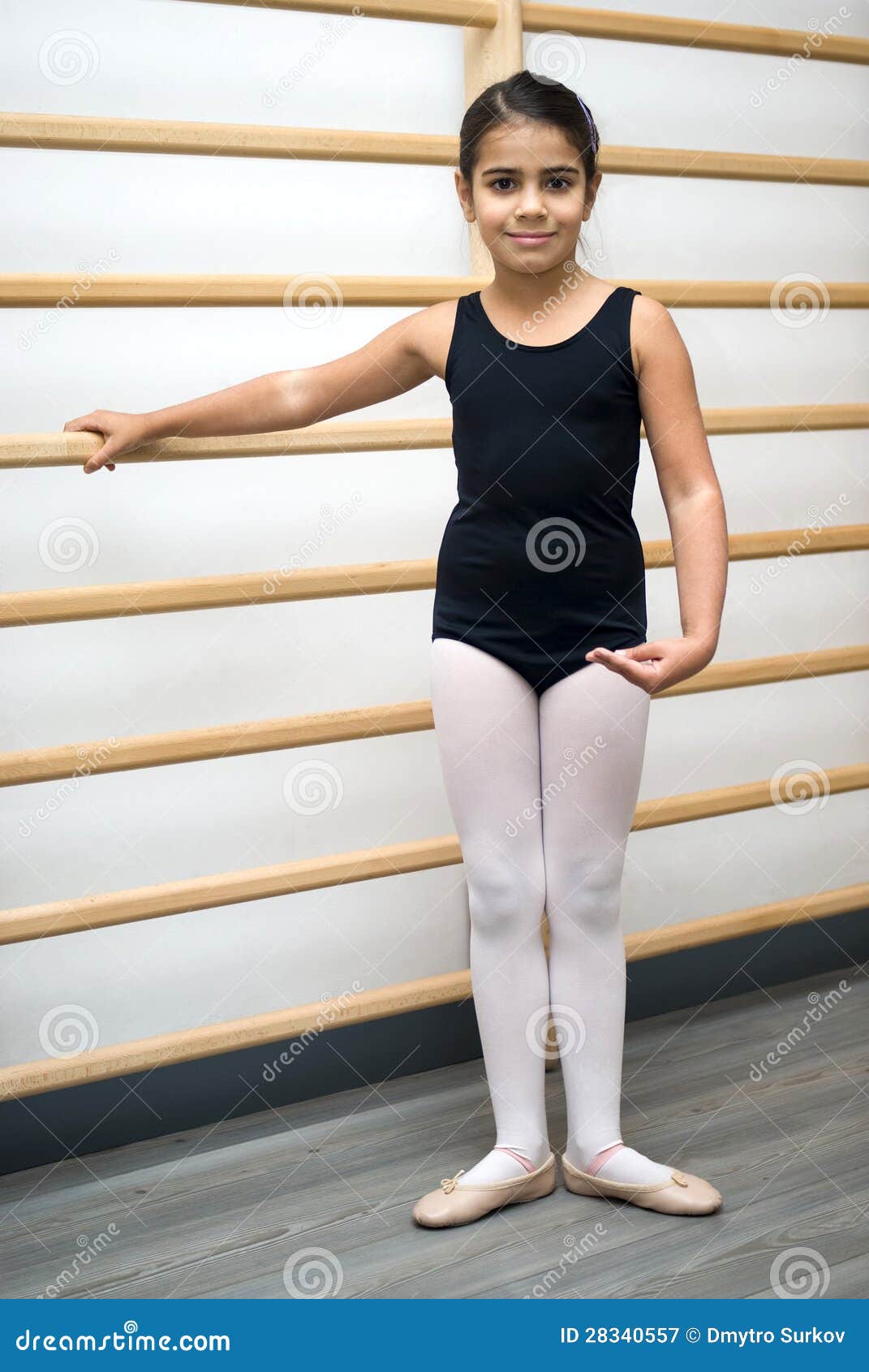 |
| She does not belong in an advanced class |
- If you are not a regular or a professional, you should be weary of standing in the front or going first in groups. If you don't know the combination, you should definitely not go in the first group.
- Evenly space yourself in class. Do not stand in front of everybody while only moving forward halfway to the front. I always teach that the best way to respect others is to respect yourself. If you stand to close to a barre or person, you are making it more difficult for yourself to execute the combinations. You are offering yourself less of a chance to succeed. If you respect yourself by giving yourself enough space, you will also be respecting others because they won't be avoiding your limbs while they are dancing. Dance is based on ideals of respect. When you are at barre, if you are going to hit somebody, you need to turn the angle of your body away from the barre to the front and in towards the barre to the back. If you are doing center work, don't stand directly next to somebody. Stagger yourself. This means that one person stands forward and another stands back. If you are going from the corner, stand as close to the corner as possible in a triangle with the point towards the corner you are coming from or a square in two diagonals.
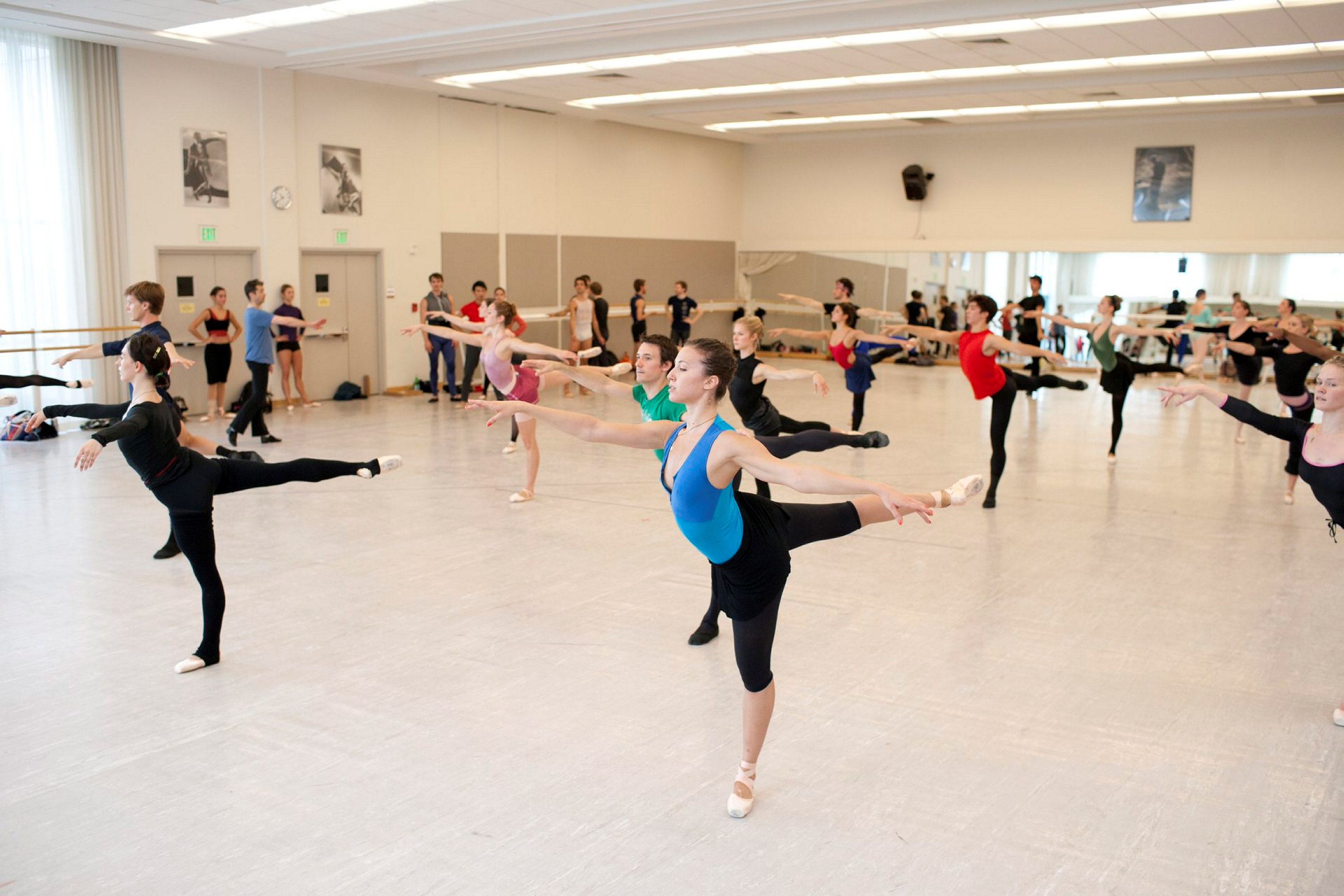 |
| San Francisco Ballet dancers properly staggering themselves |
- If you are not going to or unable to execute the combination in full, absolutely do not stand in front of anybody. It is disrespectful and prevents anybody behind you from fully executing the dance.
- One rule that is very important in ballet class is that you should never step in front of anybody. If somebody is standing in fifth position or B-plus, they are communicating that they are ready to perform. It is rude and disrespectful (and distracting) to step in front of or next to a dancer that has already expressed that they are going to do the combination.
- When a combination is over, it is proper to run forward, first, and to the side, second, as fast as possible to allow the next group of dancers to run into place. This will help you avoid collisions and keep class flowing.
- Most of the time, professionals are in class to stay in shape and improve their abilities. They are not in class as a hobby or to hang out. Think twice before you start talking to them. Chances are, if they don't approach you, they are working very hard and trying to concentrate on improving their art. If you want to start a conversation with one of these dancers, wait until class has ended.
- All dancers enjoy a compliment for executing a step exceptionally. If you absolutely feel the need to express your appreciation or awe, clap for that dancer or say something at the end of class. To constantly walk up to a dancer after each combination because you are impressed with them is a distraction and changes the compliment into a frustration.
- After class, a professional is likely running to rehearsal or a job. Class is a warmup for them. Feel free to engage them in conversation, but be aware that they are probably trying to leave the studio. Make sure that your conversations are appropriate and not asking too much. Don't corner a dancer and remain unaware that they are trying to gracefully exit the conversation. Most dancers are glad to offer helpful advice, but in small pieces.
- If I have one rule that is extremely important to maintain, it would be to remain aware of your spatial awareness. Not to be dramatic, but there is an epidemic of ignorance towards spatial awareness in open classes. Learning how to dance within a certain confined amount of space is just as important as learning how to point your feet, lift your legs, and develop a floating sense in your port de bras. Nearly every professional dancer starts their career in the corps de ballet. Twenty four swans can not exist on a stage without having an acute sense of what is happening around them. Learn how to look around your body while you are dancing. Use your peripheral vision. Don't battements your leg toward a person if they "may be" too close. If there is any chance that you could hit somebody, you are too close. You can practice spatial awareness by dancing in a small, confined room and avoiding hitting the walls with your limbs.
If more dancers understand this set of rules before entering an open class, you will be more likely to enjoy yourself and improve faster. While it is important for many professionals to take open class daily to maintain their technique, it is equally important that anybody who wants to partake has the option as well. Not only do these classes fund schools and companies, but attendance of non-professionals keep numbers up, which allows class to keep happening. Attending ballet classes also develops certain appreciations for those that won't necessarily have a career in dance. These "open-class" dancers come to performances, spread the word to those less educated in dance, and may even be inspired to donate to professional companies to keep them up and running. While it is important that open class remains open to all, it is also important that we begin to educate dancers in the codes of conduct and the finer details that are involved in a ballet class beyond the steps.
10.03.2013
Why artists are expected to have little self-value?
I have been taking a hiatus from all forms of social media for the past week. Riding on the sweet success of Life of a Freelance Dancer accruing 25,000 views, I felt that it was time to take a week away from marketing myself as a product and to sit back, relax, and assess where I am going in this career. My first week without any form of social media in my daily life since 2004 has taught me a lot and given me a fresh new perspective on my intentions and actions, which I am grateful for at this time in my life. In less than a week, I leave for Los Angeles to rehearse for and perform in the launch of Barak Ballet. And in less than two weeks, I turn 30 years old. As I grow older, I grow wiser and my dancing has more value. But what I've also learned over the past week is that certain parts of the dance world don't agree with this.
(I would like to start this post with a disclaimer. This writing has some delicate moments and harsh realities that could be seen in the wrong light. I have no intentions of harm or dischord in publishing this, but I feel that this is a sensitive topic that needs to be discussed.)
Tis the season for Nutcracker to start calling. I have had a handful of offers through friends and employers that found me through my website. While I always appreciate being contacted to perform, I can't take every offer that comes my way. Sometimes, I am already booked during a period that my services are requested. At other times, an offer may not be substantial enough for the work that I need to put in. While I am passionate about what I do, this is how I make my living and I need to be picky about choosing the best option for myself, artistically and financially.
Last week, I was blown away by a situation that I found myself in. I had been contacted with a request to perform in a school's Nutcracker. While their offer was very generous, their consideration of what constituted a paid performance was not cohesive with mine. In typical fashion, when an offer is not agreeable for me, I either counter-offer or gracefully step out of the negotiation. On this occasion, I felt we could work something out and decided to counter-offer. Instead of receiving a response of agreement, negotiation, or decline, I was sent a scathing four paragraph email that badgered me, tore apart my resume, and tried to devalue my worth. This was all from somebody I had never met and that had never seen me dance. To be completely honest, I was so shocked I couldn't even be upset. Instead of reacting to this difficult response, I ingested the content as a learning experience and replied with a brief note thanking them for taking me into consideration and suggested that they move on to their other options.
While I didn't take this unprovoked attack as a truth, I did gain a lot of insight from my many days of processing this unnecessary response. As a dancer, you are expected to be open, available, and humble. While you are expected to respect the process and the system, that process and system does not have to respect you. I've learned during my 11 years as a professional that while there are human emotions involved in the interactions that take place in the creation of a performance, that in the end, the production takes full precedent over any situation that may involve emotion. Casting, injury, life events, arguments, money, and more. In the end, nothing matters except that the best product be put forth onstage.
When I was in my final year of training at the School of American Ballet, I very clearly remember ingesting one of the most shocking statements made by one of my most respected teachers. "Ok. So you're grandma died this morning. But that person sitting in the audience paid $200 for their ticket. They don't care how you are feeling inside. They want to see a good performance." As difficult as this was to hear, it was true. I've seen this exact scenario play out. I've experienced this scenario myself. Most dancers that have made it to a professional level understand how this system works. And along with all of the other difficulties dancers face, they still put on a good show.
Now, this is where things get complicated. When a dancer works for a company, they only have to deal with production aspects of putting on a show. As a freelancer, there is a bit of work that needs to take place before both parties get to move on to the production stage of dance. Negotiations take place, which can be as simple as an accepted offer or a fine-tuning of details. While some employers understand that the art of negotiating is impartial, others can feel it is an attack on an organization's character. In these situations, where you determine pay, terms of your stay, your workload, and more, certain emotions can be brought forth that have nothing to do with a negotiation. And more often than not, these feelings come from a place that we all started. Our training.
I have discussed this before, but it is important to reiterate it again. Dancers are taught from a young age to be submissive. They are taught that they are expendable and that there are hundreds of other dancers that want their job. For this reason, a majority of the dance world feels that one should be grateful for any job opportunity that arises. It is common for a company to feel that it is a privilege to work with them, less so an accomplishment of one's hard work. But when a dancer leaves the submissive role and tries to stick up for their value or rights, they are suddenly egotistical, hard to work with, and a diva. A prime example of this would be when I worked for an employer that loved me dearly and that I loved dearly as well. While we had a mutual respect for each other, there were often jokes that I was a diva when I would bring up situations that were not commonplace in most of the companies I have danced for. While we were able to laugh at this, I was still gently nudged that I was breaking "dance code" for speaking up for things like not having a break for nearly two hours.
As freelancers, we have to take care of ourselves. If we get hurt on the job, we don't have the privilege of having worker's compensation pay our salary and provide our medical care. If we don't negotiate a comfortable living environment at a home-stay, we have to sit tight or uncomfortably complain to try to find a more agreeable resolution. If we don't negotiate a respectable salary, we can't pay our bills. But it is not uncommon for dancers to be made an offer and expected to accept with full appreciation that they were even given an opportunity to dance. This needs to change.
When I was 18 years old, I was offered a contract in the corps of Colorado Ballet. My starting salary was $500 per week. By the time I left Pacific Northwest Ballet, my salary was well into four figures per week. The company I left PNB for offered me nearly one third of what I had been making out northwest and I graciously accepted without negotiation. I began freelancing while dancing with that company. During this time I realized that not only could I barely sustain myself on that salary while I was working, but I couldn't save any money to sustain myself when I wasn't working. And now that I am freelancing full-time, aside from Nutcracker season, most of the work that I am offered usually pays at or below the offer I was made for my very first job. Eleven years after starting my career, I am performing at a higher level than I did at 18 years old and I am, at times, forced to feel ashamed for trying to ask for a livable wage. It is not a matter of asking whether or not this is fair. It is more a matter of asking when those that were once in this position and moved up to leadership roles will respect and appreciate what dancers go through in this career and that their survivability should come before their production.
I am not writing this post to call anybody out and there are some employers that I have worked for that have been greatly generous in their efforts to support me and the other artists that they employ. I think it is important to raise awareness that artists and their value are often abused by the ideals that are imposed by their very training. While some of the ideals that are taught as a student are necessary to create beautiful artists in the most difficult of fields, these ideals need not to be imposed upon fully-grown artists that have worked years to develop and perfect their craft. An artist's value should not be taken lightly. Be grateful when offered work, but don't accept work that is not grateful back. Take a job where you will grow or find value in raising the level of a production, but don't let somebody tell you that your experience doesn't qualify you to respect yourself. Dance as if nobody is watching, but don't dance if nobody wants to foot the bill. While you can't control who is going to value you and your work, the best one can do in their career is to do exactly that for themselves.
(This post is dedicated to James Fayette, former New York City Ballet Principal and current New York area dance executive for AGMA, who was recently injured in a senseless attack in Riverside Park in Manhattan this past week (article). James and I worked together when I was a union rep at PNB. He taught me a great amount of what I know about fighting for dancer's rights. LOFD wishes him a speedy recovery)
(I would like to start this post with a disclaimer. This writing has some delicate moments and harsh realities that could be seen in the wrong light. I have no intentions of harm or dischord in publishing this, but I feel that this is a sensitive topic that needs to be discussed.)
 |
| Guesting w/Ballet Nova for Nutcracker (Photo: Ruth Judson) |
Last week, I was blown away by a situation that I found myself in. I had been contacted with a request to perform in a school's Nutcracker. While their offer was very generous, their consideration of what constituted a paid performance was not cohesive with mine. In typical fashion, when an offer is not agreeable for me, I either counter-offer or gracefully step out of the negotiation. On this occasion, I felt we could work something out and decided to counter-offer. Instead of receiving a response of agreement, negotiation, or decline, I was sent a scathing four paragraph email that badgered me, tore apart my resume, and tried to devalue my worth. This was all from somebody I had never met and that had never seen me dance. To be completely honest, I was so shocked I couldn't even be upset. Instead of reacting to this difficult response, I ingested the content as a learning experience and replied with a brief note thanking them for taking me into consideration and suggested that they move on to their other options.
While I didn't take this unprovoked attack as a truth, I did gain a lot of insight from my many days of processing this unnecessary response. As a dancer, you are expected to be open, available, and humble. While you are expected to respect the process and the system, that process and system does not have to respect you. I've learned during my 11 years as a professional that while there are human emotions involved in the interactions that take place in the creation of a performance, that in the end, the production takes full precedent over any situation that may involve emotion. Casting, injury, life events, arguments, money, and more. In the end, nothing matters except that the best product be put forth onstage.
When I was in my final year of training at the School of American Ballet, I very clearly remember ingesting one of the most shocking statements made by one of my most respected teachers. "Ok. So you're grandma died this morning. But that person sitting in the audience paid $200 for their ticket. They don't care how you are feeling inside. They want to see a good performance." As difficult as this was to hear, it was true. I've seen this exact scenario play out. I've experienced this scenario myself. Most dancers that have made it to a professional level understand how this system works. And along with all of the other difficulties dancers face, they still put on a good show.
Now, this is where things get complicated. When a dancer works for a company, they only have to deal with production aspects of putting on a show. As a freelancer, there is a bit of work that needs to take place before both parties get to move on to the production stage of dance. Negotiations take place, which can be as simple as an accepted offer or a fine-tuning of details. While some employers understand that the art of negotiating is impartial, others can feel it is an attack on an organization's character. In these situations, where you determine pay, terms of your stay, your workload, and more, certain emotions can be brought forth that have nothing to do with a negotiation. And more often than not, these feelings come from a place that we all started. Our training.
I have discussed this before, but it is important to reiterate it again. Dancers are taught from a young age to be submissive. They are taught that they are expendable and that there are hundreds of other dancers that want their job. For this reason, a majority of the dance world feels that one should be grateful for any job opportunity that arises. It is common for a company to feel that it is a privilege to work with them, less so an accomplishment of one's hard work. But when a dancer leaves the submissive role and tries to stick up for their value or rights, they are suddenly egotistical, hard to work with, and a diva. A prime example of this would be when I worked for an employer that loved me dearly and that I loved dearly as well. While we had a mutual respect for each other, there were often jokes that I was a diva when I would bring up situations that were not commonplace in most of the companies I have danced for. While we were able to laugh at this, I was still gently nudged that I was breaking "dance code" for speaking up for things like not having a break for nearly two hours.
As freelancers, we have to take care of ourselves. If we get hurt on the job, we don't have the privilege of having worker's compensation pay our salary and provide our medical care. If we don't negotiate a comfortable living environment at a home-stay, we have to sit tight or uncomfortably complain to try to find a more agreeable resolution. If we don't negotiate a respectable salary, we can't pay our bills. But it is not uncommon for dancers to be made an offer and expected to accept with full appreciation that they were even given an opportunity to dance. This needs to change.
 |
| One of my audition shots - circa 2002 (Photo: Roe O'Connor) |
I am not writing this post to call anybody out and there are some employers that I have worked for that have been greatly generous in their efforts to support me and the other artists that they employ. I think it is important to raise awareness that artists and their value are often abused by the ideals that are imposed by their very training. While some of the ideals that are taught as a student are necessary to create beautiful artists in the most difficult of fields, these ideals need not to be imposed upon fully-grown artists that have worked years to develop and perfect their craft. An artist's value should not be taken lightly. Be grateful when offered work, but don't accept work that is not grateful back. Take a job where you will grow or find value in raising the level of a production, but don't let somebody tell you that your experience doesn't qualify you to respect yourself. Dance as if nobody is watching, but don't dance if nobody wants to foot the bill. While you can't control who is going to value you and your work, the best one can do in their career is to do exactly that for themselves.
(This post is dedicated to James Fayette, former New York City Ballet Principal and current New York area dance executive for AGMA, who was recently injured in a senseless attack in Riverside Park in Manhattan this past week (article). James and I worked together when I was a union rep at PNB. He taught me a great amount of what I know about fighting for dancer's rights. LOFD wishes him a speedy recovery)
7.16.2013
The overwhelming feeling that I ALWAYS need to be in shape.
 |
| A typical view driving around Los Angeles |
One of the most challenging aspects of freelancing is deciding when to take a break. I wrote a blog awhile back about the importance of taking breaks. A majority of the discussion was focused on why we take breaks and how to take them properly. One thing I didn't really touch upon was the anxiety that many dancers feel about getting out of shape. From a very young age, young hopeful children begin feeling the pressure of improvement. At a certain point in most dancer's training, they feel like they can't even rest a day in their training or they will start to fall behind everybody else. Even though I have already had a substantial career, I still fear that if I slow down for a moment I will fall behind everyone, as I did when I was a student. Putting that in writing, it doesn't even really make any sense. Who do I have to fall behind at this point? Myself. This thought of falling behind as a student translates into, "if I am not constantly training, working, rehearsing, etc., I am going to lose everything that I have worked for," as a professional.
I recently had a conversation with a friend about having a dance career versus a normal career. In most non-dance careers, you know that as you get older you will always have the knowledge that you've gained, even if your mind isn't as sharp, you sustain an injury, or you level out. Unfortunately, as a professional dancer, you know that at a certain point, while having the knowledge of all of your hard work, you will lose nearly everything you have worked for physically. Another friend of mine who recently retired from the professional ballet life was telling me that after a year of not dancing en pointe, while her body still knows how to do it, it doesn't have the strength to do it anymore. At her young age, she can, of course, work to get that strength back if she wishes. But in just under a year, one can lose 20 years of strength building. This is the best example of why we dancers fear taking a break so much.
 | |
| My partner (R) and me (L) at the pier in Santa Monica |
 |
| The view for my jog in Long Beach |
While I definitely feel caught off guard in this moment, I am going into this audition hopeful and knowing that not only have I done everything that I can for this moment, but also everything I can for my dance career and being. Yes, one of my biggest fears as a freelancer has come to fruition. But at the same time, if I don't attempt to take breaks, my body and mind will probably not continue to love dance the way it does. So, as my Bolt bus is currently driving through the Lincoln Tunnel, I must bring this post to a close. But what it really comes down to is that dancers must take time off. Freelancers don't have the luxury of a regular stream-lined schedule. They need to always be in shape. And although that is not possible, they need to be prepared to not always be prepared as perfectly as they may wish. Although I am very hopeful and excited about tomorrow's audition, no matter the turn out, I will leave knowing that I did the best that I could. And not just for this one audition, but as a freelance dancer trying to exist in this sometimes spontaneous world.
(UPDATE: Although I wrote this on my way into the city, I am now editing it on my way out of the city. I won't say much, but the audition went very well. I was even asked to sing, my first time ever singing for an audition. :-)
1.20.2013
Freelancing while in a relationship
 |
| Danya and me at Pacific Northwest Ballet's opening night gala dinner in 2006 |
One of the reasons I left PNB was because I felt the company didnt get to travel enough. Working 40 weeks a year in a distant city like Seattle, I felt like my feet were glued to the ground. As a hopeful student, I heard fabulous stories of dancers going on tour, seeing the world, and getting paid to do it. I worked hard to get into a big company that had a great history of touring. Being offered a job at PNB, a place that had a reputation for international touring, I fully expected to be visiting London, Hong Kong, and many other places. But after joining the company, touring barely happened more than a few times. While with the company, I traveled three times to the Vail International Dance Festival and once to the Joyce Theater in New York City. When I left the Pacific northwest, I figured that I might travel a little more since I was only tied down to a 22 week contract in Philadelphia. In typical fashion, when I ask the universe for something, I get exactly what I ask for, but in some completely ass-backwards way. I am not complaining, but freelancing full-time was not my expectation.
 |
| My first time visiting L.A. at the Getty Museum - January 2006 |
Living in Seattle brought us many challenges that actually made our relationship stronger in the long run. From stifled careers to passive-aggressive friendships to a tragic accident that left Danya incapable of walking for 3 months, we survived together and our bond grew stronger. One thing that we never had to deal with was spending time apart. By the time that we moved to Philly in 2011, I believe the longest we had been apart from each other since Danya's move to Seattle was 10 days when I traveled to Israel on a Birthright trip. Moving to Philadelphia was a choice we made together. While we were happy to leave Seattle behind, I don't think we quite expected things to be the way they are today.
I remember back in April when I traveled to Providence on my first gig as a full-time freelancer, I wrote a status update on Facebook about missing my partner. He gave a supportive response and thrown in there was something along the lines of, "we are in a part-time long distance relationship." My heart sank into the pit of my stomach and I thought to myself, "how did I get here?" Once I came to terms with the fact that my current career track meant that we would be spending a lot of time apart, I started figuring out ways to help make myself feel close to Danya, even when I am halfway across the world searching for the Aurora Borealis.
 |
| My nightstand in Alaska |
 |
| Another photo I bring wherever I travel |
One issue I have is that I am a constant worrier and get really anxious about the possibility of things that could happen, even if that possibility is unlikely. My friends think its a part of my Jewish blood, but genetics or not I am always worried that certain things are going to happen, like losing touch. In order to calm my worries, Danya and I always develop a plan before I leave town. For instance, I am writing this blog from seat 15A on my way to spend 3 months in Anchorage dancing with Alaska Dance Theatre. To ensure that we stay in the best touch possible, we have developed a plan to talk every evening before Danya goes to sleep (there is a 4 hour time difference) and to Skype once every weekend. We keep this plan loose, in the event that we are just too busy to talk. But the important part of this plan is that we have set an intention. Even if we don't have much to share with each other, we still get on the phone and talk for a minute or two. When you are used to seeing one another every day, it is easy to get into free flowing conversation. But when you are apart, the conversation tends to focus on what you have done during your day. If there isn't much else to talk about, there is no need to sit in awkward silence waiting to stir up conversation. If we have a lot to talk about, we spend more time chatting. But on days where we have less to talk about, we sum up our day and say goodnight. There will be more to talk about tomorrow and its not worth stressing that we didn't have much to share. As for Skype, having a visual conversation helps make me feel better when we've been apart for too long. Although you can't touch each other, you can at least feel like you are in the same room.
One particular challenge that took a bit more thought was missing important holidays, dates, and events with one another. For instance, Danya and my anniversary is coming up in 9 days. We won't get to spend this important milestone together. To make sure that we don't miss out on this special occasion, we moved the date of our anniversary ahead ten days. Last night, we went out for a nice dinner and went out dancing afterwards. Although we can't spend our special day together, it doesn't mean that we can't move it and celebrate on another day. Coming up next is Valentine's day. We clearly can't spend this holiday together and it would be odd to celebrate our anniversary and Valentine's day a few days apart and nearly a month prior to the holiday. So, we have already planned to celebrate Valentine's day with a Skype dinner date. Having some facetime on a computer doesn't only have to involve sitting at a desk, staring at one another on a computer screen. We are both going to make our own dinner and buy a bottle of wine and sit down at a table and enjoy each others company over a meal. Again, although we can't touch each other, we can still have the experience of being together.
 |
| Dan climbing atop a mountain of snow at Portage Bay, AK |
Traveling while freelancing can make one feel lonely, moreso when you have to leave a loved one at home. Bringing sentimental items and photos, setting up phone and Skype dates, celebrating special days and holidays early and via skype, and bringing your partner along with you can make the distance more bearable. I love my partner and I love my job. I feel so lucky to have a partner that is so supportive of what I do that he is willing to let me leave home for, sometimes, months at a time. One thing that I was surprised to learn through all of this time apart is that the distance actually brings us closer. It brings about a stronger sense of appreciation, refreshment, and excitement when we are finally reunited again.
 |
| Savoring the moment and sharing a special dinner together |
9.30.2012
The importance of taking breaks
 |
| Driving towards downtown Los Angeles |
The past year and a half has been quite challenging for me, adjusting from the structure of a big-time union company to the wildly changeable life of a freelance dancer. I began auditioning for companies while still working at PNB, often on weekends. I would finish my workweek, take a cab to the airport, fly across the country, audition, and then fly back to begin a new workweek (sometimes flying back early Monday morning and going straight to work). Following this extravaganza, I finished out my last season with the company, moved across the country, danced job after job after job, and taught master classes/subbed whenever possible. It was shocking to my system and I was very clearly running full speed ahead towards burnout. About six weeks ago, my partner made me take a day retreat to assess why I had started developing extreme stress and anxiety symptoms in even the most minor situations. My assessment: I hadn’t even realized that I had been dancing, working, teaching, and stressing about so many life changes for 18 months without taking more than a few days for myself. My plan? Take a month off from dance and dance work, teach minimally, travel somewhere that isn’t in the Philadelphia region, and dye my hair some fun color that I could never sport onstage.
 |
| Purple and Blue |
Working full-time for a company has many great perks. Aside from rep, finances, touring, and benefits, you are also given structure. PNB had a great contract that provided forty weeks of work a year. This meant that we were laid off for 12 weeks every year. Of course, you could continue dancing during these weeks, but you were afforded the opportunity to take a break if you wanted or needed. As a freelancer, you aren’t governed by an official calendar. If work pops up, chances are you will take it. Freelancers, often living in constant fear of financial disaster, tend to book their schedules dancing with “this” company and teaching at “that” school and “that other” school. My summer included me dancing two gigs in Philadelphia that rehearsed on completely different sides of town and teaching at six different schools, some of which were more than an hour commute each way. On top of all of this, I was taking ballet class in the mornings, going to the gym daily, choreographing a solo that I performed in the Philly Fringe Festival, keeping up this blog, looking for new work, and so much more. I was literally running from place to place. As in, I would dash down the street running to get to my next job. I didn’t have time for anything. My bills were paid, but I wasn’t even aware until my retreat that I couldn’t keep it up much longer. I clearly needed a break.
One of the hardest things to figure out is exactly when one should
be taking a break. There are two ways that you can figure this out. The first
way is to look at your calendar and determine how long you can practically dance
before giving your body a rest. Some dancers need time off after a couple
months, while others can go up to six months. One thing that I am sure of is that
no dancer can keep their body in peak physical condition 52 weeks a year. You
can put time off into your calendar, blocking out one or a few weeks. Of course,
these dates can be flexible in the event that a great opportunity presents
itself. But you should really try to commit to this time off. The other way to
determine when to take a break is impractical and dangerous. Many freelancers
beat themselves into the ground until they burn out or become injured. I
learned this lesson the hard way, but I figured things out just in time. The
hard part was that I didn’t even realize that I was approaching burn out.
In my mind, I was convinced that I had absolutely no choice but to
hustle around the city like a prostitute de ballet. At times, I didn’t have a
choice. But once I got in the flow of that constant rush and panic, I couldn’t
break the pattern. I was rushed and panicked about everything from making ends
meet to food shopping. How can you tell if you are approaching burn out? There
is no real answer to this question, as I feel that everybody handles stress and
workload differently. For me, I first noticed it in my breath. My partner
turned to me after I had reacted with unnecessary abrasiveness when he was
trying to help me accomplish a task and said, “I haven’t seen you take a full
breath in at least two weeks.” I was anxious about the simplest things. At
times, I couldn’t even handle our cats meowing when we prepared to feed them,
like they do every night. I had begun to lose my ability to cope with normal,
everyday stressors. This was my first sign. The second sign that I was running
myself into the ground was when I started to question whether I should continue
in my profession. Anybody that knows me personally is well aware that I am
quite the “bunhead.” I live for dance and try to immerse myself in the art as
much as possible. So, it was odd when I started thinking about what my life
would be like without dance in it. I knew that I was lying to myself, but I
also couldn’t stop playing with the idea. It was almost as if I was teasing
myself to take the bait. When burn out is approaching, it is almost like being
addicted to a drug. You start ingesting unhealthy thoughts. Though you are
quite aware that this kind of thinking is bad for you, you keep going back to
that negative thinking. If one gets to this point, it is necessary to take some
time off. Essentially, burn out can be a career-threatening injury.
When a dancer has determined that they need to take a break, how do
they prepare to take time off? Obviously, the most ideal way is to create some
type of savings. This way you can pay your bills and maybe even travel while
you are giving your body and mind a rest. With scattered or sometimes low
paying work, it can be difficult to create a savings. If you are unable to save
enough money to take an extended break, I suggest finding some way to make
money while avoiding dancing. Teaching is an option. But, if the plan is to stay
away from dance altogether, teaching may not be the best option. If you need to
continue bringing in income, perhaps, look for other work that isn’t dance
related. Not only will this give your body a chance to recover, but it will
hopefully give you time to miss dancing. I think it is important to miss
dancing every once in awhile. It builds a greater appreciation for and want to
dance. Doing other jobs also gives you a greater range of work experience that
will benefit you when you retire from dancing. One could look for desk work at
a dance/non-dance institution. If one is looking for short-term work, they
could check out Craigslist or ask around. I know some friends that even mention
that they are looking for short-term work on Facebook. No matter the avenue,
just make sure that you feel comfortable with the situation and that you trust they
will compensate as agreed upon prior to doing the job.
 |
| Corona Del Mar in Orange County, CA |
I began this blog en route to Los Angeles and am finishing the post
a day after arriving back home. I didn’t touch it the entire week I was taking
a break, even though I was tempted. Lynne Goldberg (link in my friends of
freelancers column) is a life-coach for many great dancers in our community, including
Edwaard Liang, Maria Kowrowski, and Kathryn Morgan. We were having a
conversation a couple of months ago where she mentioned that repeated thoughts
create wiring in the brain. Once you have created that wired connection, it is
hard to break the pattern of thought. I really agree with this concept. I spent
a large part of my vacation struggling with guilt that I was getting out of
shape, falling behind in work, and losing valuable opportunities that I should
be seeking. Even with these thoughts, I did not work. The emails and phone
calls came in and I responded that I wouldn’t be available until the following
week. I feel that the reason I struggled so much to relax was because I have wired
my brain to be in a constant state of staying in shape, looking for work, and
stress for the last 18 months. I still need to work on relaxing and taking time
for myself, but this vacation was a good first step. I am positive that taking
short breaks more often will help me find a healthier balance, physically and mentally.
In this difficult career, not only do we have to enjoy our work, but we need to
find time away so that we remain healthy and passionate about our artform.
 |
| Driving into the sunset (and palm trees) in Long Beach |
Subscribe to:
Posts (Atom)