Showing posts with label culture. Show all posts

10.17.2016

Acting Professionally in a Rehearsal Studio

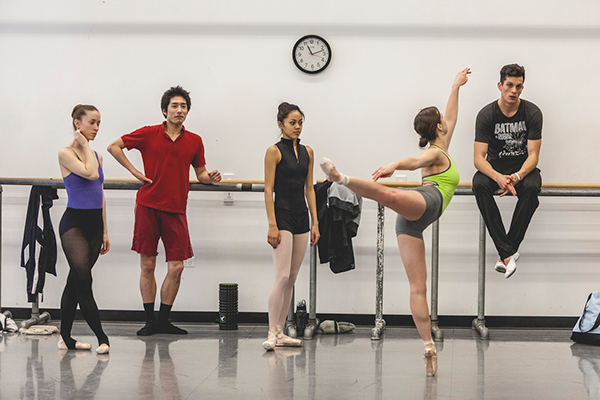
The Royal Ballet in rehearsal (Photo: Unknown)
Rehearsal etiquette is one of the many unspoken areas of our silent art form. There is no particular way that each and every rehearsal studio is run. But at the same time, there are general no-no's (and yes-yes') that are taught within the culture of a company as they create, fine-tune, and prepare a work for the stage.

Back a handful of years ago I was working with a pickup company that employed enough dancers to fill a small rehearsal room. In other words, our athletic group of 8 had to get along considering our company's size. A few of us were more seasoned than the others. But one dancer was enjoying the raw, empowering, and often shocking experience of their first job as a professional. Previously, I talked about my experience at my first full-time job with Houston Ballet and how I stepped on dancer's toes without even realizing it. After watching this type of situation from the other side, as a senior dancer, I was taught a lesson in kindness, patience, and humility.

Dancing for a big company is very different than dancing for a small ensemble. In a bigger company, dancers often feel more comfortable being up front (if not, sometimes, mean) when trying to streamline a young dancer into their place in the unique culture of a professional company. If any interaction becomes tense, dancers can retreat into their clique for comfort or hide behind other dancers who are more willing to stand their ground. But in a small company, there is nowhere to hide, very little hierarchy, and everybody has to interact frequently with one another in the studio.

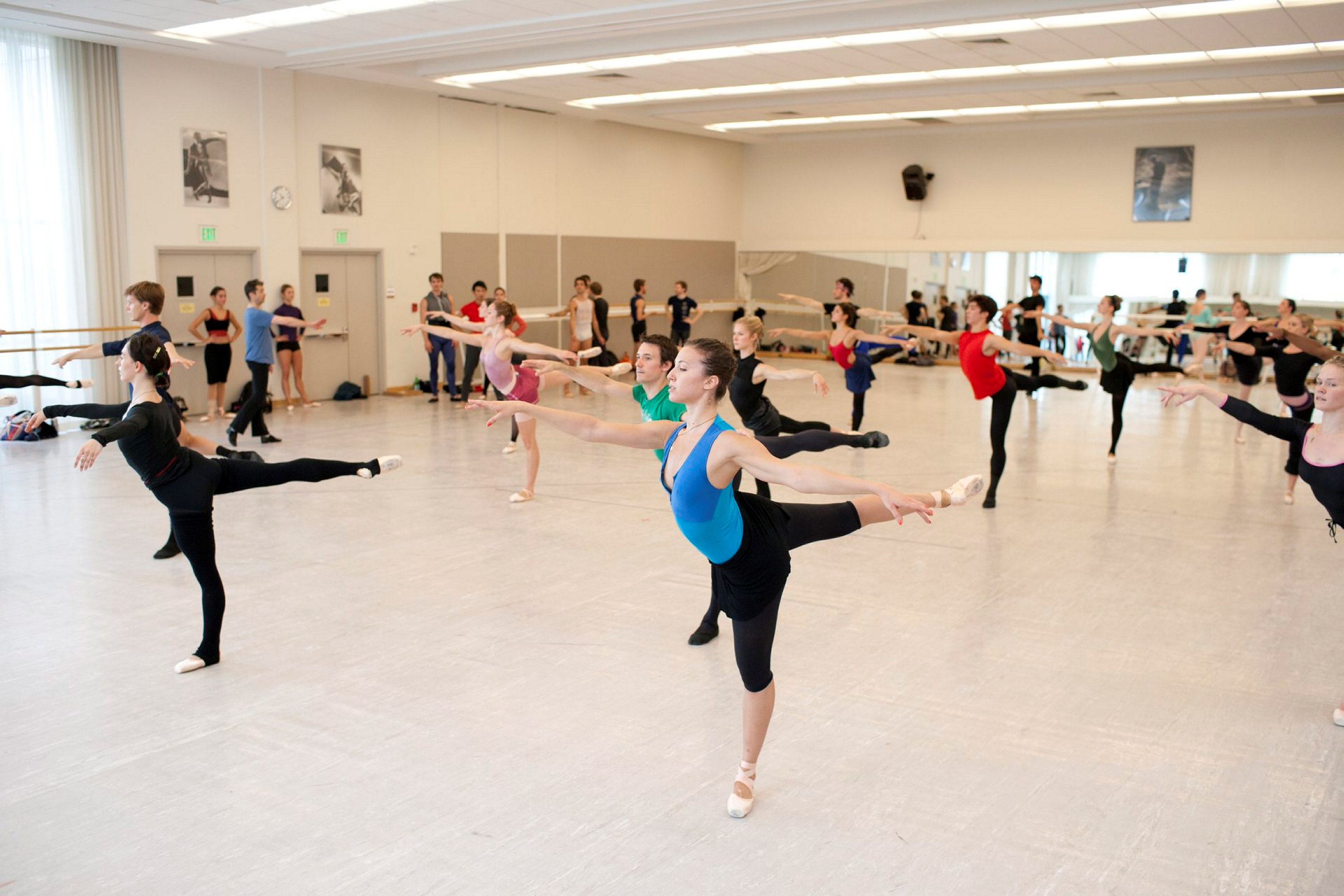
Smuin Ballet in rehearsal (Photo: Chris Hardy)
Back to the occasion of watching this new dancer enter a rehearsal studio without the assimilation that the rest of us dancers had. It was a generally difficult situation to endure. The leadership wasn't very good at running a rehearsal studio and they let the dancers have a bit too much control over what happened. This new dancer became a stressor for other dancers as they were acting in ways that went way beyond the etiquette of most professional environments. Things like actively telling other dancers how to fix their dancing, counting over the choreographer, and regularly interrupting the process to crack jokes became the norm. And while the other dancers with more experience didn't approve of this behavior, the director and ballet mistress chose to allow it to continue.

Now, it is perfectly healthy to run a studio where dancers feel that they are a valuable part of the process, where the environment is light and friendly, and where a dancer feels that they can speak up when they feel that something isn't working properly. But this dancer started to become a distraction and affected the ability of others to work to the best of their abilities. Due to the size of the company, where another more experienced dancer may have talked to their freshly minted colleague, this dancer was left continually breaking "rehearsal-code" for the extent of the gig. This was most likely due to the fact that, in such a small group, everybody knew that a small amount of tension between two dancers would be felt by all.

In this company, many of the dancers looked up to me and respected my work. And for that reason, it was suggested by some that I speak to this dancer to give them an idea of professional rehearsal etiquette. But, as I stated before, I felt it would cause too much tension and that it was actually the responsibility of those in the front of the studio to hone this character in. Looking back, I'm glad I maintained this position. But this is the advice that I would offer that dancer today if I were the person at the front of the studio.

First things first, the way you act in a rehearsal studio as a student is completely different than when you are a professional. Most students who become professionals have reached the top of the hierarchy of a school. Essentially, if the school had a ranking, these dancers are the Principals of the school. In a professional company, a top-level student most often enters at the lowest rank and seniority. In most professional rehearsal setting, Principals have more leeway and freedom in their choices, actions, and vocal interaction than others. Not to say that a new professional can't have a voice or input. But it is the job of an apprentice or first year dancer to sit back and absorb what is happening around them. They don't have equal cultural standing to those higher ranked or more senior dancers. Just like in medieval times, the apprentice to the blacksmith didn't walk in on day one and start working with the iron. It may have taken a long time before the mentor allowed the apprentice to even touch any equipment, let alone lead the creation of a work of art.

My next bit of advice is to keep an open mind about your idea of what a rehearsal should look like. School rehearsals are often much slower paced with more time to retain choreography, fine-tune, and engage in conversation. Many professional environments are much faster-paced and don't open up the room to ask questions or discuss particular material until all of the material is already out. This is to help streamline the process and may even be an effective money-saver. In school, most of the students are paying to dance. In a professional environment, time is money. The longer dancers are in rehearsal, the more they get paid and the more time spent paying for rehearsal space (esp. in freelance or project based gigs that don't have a home studio). There are reasons for professional rehearsal culture that go beyond personalities and people getting along.

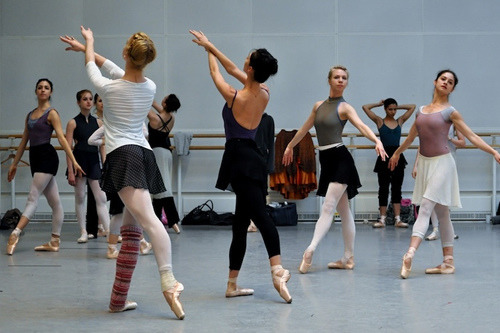
Joffrey Ballet in rehearsal (Photo: Lenny Gilmore)
The final idea I'd like to share about rehearsal etiquette is a grey area that is fluid from company to company, but generally recognized in some way or another. I'd like to bring up seniority and respect for dancers with more experience. One of the big issues with this fresh, new dancer was that they felt their presence in the studio was absolutely equal in contribution to the more experienced dancers around them. I'd love to say that this is the perfect ideal, but it was actually one of the most challenging aspects of working with this person. The difficulty laid in looking at them as a person versus their job and position as a dancer. As a person, we all enjoyed this dancer very much and wanted to give them a chance to find their place. But as a dancer, many of us felt disrespected by this person's actions. For instance, a young dancer should never think it is acceptable to offer unwarranted corrections to a more senior dancer. Additionally, taking over a rehearsal space and telling dancers how to count or how your exploration of the process is more correct can be horribly disrespectful and doesn't acknowledge a dancer's wisdom gained from time put in. Whether a young dancer is more naturally talented than a senior dancer doesn't play into the fact that dancers with seniority have spent years fine-tuning their technique, movement, and rehearsal practice. The value in hiring more senior dancers is that they have existed in a professional dance studio much longer than younger dancers. They are brought back to dance for an organization because they have a very keen sense of how to work effectively and professionally in a variety of work environments. Even a dancer with immense talent can not innately understand this. And for this reason, it is extremely important that they take a step back and absorb the culture that experienced dancers project. Because in the end, these senior dancers are not projecting their own idea of the culture. They are projecting the culture that came before them and taught them that culture and so on. You are essentially being taught the cultural history of the company by learning from those who came before you, absorbing it, and then will hopefully pass it on when you aren't the young or new one any more.

As you can see, I shied away from sharing too many specific items about how to act in a studio. This is mostly because each and every studio functions differently and most effectively per the needs of an organization. I don't want any dancer to ever feel completely stifled by trying to fit in to the culture of a dance company's rehearsal process. But if you approach a professional rehearsal studio with respect for those around you and respect for what came before, it will be much easier to acclimate to dancing for a company. And, if you are lucky enough, perhaps, you will have the staying power to become one of those dancers that helps the next generation learn a company's culture from your fine example.

6.09.2016

Adapting to Differing Company Practices

I'm currently in Alaska running my annual summer intensive for pre-professional track students. The sun sets a few minutes before midnight and rises around 4 am, but it never gets fully dark. I started this intensive to help enhance these Alaskan student's local training after my tenure as Interim Artistic Director of Alaska Dance Theatre. One of my favorite things about getting to run this program is that I am in complete control of what happens in the studio. If I feel that a student needs to be pushed, I can push them to their limit. If the time has come to pull a student back for their own safety, I do that because I answer to myself. Working like this was a rarity when I held a full-time schedule of performances with multiple companies as a freelance dancer. I was often a slave to company practices, which could mean that I was adjusting to 8-10 different ways of running rehearsals each year. So, getting to make strategic decisions in the studio is a luxury that I really appreciate.

AK-BK Students in Contemporary Technique Class
It can become quite easy to get stuck in one's ways when you have been dancing with a company for any time greater than a year. You wake up in the morning with a general idea of what to expect throughout your day. There may only be cause for concern if a new choreographer or stager is creating/teaching a new work. And, even in these situations, you usually have the protections of an extensively negotiated contract to make sure that there are at least a handful of regular studio practices in place. Some of these luxuries can include a 5-minute break during each hour that you rehearse, an hour for lunch in the middle of the day, a non-mandatory hour-and-a-half warm up class, major issues taken up in private meetings, and more. No matter how functional or dysfunctional a company may be, one often finds a certain level of comfort and expectation in working for one organization. You know what you are getting into from day to day and week to week.

Unfortunately, for freelancers, the above case of comfort and expectation just doesn't exist. I learned this the hard way after dancing with Pacific Northwest Ballet for 7 seasons. After experiencing this company's very functional way of running, I found myself struggling to adjust (and sometimes handle) to the multitude of environments in which I was dancing. For instance, the first time I was brought in to dance with Festival Ballet Providence for their production of Swan Lake, I was at a loss for words when I walked into my first rehearsal. I was standing in the middle of the studio preparing to learn the waltz in the first act of the ballet. Due to circumstances, I was only able to enter the studio after most of the company had already learned this piece of the ballet. My assumption, based off of previous experience, was that teaching me the choreography and filling in the gaps would be the priority of this rehearsal. Instead, I was partnered up with another dancer who already knew the choreography. Before I knew it, the music started. I stood staring at my partner, following her around for about 16 counts before I walked off the floor and raised my hand. Instead of the, "Oh, we forgot that we had to teach it to you," response I was expecting, the director told me that he would teach it to me another day and to just stand beside my partner and follow her around for the next hour. If I remember correctly, I left rehearsal and texted my husband, "I'm really concerned about what I have signed up for." This may be an extreme example of the point I am trying to make, but after asking around the studio if this was a common practice, none of the dancers were even slightly phased by what happened to me. This was not an uncommon practice for them.

Throughout most of my freelance career, I have had a different experience with each company I danced for. Fort Wayne Ballet left my Juliet and myself in the studio with a DVD to learn all of a full-length Romeo and Juliet without a ballet master. We had the freedom to make decisions and they trusted that we would make the right ones. Company C Contemporary Ballet wanted to rehearse a 20-minute one-act ballet that I had learned in a flash almost immediately. Other companies I worked with rehearsed 3 hours a day (instead of the 6 hours I was accustomed to at PNB), docked your pay if you missed company class, and even requested dancers perform on public transportation. Instead of experiencing the restricted choices of a unionized company contract, I found myself panicking that these practices were going to injure me or take away from the integrity of my work that I felt I had built during my years dancing in Seattle.

Performing Romeo & Juliet w/ Fort Wayne Ballet - Dancer: Lucia Rogers (Photo: Jeffrey Crane)
I'm not sure if I ever fully adjusted to the malleability that is necessary to function in the freelance world. But I can tell you that I have many friends and colleagues who have learned to just go with the flow and hold no company to any expectations. While some of these dancers have come from major companies, what I have found is that most of these more fluid dancers have never danced in a union company. In this situation, I feel that it can be very beneficial to lack the experience of working for an organization that is structured by a strong contract. It is kind of like eating candy. If you have never eaten candy, you are a lot less likely to crave it. But if you have ever tasted the sweetness of chocolate (or for me gummy bears), and it is kept from you, you will be much more likely to crave that chocolate. In the case of a dancer, if you have ever rehearsed in a more efficient way, it can become stressful to lower your standards to a less efficient approach. Even, if in some cases, that approach is more efficient, but you only want to rehearse the way you are used to.

My greatest suggestion to any dancer that finds themselves struggling with working in differing company cultures is to remember that there is no perfect way to run a rehearsal, treat a dancer, or lead an organization. Of course, there are things that should not be done; like treating dancers poorly, changing rehearsal hours without care or additional pay, etc. But keep in mind that all directors and ballet masters/mistresses have come from a different background and a have had different experiences in and out of the studio. If you were put in the same position to lead the dancers standing beside you, you may find that they dislike how you approach running rehearsals. Yes, there are more and less efficient approaches to teaching. But until you are in a position of leadership, it is actually your job to remain mostly submissive.

Now, if there is a point where you feel that you or your peers are being put in legitimate danger, it is your responsibility to speak up. But, in order to maintain a professional relationship, you may want to wait to speak to whomever is leading rehearsal until after that rehearsal has ended. If you feel that you are being put in immediate danger, of course, you must speak up. But it isn't extremely common to find yourself in a situation where something needs to be addressed at that exact moment in the studio.

One of the most beautiful parts of our dance world is that no company is alike. There are differing reps, a plethora of dance artists, and a range of styles. In the same way, there are many ways that a company can choose to function. Do your best to remain submissive and lead through example. If you become a leader in this way, you may actually be asked to help influence a clearer rehearsal process. Stay true to yourself and speak up if absolutely necessary, but keep in mind that it is leaderships choice how to run a company and its rehearsals. Think of it this way. The first time you learn a role in a ballet, dancers often feel that this is the correct way to perform this piece. If someone comes in a few years later and asks for steps to be executed on different counts or in a different style, the dancers who have already performed the work will say that what is being taught is wrong. But in reality, it is only a different viewpoint of what the work was before. There is no right or wrong, unless it is endangering one's safety or health.

10.16.2013

The rules of taking open class

I know that my last blog was a list post, but inspiration has struck and I feel that it is completely necessary to offer you another list. I was taking our morning warm-up class today at the Westside School of Ballet, where I am preparing a performance with Barak Ballet, and I found myself wildly frustrated. The annoyance I felt is actually not uncommon for me. In fact, I find myself needing to stifle my emotions often while taking open class. Most people that don't take open class don't understand what I am referring to. But any professional that has had to suffer through an open class knows exactly what I am talking about.

Open ballet classes are essentially the zoo of dance, but for people. I have taken open class in New York City, Philadelphia, Seattle, Los Angeles, Houston, DC, and beyond. So I have a pretty good take on this. There can be any combination of people taking class, from young students looking for an extra class to middle-age professionals (non-dance professionals) trying to stay in shape. Sometimes, you find tweens in class and, at other times, the dancers may be closer in age to your grandparents. Add a handful of professional dancers trying to stay in shape and you can only imagine the cast of characters that have arrived to partake in the art of ballet. For some reason, "dance-etiquette" is rarely taught in combination with the strict set of exercises that are given from barre to center and jumps . For this reason specifically, I feel that I need to speak up about the horrors faced and the lack of understanding and respect that occurs around the world daily in these classes open to all. When I teach class, I do my best to educate my students about an art that is borne out of respect. So, let's proceed and learn a lesson or two in the etiquette of ballet.

King Louis XIV
- Traditional ballet was founded by a king to be performed by those in the higher class. Royalty. There were many expectations in place when these royals interacted with each other and those considered to be below them. While things have changed as we have evolved out of this culture, there should still be a great sense of respect for those around you and their relationship to you in class.

- Look around the room. Yes, most everybody has paid an equal sum to partake in class. But each dancer is individual and has come from a different background. If a dancer looks like they really know what they are doing, they are likely professional dancers. They have put in a lot of time and effort, plus they have been highly trained in the rules of ballet. Don't assume that you have an equal standing in class as these professionals. Take a step back and take a lesson in humility. Watch these dancers and learn from them. Dance is an art that is passed on by spoken word and careful, visual observation. The next step down from the professionals are the regulars. They have put in their time at the studio, they have cultivated relationships with teachers, and they have a better understanding of the culture of their specific community. Next on the list are pre-professional students. These students are hopeful to achieve the status of professional. They are still learning the ins and outs of ballet and may not fully grasp the system that is commonly in place during a class. But they are on their way. Lastly, you have the drop-in students that come for fun and health. These dancers aren't necessarily interested in performing professionally or regularlity in attendance, but they stop by here and there to keep in shape and enjoy themselves.

- Show up to class before it begins. This doesn't mean you should walk in the door at the listed time. Arrive at least 10 minutes prior to the scheduled start time to sign in, pay your fee, and change. Here in Los Angeles, it is not uncommon for people to get stuck in heavy traffic and arrive late. This happens. But respect the fact that others showed up on time. If you are late, immediately look for a barre that is unused or the least full. DO NOT stand in front of somebody who has a direct view of themselves in the mirror. They probably arrived early to ensure that they could watch themselves and improve. If there are multiple barres in the room with two people on each side and one barre with 3 people on it, join one of the barres with fewer people on it and stand in the less comfortable spot. Whatever you do, if you are tardy, you should not place yourself somewhere that makes it harder for someone who arrived on time to work properly and effectively.

- It is perfectly fine to have a conversational moment with the teacher or your peers, but only for a short moment. Do not engage in loud, extended, or multiple conversations between combinations with the teacher. Also, if you have a question, by all means ask. But if you find yourself asking a question after nearly every combination, be more attentive and start watching other dancers. If you didn't catch a combination the first time in center, go in the second group. If you don't know how to execute a step properly, watch a dancer that looks like they know what they are doing. Ballet classes are a series of stops and starts to learn combinations, then execute them. Adding more time between the end of a combination and the start of the next one leaves time to get cold and to lose focus.

She does not belong in an advanced class
- Study the list of classes and ask the front desk questions before you enter a class at a level potentially higher than your ability. If you danced for years, but haven't taken class in five years, you should start in an intro or beginner class. Always take a level lower than you think you should before you consider moving up. There are constantly dancers taking the most advanced classes that do not belong in these classes. Not only are they a distraction to those that understand the intricacies of an advanced class, they are putting themselves in danger of potential injury. If you aren't sure where you should be placed, take the lower level classes and ask the teacher what they think after class. Also keep in mind that it takes a student years to progress to an intermediate, then advanced level.

- If you are not a regular or a professional, you should be weary of standing in the front or going first in groups. If you don't know the combination, you should definitely not go in the first group.

- Evenly space yourself in class. Do not stand in front of everybody while only moving forward halfway to the front. I always teach that the best way to respect others is to respect yourself. If you stand to close to a barre or person, you are making it more difficult for yourself to execute the combinations. You are offering yourself less of a chance to succeed. If you respect yourself by giving yourself enough space, you will also be respecting others because they won't be avoiding your limbs while they are dancing. Dance is based on ideals of respect. When you are at barre, if you are going to hit somebody, you need to turn the angle of your body away from the barre to the front and in towards the barre to the back. If you are doing center work, don't stand directly next to somebody. Stagger yourself. This means that one person stands forward and another stands back. If you are going from the corner, stand as close to the corner as possible in a triangle with the point towards the corner you are coming from or a square in two diagonals.

San Francisco Ballet dancers properly staggering themselves
 - If a professional or regular moves over, it doesn't necessarily mean that they are making space for you to move over as well. It likely means that you are too close to them and they are trying to gain more space to avoid hitting you.

- If you are not going to or unable to execute the combination in full, absolutely do not stand in front of anybody. It is disrespectful and prevents anybody behind you from fully executing the dance.

- One rule that is very important in ballet class is that you should never step in front of anybody. If somebody is standing in fifth position or B-plus, they are communicating that they are ready to perform. It is rude and disrespectful (and distracting) to step in front of or next to a dancer that has already expressed that they are going to do the combination.

- When a combination is over, it is proper to run forward, first, and to the side, second, as fast as possible to allow the next group of dancers to run into place. This will help you avoid collisions and keep class flowing.

- Most of the time, professionals are in class to stay in shape and improve their abilities. They are not in class as a hobby or to hang out. Think twice before you start talking to them. Chances are, if they don't approach you, they are working very hard and trying to concentrate on improving their art. If you want to start a conversation with one of these dancers, wait until class has ended.

- All dancers enjoy a compliment for executing a step exceptionally. If you absolutely feel the need to express your appreciation or awe, clap for that dancer or say something at the end of class. To constantly walk up to a dancer after each combination because you are impressed with them is a distraction and changes the compliment into a frustration.

- After class, a professional is likely running to rehearsal or a job. Class is a warmup for them. Feel free to engage them in conversation, but be aware that they are probably trying to leave the studio. Make sure that your conversations are appropriate and not asking too much. Don't corner a dancer and remain unaware that they are trying to gracefully exit the conversation. Most dancers are glad to offer helpful advice, but in small pieces.

- If I have one rule that is extremely important to maintain, it would be to remain aware of your spatial awareness. Not to be dramatic, but there is an epidemic of ignorance towards spatial awareness in open classes. Learning how to dance within a certain confined amount of space is just as important as learning how to point your feet, lift your legs, and develop a floating sense in your port de bras. Nearly every professional dancer starts their career in the corps de ballet. Twenty four swans can not exist on a stage without having an acute sense of what is happening around them. Learn how to look around your body while you are dancing. Use your peripheral vision. Don't battements your leg toward a person if they "may be" too close. If there is any chance that you could hit somebody, you are too close. You can practice spatial awareness by dancing in a small, confined room and avoiding hitting the walls with your limbs.

If more dancers understand this set of rules before entering an open class, you will be more likely to enjoy yourself and improve faster. While it is important for many professionals to take open class daily to maintain their technique, it is equally important that anybody who wants to partake has the option as well. Not only do these classes fund schools and companies, but attendance of non-professionals keep numbers up, which allows class to keep happening. Attending ballet classes also develops certain appreciations for those that won't necessarily have a career in dance. These "open-class" dancers come to performances, spread the word to those less educated in dance, and may even be inspired to donate to professional companies to keep them up and running. While it is important that open class remains open to all, it is also important that we begin to educate dancers in the codes of conduct and the finer details that are involved in a ballet class beyond the steps.
5.02.2012

Adjusting to new environments...fast!

Every dance company has it's own culture. Larger companies tend to have more structure and dancers thrive in cliques, while smaller companies tend to fly by their own rules and have a greater sense of family. Although, I have seen these trends throughout my dance career, each and every company works differently and has different social rules. Essentially, dancing with new companies, schools, and events can be like visiting different countries. Unfortunately, we don't have the luxury of a Frommer's or Lonely Planet guide to tell us how to conduct ourselves and what to expect while dancing in a new environment.

When I first started dancing professionally, I was wide-eyed, bushy tailed, and a bit green. While training, I would always go in the first group and stand front and center. This practice didn't work very well for me when I joined a company. I remember the first time that a principal dancer walked up to my apprentice self and scolded me. They said, "You have only been here for a month. You need to respect the people that have been here for years and let them dance first and in the space that they want." I was in shock, a little hurt...a little embarrassed. I was under the impression that a principal dancer had already proven themselves to the artistic staff. As an apprentice, I thought it was my duty to show what a hard worker I was and that I was going to be a valuable member of the company. I had two choices: Do I unabashedly prove my worth to the artistic staff or do I push to be accepted by my colleagues?

I spent the rest of my apprenticeship and my first couple seasons in the corps of a different company figuring out how to conduct myself. I was lucky that I got to spend time in more than one institution. It showed me that no two companies function the same. Some dancers worked differently with different teachers and ballet masters, in different rehearsals, and in different social situations. This left me plenty of time for analysis. And to make some very awkward mistakes along the way. In the end, though, these situations have been very valuable to me, especially as a freelancer who finds himself in different environments pretty often.

The first time a dancer has to adjust to a new place occurs before class even starts. Barre spots. Everybody hates them and everybody loves them. There is nothing worse than having no definitive place to stand. But there is nothing better than having that perfect spot where you see yourself in the mirror (or don't see yourself) at that perfect angle that makes all of your lines look their best. I find that smaller companies tend not to care as much about where they stand because there are fewer dancers and there is more space. On the other hand, dancers in larger companies tend to be more possessive of their barre spots. It is important not to impose upon somebody, but also not to become overanxious about stepping on anybody's toes. The best thing to do is ask dancers that have already claimed their spot where to stand or, if you are not comfortable, sit away from the barres and find a place to stand as the class begins. Use the first few days of class to feel out the company before you start to develop any regular habits. Within a week, you should have a good idea of how the dancers function.

For me, building and using my social skills has been a very important aspect of freelancing. I have always been generally outgoing. Starting back at my first summer program, I made extra effort to talk to people when I passed them in hallways. I tried to learn everybody's name with whom I had any slight form of interaction. Some people gave me dirty looks, but most people were very friendly and equally eager to meet me. This openness has been extremely helpful to me throughout my career. Today, I still try to introduce myself to people the first chance I get. I try to learn people's names quickly and find a connection or identifying characteristic that will help me remember individuals. Before I enter any new workplace, my first step is to browse the company's website and to look at people's faces and biographies. I tend to learn names better when I am told people's first and last names. So, when I meet people, I always ask for their full names. When I go home, I will recheck the website using the roster like a set of flashcards. I find that the quicker you can remember and relate to people you are working with the faster you are welcomed into an environment.

Another important way to speed along adjustment is to ask questions. I often tell people that I am "the question guy." It is nice to learn some history of an organization from the people that have been existing within it. How long have people been in the company? How often do they rehearse? What is the director like? Do rehearsals end on time? Where do people live? What is there to do around the studios? Is there anything that I should know about? Of course, you need to take into consideration that everybody has had different experiences within the workplace and some people may feel more positively or negatively about their time with the company. For this reason, take advice with a grain of salt.

The most important thing when coming into a new environment is to be open to new experiences. I spent 3 years working as a union representative for AGMA. So, I know what it is like to work within the tight framework of a union contract. When you are freelancing, you are much more likely to be in a place that is run differently than what you are used to. If somebody skips a 5 minute break, go with the flow. But, if you need to speak up to protect yourself, do so. Be open to new classes and new movement styles. But still be true to yourself as an artist. Don't let your neurotic dancer habits (you know we all have them) take away from the opportunity to expand yourself as an artist or to inhibit yourself from making new connections with people. For instance, I have a regular, 5-day a week, gym habit that I am pretty reluctant to give up. Just last week, I had to allow myself to take a day off from my schedule when a dancer asked if I wanted to grab a drink after rehearsal. It was a good decision, as it gave me the opportunity to make new connections that have helped ease my way into a new place. The more open you are, the more you will learn, the more you will be embraced, and the easier it will be to enter into a new workplace every couple of weeks.