Showing posts with label injury. Show all posts

2.27.2017

The Ultimate Sacrifice

Throughout the wildly political 2016 calendar year, social media became all sorts of heated platforms. Long gone were the days of respectful conversation and friendly debate. This new age of irresistible public posting with resistant, closed-mindedness permeated my feed as I tried to stifle the stress of possibly losing my rights and watching the positive progress of 8 years disappear with the ding of voting machine buttons. Nonetheless, I did everything in my power to avoid arguments on social media while staying a part of important conversations. And this is how I continue to treat social media while the remnants of this election cycle still have people on an argumentative edge. Now this is where this post swings from political to dance. The other day I was sifting through my feed to find a former professional dancer I was acquainted with through Pacific Northwest Ballet's school (who is now retired) reposting the article I shared in my most recent blog post about dance potentially causing psychological harm. Now a mother, her sharing of this article was accompanied by a statement that her daughter would never be a part of the art form to which she once gave her full self. I felt the need to turn this public thought into a caring conversation, and luckily she responded with the same sentiment. And from that respectful chat this post was borne.

A local Philly sculpture - "Freedom" by Zenos Frudakis
There is just something about being a former professional dancer. I can speak to this from both perspectives, as I am out of my performance career, but still maintain dance as every aspect of my career and self. While there are short-lived, wildly euphoric highs involved in the life of performing artists such as dancers, there are also desperately painful lows. These lows are often accompanied with physical pain that can drive a dancer into the ground before they fully blossom. Most professional dancers don't stop dancing because they have consciously tied up all ends of their performing careers and feel like they have accomplished what they set out to do. More often, they retire due to complication from injuries, disappointment in casting and organizational progression, and beyond. This array of painful endings has more dancers leaving our career feeling bitter than sweet (not even bittersweet). So, why even try to be a part of this career?

What it comes down to is that a career in dance is the ultimate sacrifice. It is the sacrifice of one's body, mind, will, and lifestyle. A dancer may come off as selfish in their full-out ambition to have a stage career. But the truth is that a dance career can't be selfish, as it is submitting oneself over fully to the art form. Perhaps, the art should instead be deemed selfish. And all of the stepping stones to get a dancer to the point of performance in a professional setting prove that they are willing to submit themselves, even if they aren't aware of it.

One of my biggest challenges as an educator in dance involves getting through to parents, children, pre-professional students, and open class students that I am not coming into the studio with any intention but to prepare them for a lifestyle in dance. Whether that means you are striving to have a career or you only intend to take open classes for health, fun, and fitness, I will enter the classroom to impart my knowledge and share our art form to better you along whatever path you wish to take. Initially, I have found this is often met with resistance and confusion. A few examples of this include an open class student telling me they come to class to have fun and I make them think too much. Or a young student taking my contemporary class once and her mother pulling her from subsequent classes because of my approach to instruction, only to return 3 months later because the other student's parents who gave me a chance had so much positive to say about my teaching methods. The struggle as an educator is real. And it is especially difficult in our field because young dancers don't understand that there are many challenges a dancer must face in order to know whether they can be one of the few who can sacrifice certain aspects of their lives to be a dancer. A life in dance is a life of sacrifice. And these sacrifices aren't common or comfortable.

There are many points in a dancer's education that can be considered stepping stones towards testing out the waters of a career. Your first recital. The first time you feel the pain of pointe. That point when you realize more of your friends have quit dance than remained. The first time your teacher is unusually critical of your dancing. The days you have too much homework, but you still refuse to miss class. The time when you choose to move away from your family before you are even your own legal guardian. The first time you get that rejection at an audition. The first time your company doesn't cast you in a ballet. The first time you suffer a career-threatening injury. The first time somebody mentions your weight. The first time your friend is unkind to you because they are jealous of your casting. The first time you don't want to wake up to take class because you are so exhausted. The first time you consider your life without dance. Most dancers don't get past point three in this paragraph. But those who do are commonly accepting each subsequent sacrifice as a necessary step towards living out their dreams to become one of us rare human super-humans called a professional dancer.

Nicholas Rio, Ali Block, & dancers of Columbia Ballet Collaborative sacrificing their Sunday night to dance my new work
While a dance artist can perform seemingly supernatural feats with their bodies, they are also doing the same with their minds. I remember the first time I had a stone bruise on the heel of my foot around the age of 14. I was quite convinced that I wouldn't be able to dance for a week, let alone walk. But I learned that day that, while I felt the pain, I could ignore it enough to continue. Eventually, I forgot about it. This evolved into handling being so sore day after day and still attending class and rehearsing for 8 hours without realizing that most people would completely shut down under the same circumstances. But then there is also the ability of a dancer to stifle emotional trauma and still perform at a high level. For all of the effort put in by most dancers day in and day out, they may still find themselves in the 2nd cast of a ballet. Or, perhaps, they were learning a new role for weeks and the director chooses not to put them onstage for the production. Even under these circumstances, dancers keep trucking on and perform their job to the best of their abilities. But what about all of the hard work they put in? What about the extra time they spent at home after their 8 hour dance day watching footage of the role and marking the steps in their living room? Don't they deserve a chance for all of their effort? Perhaps, they even put in more effort than the person who got to perform that role. 

With all of these different ideas colliding into one, what most dancers are forced to reconcile, but rarely see, is that dance never owed them anything. Just because you walk into a studio and work every ounce of your being off doesn't mean you deserve to step on a stage and enjoy the bliss of performance. And most people don't ever recognize that, even after their career is over. Dance is always a gift and rarely a straightforward response to all of the effort you put into it. Due to the lack of open dialogue about this harsh reality of the life of a dancer, there is an epidemic of bitter, jaded dancers expressing how dance victimizes its participants and leaves them broken with little to show for it. This is often an inner dialogue of their perceived failure of expectation. An expectation that dance promises no one. This reality isn't talked about enough during the training stages of a dance career.

Shira Lanyi & Allen Abrams in my work, Distinct Perceptions (Photo: Dave Friedman)
When this naivety is broken for a dancer, which is often caused by a case of physical or emotional injury, dance often turns from a personal passion into a personal vendetta. How can a dancer submit themselves to an art, then claim hatred for something that is so ingrained as a part of them? It could be the fact that they had expectations and weren't aware of what they were signing up for when they fell in love with dance while still aged in the single digits of life. But the way I see it is this. When you fall in love with somebody, you open up a more vulnerable part of yourself to this person. And if things don't work out, you often feel anger towards that person, if not hatred. So many people will say the worst things about their ex-lovers, even if they were married for years and years. My assumption here is that the brokenhearted must create negative feelings towards their ex-lover, otherwise they may find themselves still in love with them, even if they aren't a good fit today. For example, if they don't hate them for this, they may remember that they were the most generous of people. Or if they don't speak negatively of that, they may realize that nobody ever made them feel more empowered to reach for their dreams. In this vein, ending a career in dance that wasn't fully realized to one's expectations may lead a person to project negativity and bitterness towards dance to help them detach from something that they used to love more than most anything else. I've seen this happen among more retired dancers than you can imagine.

This is a lot of information to take in here. But what it comes down to is that we all fell in love with dance for a reason. Whether it was fascination with the super-human aspect of it, getting out of the house during your parent's dirty divorce, the only place you felt you fit in, or some other situation, dance doesn't owe you anything. It can offer you some otherworldly experiences. It can introduce you to the most diverse cast of friends. It can keep you fit, disciplined, and eager to enjoy a lifetime of progress and growth. But it doesn't owe you that Odette/Odile. It doesn't owe you a body that can withstand the wear-and-tear of near-contortionism. It doesn't owe you that meteoric rise to Principal. It doesn't owe you that final curtain call with audience members yelling bravo and tossing roses at your feet.

Many people look up to dance artists because they feel that they are ethereal creatures. Dancers look at their careers the same way. Infinite progress is the ethereal creature they seek to capture. But at a certain point, nearly all of us will hit our peak, as infinite is unattainable. And instead of looking up at the next tallest mountain with bitterness and disdain for its unattainable height, we should instead look down from the impressive heights we have climbed and enjoy the breathtaking view that lay before us.

Looking over Lake Eklutna in Anchorage, AK

2.03.2017

Knowing When to Say "No"

As dancers, we are always taught to be YES people. Do you want to do the combination again? YES! Do you want to try that lift again? YES! Do you want this job? YES! It is ingrained in a dancer's mind at a very young age that you should nearly always say YES during your dance career. For, if we say no, we may actually remember that the human body has certain limitations and we may miss out on career-boosting opportunities. At the same time, it is also considered poor etiquette to say NO to an instructor, choreographer, or director. But there will be a time in every dancer's career, especially as a freelance artist, when they are suddenly struck with an instance where they may need to say NO. When is it appropriate or, perhaps, even necessary for a dancer to break the expectation for them to remain submissive and say NO?

1. Since this blog is about freelancing, let's start with an example for any dancer that works as an independent contractor. It can be very exciting to have an employer reach out to you for an opportunity to dance with their organization. Though, there are a few reasons that you should say NO to a potential job for reasons beyond timing and logistics.

If a director want you to travel for a period of time to work with them, but doesn't want to provide travel, housing, or sufficient weekly pay to cover your bills, this is absolutely a time that you should say NO. Take it from me. My last major performance gig didn't provide housing, which led to me living like a homeless person going from couch to couch at pure strangers homes for 5 weeks. I ended up severely injured and traumatized for months after (imagine random crying fits out of nowhere). Beyond that, if you are away from your normal connections and you aren't being paid enough to cover your monthly expenses, it will be nearly impossible for you to recover your lost income in time to meet your bills. Be sure to know what you are committing to before signing that contract.

2. As you mature as a dancer, you get a better idea of what works for your body and what doesn't. Also, you may end up dealing with some nagging injuries that prevent you from performing certain steps. For me, when my lower back started to reject certain partnering choreography, I would have to step up and tell a choreographer that I couldn't perform certain lifts from a flat-back position. While this wasn't always met with the happiest response, I was able to continue dancing without injuring myself for quite some time. It is important that a dancer is completely sure that specific movements are off the table before claiming that they can't perform those maneuvers. Also, be sure to understand that saying NO to certain movements may end up reflecting upon you in certain ways and you may find yourself limited in casting.

If you are a freelancer, this is one of the most important things, as you don't want to injure yourself to impress an employer that is only hiring you for one production and may never use you again.

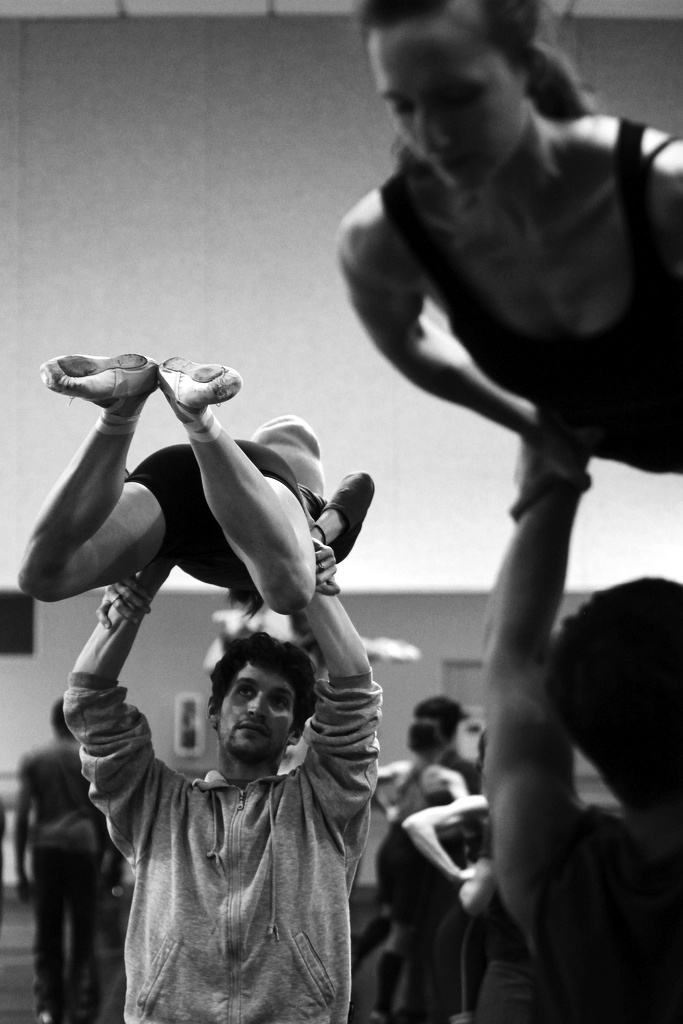
At a certain point, this lift was off the table for me - "Not a Cry" by Amy Seiwert (Photo: Alexander Izaliev)
3. During my time working for the American Guild of Musical Artists (AGMA), I learned that there has been research conducted that shows dancers are much more likely to become injured during the 4th consecutive hour of rehearsal. Beyond that, there is an increased likelihood of injury in rehearsals that extend beyond one hour. When I worked for Pacific Northwest Ballet, we had a 5-minute break every hour of rehearsal and no dancer was allowed to work beyond 3 hours without a 1-hour break before starting back up again. I understand there is sometimes a need to break one of these rehearsal rules, as stopping a choreographer mid-thought could be detrimental to their process or holding an emergency rehearsal on a performance day may only be available during that 4th hour. But, generally, a dancer should do their best to avoid saying YES to rehearsing for endless periods of time without appropriate breaks. Your body is your instrument and, if your employer isn't going to take that into consideration, it is your job to protect it.

4. While it may be great experience for a dancer to take on additional non-dancing work for a company (social media, marketing, admin, etc.), a dancer shouldn't be required to perform work outside of their job description. Working as additional stage crew to load-in, load-out, or perform duties of a stagehand should not be an expectation of a dancer, as well. Heavy lifting and moving could put dancers at risk. If an employer has these expectations of dancers, this should be expressed to them before they are given the choice to say YES to accepting a contract.

Networking at an event (Photo: Patrick Mackin)
5. One expectation of many dancers is to attend general public and fundraising events for an organization. While this is not always mandatory, it is good for dancers to attend these events. It helps the company promote its' mission, it lets donors and potential sponsors feel like they are a part of the organization, and it humanizes our often untouchable-feeling art form. While these events are often lots of fun, there are times when an attendee has too much to drink or is attending with less than favorable intentions. Just because a major donor or a potential sponsor is looking to give money to the organization does not mean that they can treat a dancer inappropriately. If you are uncomfortable with the direction a conversation is going, absolutely do say NO to any advances that are clearly inappropriate. And, if worse comes to worse, excuse yourself to use the restroom, refill your drink, or grab a friend to help pull you out of the situation.

6. I have a major rule that I never pay to work for an employer. If there are any items that an employer asks for you to pay for, you should say NO to that job. This includes paying for unpaid tickets that you were expected to sell (I don't think this should ever be a dancer's expected responsibility), shoes for performances (especially if you are required to dye them), travel, hotels, costuming, housing, etc.

7. The rehearsal studio is an extremely unique workplace. There are many things that if put in any other work environment could easily be considered crude, inappropriate, or sexual harassment. This is a difficult item, as dancing requires touching each other's bodies in otherwise inappropriate places for partnering or to tell the story. If you are a young, hopeful dancer who is shy, prude, or extremely religious, then you may want to consider looking into a different career option.

Now, there is a time when certain types of touch are inappropriate in the studio. If your partner or a choreographer are touching in places that are unwelcome for you or don't make sense to express the storyline, do express that it feels uncomfortable immediately. Usually, if everybody is working appropriately, this should resolve the issue. If certain types of touching continue beyond rehearsing the actual part, it is necessary for you to say NO or to reach out to the company's Human Resources department to address the issue. If there is no Human Resources department, you need to reach out to the ballet master or director.

In an office environment, this would be sexual harassment - Romeo & Juliet w/Fort Wayne Ballet (Photo: Jeffrey Crane)

7.19.2016

Respectful Ways to Respond to Issues

An image from my work, Glass House - Dancers Toby Lewellen & Amanda Sewell
As a freelance dance artist, you may find that you are often responsible for negotiating terms of your own contracts; including pay, housing, travel, and more. While some of these situations can be slightly uncomfortable, things are usually fine once you get everything in writing and sign on the dotted line. Unfortunately, though, as with many things in life, complications can arise that cause agreements to be violated or induce stress on your work in the studio. When this happens, your working relationship with that employer may suffer greatly. Dancers often choose the submissive path that they are taught to follow during their intense training years. But while it may be more comfortable to avoid conflict and let certain items pass by without even mentioning the issue to your employer, letting item after item slide by can be very damaging to your career and psyhce. From injury to disappointment, to anything as far as full-fledged burnout (which I recently discussed on my Pas de Chát podcast), not standing up for yourself can have dangerous implications.

There are many situations that may be better to leave unaddressed, but there are also a handful of topics that I strongly feel need to be touched upon. To offer all of my readers and those working dancers out there that don't have the luxury of turning to a union to deal with workplace issues, please read below to see my thoughts on how to best approach certain issues that may present themselves while on the job. With three years behind me working as a union delegate for Pacific Northwest Ballet and 5 years guiding my own career as a freelancer, I feel that I have a ton of valid experience to lend you some sound advice on how to respectfully respond to workplace issues.

Pay:

This is one area in which I have actually had relatively few issues throughout my freelance career. Of course, there is always that uncomfortable period when you are negotiating pay. But for the most part, employers respectfully follow through with paying dancers what they agreed, when they agreed to do it. Still though, every once in awhile I have heard of dancers that have had issues of non-payment.

When I have had an underpayment in the past, I have contacted my employer and casually mentioned it to them under the assumption that it was an honest mistake. This can be easier to discuss via email (and is more ideal for documentation purposes) because money is always a touchy topic to bring up. After an initial conversation, any errors or issues are usually resolved immediately (and with apologies).

I do remember an instance where an entire company of dancers wasn't paid for their work. After scrolling through angry, public Facebook outcries posted against the organization, I wondered how it could have been handled better. When a contract is being violated, it can be difficult to understand the correct route of execution to resolve complicated issues. For this reason, I hold legal insurance. This inexpensive assistance offers me access to talk directly to lawyers about any issues that I have free of charge beyond the $10 monthly rate. If their advice doesn't help you resolve your issue, they are also available to write letters to try to create an open path of communication. I strongly suggest stepping away from Facebook to announce any decrees against a company. While it may make you feel better, it could actually be used against you by the company, future employers, or cause issue if legal action needs to take place.

In the end, if there is no way to resolve the issue, you will need to determine if it is necessary for you to take legal action to reclaim your losses. I always suggest that you do everything in your power possible to avoid this. But a dancer should never feel like they can't protect themselves by accessing the power of the law.

Studio Conditions:

Rehearsing w/Oakland Ballet in 2014
Before I suffered a severe injury while dancing for Oakland Ballet, I actually told the director that I was concerned for my safety. After only a few days of dancing at their facilities, I recognized that the floor wasn't sprung and that they weren't turning the heat on (during the chilly 50 degree mornings of the East Bay spring). I started to change the way I approached my days. For instance, I stopped jumping altogether during class and wore gloves at barre. I'm not sure why, but this was one of the first times in my career that I was remiss to walk straight up to the director and ask for resolution.

After a few days of not jumping in class, the director pulled me aside and stated that he wanted me participating until the end of class. I wasn't too pleased with his request, as it showed me that he didn't understand the inadequacies of the facility and why commonplace items like a sprung floor are important to have for dancers performing at a professional caliber. In response to him, I calmly stated that I was concerned that I was going to injure myself due to the lack of spring in the floor. He acknowledged my concern, but still requested that I continue jumping. At that point, I responded, "I understand where you are coming from, but I am concerned that I am going to become injured. And while I would like to follow through to please you, you are not providing workers compensation in the event that I do get injured. So, I do feel it is necessary for me to continue working in the capacity that I am." He calmly agreed, though, I don't think he was very pleased with my response.

The best route of action to deal with studio conditions is to approach these issues earlier than later. If you have been dancing on a floor that is frighteningly slippery for a month and you finally reach your maximum threshold, it may be confusing to a director if it was never brought up before. Be sure to approach issues sooner than later. The way in which I interacted with the director may not appropriate for all dancers. I was lucky enough that I was more senior and had experience with talking to management about issues. If you feel that certain conditions may be endangering your body, but don't feel comfortable to approach management about the issues, I would suggest reaching out to a more senior dancer or somebody who seems to be on a more friendly level with the director. There is always a pathway to communication, even if it isn't direct. 

Rehearsal Conditions:

Some of you may look at the above section about studio conditions and assume that I am talking about the same thing. Let me differentiate this for you. Studio conditions involve the physical condition of the studio; like sprung floors, slippery floors, temperature, size, ceiling height, etc. Rehearsal conditions are the way that you are treated by whomever is running the rehearsal. Issues like this may include not being given appropriate breaks, demoralizing remarks, proper rehearsal structure, etc.

Back when I was dancing with another company in the Bay Area of San Francisco, I had an issue with rehearsal conditions. At the time, I had been flown in with one day's notice to replace an injured dancer in two difficult ballets. Within the time frame of 2 rehearsal days, I learned these two 20 minute ballets. This was an extremely difficult task, but my ability to retain quickly meant that we had more time to rehearse the ballets before they were put onstage. On the 3rd day of rehearsal, I was told by the ballet mistress that we would be running the 2nd ballet that I had just learned. We had hours of rehearsals and four more rehearsal days until we were in the theatre, so there was still some time left. I was concerned that running this fresh work full-out could possibly injure myself or cause me to injure my partner due to the lack of freshness in my mind. Instead of following common rehearsal procedures of breaking the work down into sections and rehearsing the sections separately before putting the whole ballet together, they wanted to skip to the final step.

As with the last section about studio conditions, it is important that you set up a pathway for communication. Make sure you say something before rehearsal gets underway. And if you aren't comfortable speaking up for yourself, don't be shy to ask for assistance. This should be approached in the same way as I mentioned above. You are responsible for your own health and career. And nobody knows what your body needs more than yourself.

Housing Issues:

Sometimes, people live differently...with ants all over their kitchen
This is yet another tricky topic that freelancers like to talk about among each other, but don't really like to address in the moment. I have had a great range of experiences with my housing while traveling the country to perform on stages small and large. Sometimes, I have stayed with host families. And, at other times, I have stayed in hotels. My experiences in both of these situations has ranged from the most amazing experiences of my career to the worst anxiety building periods of my life. At its finest, I have made lifelong friends, career benefactors, and more. At its worse, I have felt in genuine danger. It can really be a mixed bag when you are living in somebody else's space or staying somewhere unfamiliar that is booked by someone else.

First things first, when you start to feel uncomfortable with your housing, take a step back and out of yourself. Are you particularly uncomfortable only because you are out of your comfort zone? This is normal. Maybe the host doesn't like to turn on the heat until it is well past cold. Or, perhaps, your host smokes marijuana and you prefer to keep your distance from such substances. There are many situations that can feel frightening when you are trying to find your own comfort outside of your home. I always remind myself that there are many ways to live. My way of living is only one way, not the only way.

If there really is an issue with something, kindly ask to discuss the issue with your host, if you are comfortable. Most of the time, these people are housing you because they love artists and want to make you feel at home. I have had host families go way out of their way to accommodate my comfort. It is always best to have a personal conversation first because things can get awkward if you have to go through certain channels to relay a point. If worse comes to worse and you need to have somebody outside of the housing address it, it is not improper to ask your employer to change your housing situation. In the end, you are on-site to deliver your product, which is your dancing. If you can't relax, rest, and properly recoup at the end of your work days, you are more likely to get injured, less valuable to your employer, and less likely to return to a gig again.

Issues with Fellow Dancers:

It was the first day of a job and the choreographer had asked us to pair up with a peer. We were asked to improvise a duet together based off of a certain concept. By the time we had finished up, the choreographer had really latched on to the phrase that my partner and I had created. After sharing our choreography with all of the dancers, we were asked to do this again. I'm not sure what happened between the first and second exercise, but my peers mood quickly turned from camaraderie to anger. We were trained in different styles of dance, therefore we had different approaches to creating movement. The place we were working from previously was mutual, but once we hit a roadblock all of this dancer's communication skills broke down.

My first reaction to this breakdown was to try to resolve it myself. I apologized to the dancer for the miscommunication and asked if he would be a little clearer in what he was asking. At that point, the dancer turned to me and told me that they would figure it out on their own and I should figure it out on my own, then we could just dance our separate solos like a duet beside each other. I was in my 30's by this point and wasn't really interested in having a tense, dramatic in-studio experience.

I was really proud of how I approached this situation. I didn't make a big fuss out of it. I raised my hand and waved the choreographer over to speak to us. Instead of laying the blame on my fellow dancer for the anger that he was displaying towards me, I calmly mentioned that we seemed to be having a misunderstanding and some miscommunication and needed assistance to get back on track. The dancer snapped back in defense of his actions. Instead of trying to rat this dancer out, I continued to keep my calm and said, "I'm not trying to cause any issues, I just feel that we need help communicating and I'm hoping that he can assist us with that." The choreographer saw what I was trying to do and did a really great job of calming the other dancer down and getting us back to a good place.

So, if you find yourself in a similar situation, please follow my lead and seek out assistance to create a dialogue versus assigning blame. Blaming your fellow dancer will only cause immediate and, likely, future issue. Dance is very competitive and dancers almost always want to be seen in the best light possible. If a dancer feels like you are trying to make them look bad for your own personal gain, you will never resolve any situation.

Injury:

When most people think of an injury, they imagine those scenes in movies when a dancer goes down screaming in pain and hugging an ankle or extremity. While these dramatic injuries do happen, there is also a range of problems that don't always manifest as immediate or cringe-inducing traumas. Back in 2014, when I suffered the injury that took me out of dancing with Oakland Ballet, I landed a Horton-based jump that required me to drop out of the air in a contraction over one leg. I didn't feel or hear any pop. And I didn't feel any dramatic event immediately after execution either. In fact, I didn't notice it until after we finished running this difficult Molissa Fenley work. At the completion of the run, I noticed that my back was becoming mildly tight, but it didn't present itself as anything more than a bit of overwork. It took me nearly an hour outside of rehearsal to notice that something had went wrong and about 3 hours to know that something had gone severely wrong. As my back continued to seize up to the point that I almost had to call an ambulance to get out of bed the next morning, it became quite clear that it was unlikely that I was going to be able to make it to rehearsal that day, let alone the performance 8 days from then.

This is how I approached the situation. If you have a dramatic, clear take you out kind of injury, there really isn't much conversation to be had. You know you will be recovering for awhile and need to address whether you have the right to workers compensation or not. But if you have an injury like the one that I had in Oakland or a slowly building stress injury (stress reaction or stress fracture), it may be harder to assess if you need to be replaced or if you can muster up the strength to move on without causing further harm.

If you find yourself dealing with an injury that may resolve in time for a show or that you can continue dancing on without causing irreparable damage, you need to assess where you are today, if it is feasible to make it until the end of the show, and what type of physical therapy you can get to help cope with pain, swelling, or immobility. Once I assessed my injury and considered the amount of time it could take for me to get back to a functional place, I used my fastest path of communication to talk to the director. He had given me his phone number, so I texted him that I was injured and needed to have a conversation. If you don't have such direct access, an email should suffice. I wasn't quite ready yet to take myself out of the program. So, I sought medical assistance and started to take the powerful steroid Prednisone. Once that kicked in and the muscles around my spine started to calm down, it became clear to me that I was in pain beyond the immobility caused by muscular spasm to protect my injured spine. At this point, I had to make a decision between selfishly holding on to my roles in the performance (under the assumption that I probably wouldn't make it through the show) or to humble myself and request to be replaced in the performance.

I chose to relieve the company from the stress over whether I would make it through to the end and take myself out of the performance. While this was a difficult conversation to have with the director, it was necessary for me to give him time to figure out how to handle replacing me. Some directors take this news well, and some do not. So, be prepared to have an honest conversation based on reality. If you are concerned that the director doesn't believe your injury is bad enough or that they may feel that you should push through your pain, perhaps consider getting your doctor involved in the conversation. As dancers we are taught to do whatever it takes to please our bosses. But I urge all dancers to take care of themselves and prevent making an already bad injury worse. It is not worth living in pain beyond your dancing years to make it through one program of performances.

Inappropriate Conduct:

Dance is no ordinary workplace (Photo: Jeffrey Crane)
Overstepping sexual boundaries or making unwelcome statements is a rarity in our career field. Touching one another in inappropriate places and making raucous jokes isn't only common, but a part of the job. Keeping a light atmosphere in an intensely focused field is often important to the health of any dance organization. Additionally, while things like placing a hand high up an inner thigh for a press lift, kissing your Romeo/Juliet, or caressing one another's body for a romantic pas de deux are completely appropriate in context, there are times that lines are crossed. If this is the case, an offense that could be considered sexual harassment should not be taken lightly.

The first time that poor conduct occurs, one may not be completely aware of whether it was intentional or not. This doesn't matter. If you are uncomfortable with something that happened, I'd first suggest talking to your partner, ballet master, or whomever committed the act that was beyond your comfort zone. If everybody's intentions were good, a simply put, "Please don't touch me there when it isn't a part of the choreography" or "When you talk to me like that, it makes me uncomfortable," will likely lead to an immediate apology and acknowledgement of error (whether intentional or not). This will usually resolve any issue.

If you find that bringing up your discomfort doesn't yield a successful result, it is time that you bring this misconduct to the attention of somebody in power. First, assess whether you are overreacting to a norm in choreography. If you come from a more conservative background and aren't used to the requirements of partnering, perhaps ask a friend what they think.

Now that you've determined that what is happening is truly inappropriate, reach out. Always, always, always reach out to the Human Resources (HR) department first. This area of most organizations is responsible for dealing with any concerns or work place issues. In smaller organizations, though, these companies can't always afford to create an HR department or hire one employee devoted to HR. If this is the case, consider who would be best to talk to. A director isn't always the best person to chat with considering they often have a great deal of stress to work around. Additionally, you don't want to soil somebody's image if you mistook their intentions. If your dance partner or coworker is being inappropriate, talk to the person in charge of rehearsal privately. Do not do this in public, as there is nothing worse than embarrassing a colleague, especially if they didn't understand that what they were doing was inappropriate.

If the issue you have is with a Ballet Master or Rehearsal Director, you may need to approach the Artistic Director. Make sure that you know how you want to approach the director first. If you come off as overly emotional or aren't completely clear on what resolution you would like, they may see you as being dramatic and out of touch. You want them to take you seriously, so be clear and try to remain relatively calm.

If you have an issue with your director, there is no HR department available, and you have discussed your concern directly with them, you may need to reach out to somebody who the director respects. Be aware that if you reach out to a lawyer for advice and you have them contact the director, your relationship will change dramatically. And whether you want to keep your job or not, it will certainly end your time with that organization in the near future (whether on your terms or not). If you encounter this rare, unfortunate situation, be extremely sensitive, have clear examples, and try to stick to the facts. The moment that tears or yelling get involved, your voice is a lot less likely to be heard.

3.13.2016

How to Come Back After an Injury


I have been living between New York City and Philadelphia for nearly 2 months at this point. And while I am still working hard on finding stable teaching and choreographic work, it has allowed me plenty of time to ease myself back into shape with my favorite NYC ballet teacher, Nancy Bielski, as well as trying some new instructors and dance styles (I just tried Gaga at the Mark Morris Dance Center) to expand my scope of the scene up here. While I have been getting a great many questions about what I'm auditioning for or where I am performing, I've found it nearly impossible to explain my situation. In fact, I don't really know what my situation is and where the performing part of my career is leading me. For a long time, I tried to force myself back into shape after suffering such a severe injury in Oakland nearly 2 years ago. At times, I went about this in the appropriate ways. But at other times, even with 13 years of dancing professionally behind me, I fell down a path that was not most conducive to repair. I found it difficult to appropriately strengthen a body damaged by years of wear and tear and a mind weakened by too many daunting situations in too short a period of time.

The inspiration for this post? The other day I found that one of my former students had posted three photos of herself on her Facebook account. Initially, I was cheerful to see this talented student posting some photos. But I quickly realized that these images, which included big jumps and extreme extensions, had been taken only one day after returning from nearly 6 months off due to injury. Granted, this student is a child, I was mortified to think that she had spent so much time off in order to return healthy to dance and out of pain. Whether she was motivated to post these photos online out of excitement or ego, I'm actually glad that this happened. Not only did this allow me to intervene to keep this dancer on the right path. It reminded me that I (ripe into my 30's) have committed such acts of excitement, even if I didn't post images of it online.

There is no guidebook for returning from an injury. Every injury is different and every person's body will react differently to therapy, conditioning, and exercises. But what I have learned is that there is truly an appropriate way to come back from a long-term injury. After your doctor has given you the OK to return to class, you must resist the urge to jump into class full force. Getting the green light to return to dance doesn't mean that the work of recovery is over. It means that you are in a safe place to start producing the building blocks of your technique.

My "barre" at the gym
After getting approval to start taking class again last May (after nearly a year off from taking full class), I started things off correctly. I feel that there is often a lot of pressure to take another's class the first few times that you start executing your plies and tendus. Not everybody is like me, but I always feel pressure to follow the instructors combinations to the T. Now, as a professional, I may alter a few things in class, I still tend to do things that I shouldn't be doing if I am taking somebody's class. For this reason, my first week back to class I prefer to find a space either in a studio, gym, or at home where I can start with some simple plies, tendus, and jetes. I focus this first week on remembering what it feels like to pull my inner thighs together, to support my spine with my core muscles, and beyond. By the end of this first week, I may progress to rond de jambes. But I am reluctant to push too fast, too soon because I want to remain healthy.

Posing for Instagram, but only working up to tendus this day
Once my first week has passed, I take a day or two off and continue to build on the structure of class. I add rond de jambe, rond de jambe en l'air, fondu, adagio, frappe, and grand battement exercises at a rate of one new exercise per day. If I feel that I need more strength, I may repeat a combination twice or refrain from moving forward to a new exercise until I feel ready. I try to resist the urge to add two combinations at a time. Again, this is all about building blocks. I focus on executing exercises properly with the correct muscle groups versus forcing my way through combinations without noting what muscle groups are initiating action. I know a great many dancers that move too fast in their progression towards being in shape, and what happens is they execute exercises using the incorrect muscles. Not that they don't know which muscles they should be using, but they haven't built enough strength in the right ones to avoid gripping superficial muscles. This often causes new pain or injury. At this point, feel free to enter somebody's classroom, but be sure to tell them that you are recovering from an injury. For me, I still like to work up to this point by myself, away from the pressure of any watching eyes. Keep in mind that it is completely appropriate to start adagio with your working leg at 45 degrees or to only perform fondu or frappe on flat for some time. Give yourself a pass at judgement and offer yourself some empathy towards health.

At this point, now that I can complete barre to a degree, I feel comfortable to finally enter a classroom. Again, after speaking with the teacher before class starts, I feel more at liberty to do things on my terms. For the next few weeks, I work my way towards jumps. Sometimes, I add one combination a day. Sometimes, I choose to only execute combinations like adagio once to allow my body to acclimate. The biggest part of this return game is to make sure that I am pushing myself along my own schedule without holding back everywhere because of fear or pushing too quickly out of impatience or excitement.

I am mostly reluctant to take any dance classes outside of the genre of ballet during my recovery period due to the structure provided by ballet class. Most classes in contemporary, jazz, musical theatre, hip hop, and beyond begin with a warm-up in center, followed by technique exercises and choreography. The structure of a ballet class gives you something to hold on to for starters (barre), a period of time between each exercise to analyze how your body is responding to information, and an easy opportunity to bow out when you have reached your maximum. Dance classes in other genres, at the beginning of a recovery period, can make it difficult to gauge when and where to stop and can potentially prolong recovery or result in new injury.

After I have progressed past center, I spend the most attention coddling my jumps. Throughout this past recovery period, I began to get in shape and then fell off the wagon due to my Core-ography project, traveling for work, and a lack of classes that inspired me. Now that I am in New York and back on track, it has taken me nearly one and a half months to finally finish class. Strength for jumps is the first thing to disappear after a long period off. And since there are so many different things involved in launching yourself into the air and because it is the end of class when your muscles are tired, jumps are the last thing to build back up. The last thing you want to do is jump straight into saut de chats or other large jumps, feel great on the way up, and realize that you don't have the strength to slow down the force of gravity in your landing. TAKE YOUR TIME. Perhaps, start doing a few combinations holding onto the barre. Then, progressively move forward at your own pace. This time around, I spent nearly two weeks only working through petite allegro.

One of the biggest issues in recovery is excitement to get back in class. Whether you missed moving your body, you are responding to end of class adrenaline, or you just can't let go of that ego, don't wait for the instructor to stop you or, worse, your body. Be reasonable and keep your long-term goals in sight. Dancing feels amazing for the mind, body, soul, and ego. But nothing creates more emotional injuries than a continuous stream of physical ones. As I continue to work myself back into what I consider performance shape, when people ask me what I'm auditioning for or where I'm performing I tell them this. I am getting back in shape for me and so that I can fully show my choreography when creating and instruction when teaching, since this is what I'm focusing on. If I feel healthy enough to perform again, then so be it. But this time, I'm getting in shape for me. Not for my ego. Not for the applause of live audiences or for likes on social media. Now that I finally have access to the tools to potentially perform again, I'm pacing myself and doing things on my body's terms and in my own time.

Working on some choreography at the gym
 (Follow me on Instagram: https://www.instagram.com/bkerollis/)

3.10.2015

MRI Talk - What Is It Like to Have an MRI?

Maybe you've noticed, maybe you haven't. I haven't been sharing much about my performance experiences this season. The reason for this is because I have barely performed since the 2013-2014 dance season. I spent the end of this past summer and all of fall in Anchorage directing Alaska Dance Theatre. Upon returning, I coached a few of my students successfully through the Youth America Grand Prix semi-finals in Philadelphia, taught a handful of master classes, started sending out my choreography in search of commissions, and am working on another choreography project that I soon hope to share with you all. A lot is still going on in my freelance career, but my 2014 - 2015 season has been more about growing outside of my performance career and healing my body.

Coaching one of my students for Youth America Grand Prix at the Alvin Ailey studios
I've had injuries before, just like every professional dancer I know. But my most recent injury has been much different than any I've had in the past. While the initial injury was extremely painful and immobilizing, unlike other injuries, I have never had such an odd recovery period. In the past, I have seen marked improvement with rest, physical therapy, and time. But this time around, my gains have been marred by multiple steps back in pain and inflammation.

With my current injury, I seemed to be on the right track to recovery with physical therapy and my continuing obsession with maintaining my core strength. But when I came home from Alaska and had difficulty finding practitioners that would accept my Alaskan insurance, I was forced to continue treatment on my own. I kept up my exercises and saw a chiropractor regularly, but my pain was continuing to come back. And it was coming back stronger than it was before.

This graffiti I found in Philly perfectly represents how I felt
What I found particularly odd was that I still had my full mobility and range of movement in my body. I was taking ballet class, struggling through the first few combinations until I was warm. Then once I got warm, I could do most anything without pain, except lift my leg behind me. By the time class was over, I would feel good for about 20 minutes before my back would start to seize up. It got to the point where I couldn't sit for more than five minutes.

What confused me even more about this injury was that I couldn't figure out how to take care of it. I had been dancing in pain for some time, so I took a week off. When I took that week off, the pain got worse. So, I assumed that keeping blood flowing through those achey muscles must have benefitted them. I finally decided to take an entire month off in the middle of February and was lucky to finally find a practitioner that would treat me with my insurance.

After months of pain, struggle, and frustration, I was finally able to get a much overdue MRI yesterday. Having this type of imaging of my injury would finally give me a clue as to what has been happening in my body since October. As I prepared my MRI-seasoned self, I had to remind myself what I was getting into before I went through with the process.

Anybody that has had an MRI could quite easily scare you to death by explaining the procedure. Most people wince at the prospect of being shoved into a coffin-like tube of cacophony. But if you understand what you are getting yourself into and mentally prepare accordingly, you will have no problem acing this scan in a shavasana-like state.

Magnetic Resonance Imaging machine, or MRI
What exactly is an MRI? MRI stands for Magnetic Resonance Imaging. Essentially, this style of imaging, or looking inside your body noninvasively, is like a much, much more detailed X-ray (without radiation) for whichever part of the body needs to be studied. According to the Mayo Clinic website, an "MRI is a technique that uses a magnetic field and radio waves to create detailed images of the organs and tissues in the body." While I could go into more detail about what exactly happens to make an MRI scan work, I'd prefer to move on to the experience of getting an MRI.

Before I left home for my appointment yesterday, I left all of my jewelry at home and took out my earring. Since magnets are used for these scans, you can't have any loose metal on your body. I don't know exactly what would happen, but I imagine some Matrix-like shit going down where you are lifted off the table from your ear. All kidding aside, you seriously can't have any metal on your body. There are questionnaires about pace-makers and signs about watches being destroyed. So, make sure that you leave most of your valuables at home before you head to the facility to be seen and speak up if you have any metal objects inside your body.

After arriving you will answer questionnaires about general health and metal objects in your body (shrapnel, pace-maker, etc.). Then you will be moved into a changing room to put on a gown or pair of paper shorts, which depends on the part of your body you are having scanned (I only had to put on paper shorts and got to keep my underwear, socks, and shirt on). Once you've changed and locked your belongings in a locker, you will be brought into the MRI room.

There is no specific protocol for being prepped to get your scan done, but I will give you a general idea of what happens. You will be asked a few questions that you have probably already answered, like, "Are you wearing a watch?" Then, you will be given ear plugs to put in your ears, which you will want to make sure are secure before you are put into the machine. Sometimes, facilities will have headphones with music. Once you are prepped, you will be asked to lay down on what looks like a table without legs. When they ask you if you would like a blanket, say yes. Take the blanket whether you want it or not. It gets quite cold and lonely in there.

Is it an MRI machine?
Once placed on the table, you will be scrolled into a very tight, cannoli-like tube. If you have severe anxiety issues relating to small spaces, be sure to ask your doctor before your appointment about possible medication (usually valium) to calm your nerves for the procedure. One of the last things you will be told by the technicians before you can't see more than the creme-colored ceiling of the machine will be, "Stay as still as possible." Any movement by the patient can distort the imaging process. If you move too much, it will only extend the amount of time you are stuck in the tube. Usually (but not always), you will be given a panic button in one of your hands to squeeze if you start to feel overly claustrophobic or present symptoms of a panic attack. Relax! You won't need to use this. I suggest keeping your eyes closed as the technicians put you into the machine and just keep them closed until they move you out of the machine.

If it seems that this procedure is already stressful enough, you are given those earplugs early on for a major reason. Very few things in life, besides concerts and airplanes, can mimic the sound of an MRI machine doing it's job. According to the California Institute of Technology, an MRI is so noisy "because its magnetic field is created by running electrical current through a coiled wire—an electromagnet. When the current is switched on, there is an outward force all along the coil. And because the magnetic field is so strong, the force on the coil is very large." Essentially, you are in a small space with an overzealous magnetic tap dancer practicing like there is no tomorrow on the tube you have found yourself in. While many people find this noise unpleasant, I close my eyes and choreograph movement to the techno sound of the electromagnetic noises passing over (and through) my body. If you focus on something other than what is really happening, the time passes much more quickly and you will be out of the machine before you know it. 


If you are able to stay still and manage your fears and phobias, most MRI's don't really last too long. And, honestly, they really aren't that bad. The worst thing that could happen is that they have to pull you out. You are not stuck inside the machine. Once you are finished, you are brought out of the tube and can go about your day as if nothing unusual happened to you. You will either be given a CD or physical scans of the part of your body that was being reviewed. Be sure to bring these with you to your next doctor appointment.

An MRI scan (not my own)
As for me, I was lucky enough to get my scans looked at only 24 hours (this morning) after I had them taken. Since this injury has been so odd and lengthy, I went into my appointment prepared for some pretty bad news. I was pleasantly surprised to hear the doctor tell me that I will recover and be out of pain again. Honestly, I had convinced myself that I would be given the career-ending injury conversation. While I still need more rest, therapy, and work to recover, I should be able to dance again and live my life without any pain (beyond normal dancer aches). While I may not be able to perform for the rest of this season, I will dance again. Perhaps, the best news I've heard in a long time! So, for the time being, I look forward to continuing to push my choreography, pass on my craft, and share my stories.

Can't wait to move like this again (Photo: J.J. Tiziou)


2.19.2015

So You Think You Can Freelance?

Photo shoot at a freelancing gig (Photo: Shalem Photography)
It wouldn't be a typical week if somebody didn't reach out to me about the art of freelancing as a dancer, choreographer, or instructor. Sometimes, I get messages from dancers that have been dancing with a company for a period of time who feel like they need a change of scenery to freshen up their careers. At other times, I hear about dancers that would like to kickstart their career by getting some experience to put on their resume. While I am always happy to offer advice to professionals or hopeful pre-professionals, I find that these dancers don't always come to me having done much research about what it means and takes to be a freelance dancer. To help streamline the process, I would like to offer any dancer that is considering dabbling or immersing themselves in a freelance life these 10 questions to ask yourself before reaching out for advice on how to take the plunge into this challengingly rewarding careerstyle.

1. If you already have a company contract, what percentage of the time are you fulfilled vs. unfulfilled?

I can't tell you how many times I have heard dancers with glorious company contracts verbally announce that they are leaving their company at the end of the current season. Perhaps, they have had a few programs where they weren't casted as they wish or they don't feel appreciated for the time that they have put into an organization. No matter the circumstances behind their feelings, more often than not, the dancer is just venting. And let me tell you, dancers likely bitch more than any other species of human on Earth. With that said, once I left Pacific Northwest Ballet and got some experience in the freelance world, I realized that my lack of fulfillment was more situational than it was complete. I left the company for more reasons than just the stagnant feeling that loomed over my head like the grey, dreariness of the Pacific Northwest. I didn't like the city of Seattle as a home. But looking back at my level of fulfillment, I was fulfilled more than a majority of the time. For me, the less fulfilling moments were overwhelming enough to push me to leave the company. Take some time to assess your fulfillment ratio and consider the amount of work that goes into freelancing, the possibility of fewer experiences (whether more or less gratifying), and how much you value stability vs. artistic fulfillment.

"Oh...Honey...You're gonna be a star" (Danya mimicking Degas)
2. If you are finishing up your pre-professional training, are you honestly sure that you are qualified to dance at a professional level?

Alrighty. I'm just gonna put it out there. When people find out that I have had a successful career with companies large to small, it isn't uncommon for me to get this response. "Oh...How wonderful! You're a dancer! Well, my niece is 17 years old...and, well, she is so talented. She's gonna be a ballerina." I'm usually pretty reserved and guarded with these conversations, as I tend to be too honest and don't have much tolerance for patronizing people. When the photos inevitably come out, I am forced to help the auntie face the reality that their loved one does not have the appropriate skill, body type, or proper training to have a legitimate professional career. This is an unfortunate thing in the dance world. There is no accreditation system to say that a school with poor instruction can't take people's money for teaching poor technique. And when a dancer is the best in a bad school, they tend to think that they are much better than they actually are. Many dancers, unfortunately, suffer from what I call "American Idol Syndrome;" where their projected potential is far different than their true potential. Try visiting a few pre-professional schools, do a few auditions, or watch and compare with Youtube videos. Be realistic and make a decision. Take into consideration, "Is it just a hard year for me to get a job or am I not being offered jobs because I am not qualified to be hired?" 

3. What city do you live in?

This may not seem like the most important question, but where you live is quite relevant to being a freelancer. If you live in a small town, do you have access to professional levels classes? Is it extremely expensive to fly out of your airport? Are you able to keep up-to-date on trends? If you want to find substantial amounts of work and make networking connections, it is much more feasible to do that out of a big city that has an established dance scene. You can make a freelance career work from anywhere, but you will likely have to submit to community productions, work your ass off in your online marketing, or spend a great deal of time traveling into larger cities.

4. How do you cope with financial stress?

Unless you are a trust-fund baby or have the luxury of parents that have no problem supporting you well into your 20's, you need to look at your reaction to moments that were financially stressful. If, one time, your car broke down and you just used the last of your paycheck to pay all of your bills, how did you make things work? Did you crawl in a ball and cry until somebody else solved the issue for you? Or, when times get tight, where is the first place that you start to tighten your pockets? If you stopped taking classes so that you could go to the club with your friends, you are likely going to have issues. Freelancers need to be the most savvy financial assessors they can be. And when times get stressful, they need to be able to handle the heat.

5. Have you ever seen a professional contract and, if so, do you understand what most of the legal jargon is saying?

If you are performing in musical theatre or commercial work, you may possibly have an agent. But if you are finding work as a ballet or contemporary dancer, you are highly unlikely to have an agent (Believe me...I considered creating my own agency for freelance concert dancers). Considering the fact that the concert dance world is severely underfunded, you will likely be doing your own negotiating for pay, travel, housing, conditions, and anything else that you are going to need throughout your employment as an independent contractor. While you don't have to understand everything that is written in a contract, you need to know what you are signing. If you have never seen a contract before, consider going to the AGMA website (if you are union) or calling them up to see if you can get access to their contracts (understand that most independent contracting agreements are one to two pages long, unlike AGMA contracts). Otherwise, do some research or consult an attorney or law school friend to help you learn how to read a contract to protect yourself.

6. How do you take care of your body in your current situation? What are your plans to take care of yourself if/when you get injured?

One of my biggest challenges as a freelancer has been taking care of myself after an injury. People may think that they aren't likely to get injured or that they will just deal with it when it happens. Let me assure you that you will get injured if you stick to freelancing for more than a few months. The conditions are constantly changing, you are in unfamiliar working environments, and the work is always changing in style. When I was dancing with Pacific Northwest Ballet and Houston Ballet, we had physical therapy on-site and access to workers compensation, a multitude of high-level health professionals, and enough salary to cover any additional costs. When you freelance, you are on your own. If you don't enter freelancing with an injury plan (practitioners, how to pay, insurance, etc.), like I unfortunately did, it may cost you a job, your rent money, and/or your career. Create a plan and have an idea of what practitioners you can use for different situations.

Me in an old-school modern work - Threnody (Photo: Bill Hebert)
7. What types of works do you want to dance?

So, you are a neo-classically (Balanchine) trained dancer. You want to branch out into more contemporary work. Are you going to be happy leaving Balanchine behind? One thing I miss more than anything else is getting to dance the works of Mr. B on the regular. As a ballet dancer, with few exceptions, a majority of the freelance work that I have encountered either involve dancing full-length classical productions, edgy to post-modern contemporary works, or old-school modern works. If you want to dance the expensive repertoires of Balanchine, Robbins, Forsythe, Ratmansky, Wheeldon, and beyond, freelancing is unlikely for you.

8. You finish a show and your employer is nowhere to be found. Your flight is early in the morning and your rent is due in a few days. What do you do?

Honestly, this has NEVER happened to me. And I am quite grateful for this. But I have been in situations where I have had to stand up for myself. While it is important to attempt to remain as respectful as possible, it is impossible to have a fulfilling freelance career if you are a pushover. Yes, people may like you if you let them do whatever pleases them. But you will likely be unhappy in your work if you feel disrespected or in danger.

9. During extended lay-offs, summer breaks, or time off from school, did you take class? How did you motivate yourself?

One of my biggest fears about leaving a company atmosphere was that I was going to sleep in all the time, eat potato chips and ice cream daily, and get severely out of shape. Without the pressure of coming in to work each day to stay in shape, retain your casting, and (above all) collect your paycheck; do you have what it takes to motivate yourself to take technique class five days a week? A good gauge of this is to look at how you act during lay-offs, holday breaks, and extended times off. Are you the type of person that knows how to take a break to rest their body, but gets back into the studio with enough time to safely prepare for the next rehearsal period? Or are you that dancer that shows up the first day of rehearsal without having taken class for 5 weeks? 

10. What are your finest qualities as a dancer? Where does your dancing need work?

Perhaps, the most important quality of many freelancers is the ability to self-assess one's work. Yes, all professional dancers have some sense of what they need to do to improve themselves. But one quality that many dancers need work on developing is their ability to see what they are good at in the art form. The reason for this isn't only to boost one's confidence on days that they are feeling a bit down. More importantly, freelancers need to know their finest qualities because they need to know how to sell themselves at an audition, in a performance reel, and in an email. If you can't find the good and the bad, it may be challenging for you to improve on your own and put yourself out there to find work.

How Appropriate (Photo: Brian Mengini)
Now that you've taken the time to look over these questions and assess each of them for yourself, you might have a better idea of whether you want to leave your company contract and jump on the bus to freelance-ville. If you still find yourself enthusiastic and inspired about steering your own career, then you know where to get in contact with me for advice!

9.04.2014

How to Survive Burn-Out

Every dancer has heard of it. Every dancer fears it. But few dancers actually have the tools to understand what it truly means to be burnt out. I've spent so many years of my life diving passionately into this career; perfecting my technique daily, reading and educating myself through dance periodicals, watching Youtube videos, and much more. I love dance more than most dancers that I know. For this very reason, how could it be possible that I ever would experience burnout within my passion. Well, it happened. And I am recovering from it. How did I get burnt out? What did I do to identify it? And what am I doing to make sure that my career as a dancer doesn't escape me?

It took me a long time to realize that I was burnt out. This wasn't a slow realization that occurred over time. It was more of a BAM! in your face type of moment. As many of my readers know, I was selected to choreograph for the National Choreographers Initiative this past July. After suffering an injury dancing in Oakland back in May, I took some time off to allow my body to recover. What I didn't realize was that my mind needed more recovery than my body did. I took an entire month off before starting to get back in shape. By the time that I had arrived at NCI, I was about 70% where I would hope to be if I was prepping for a performance. Since I was choreographing, I didn't need to be in performance shape. I figured that I would show up nearly there and spend the weeks that I was creating my piece working towards 100%. On the third day of company class, I noticed that my back wasn't quite as recovered as I had hoped it would be after taking the time off that I did. But instead of panicking like I may have in the past, I calmed myself with the knowledge that my choreography wouldn't be affected by my ability to physically perform. Keeping that in mind, I choreographed on
Leading my dancers in rehearsal at NCI
my dancers for the remainder of the day while in a bit of pain. I also noticed that I was starting to feel that something had changed mentally for me.

At the end of this gratifying workday, I called my partner as usual. But what came out of my mouth in our conversation was quite unusual. While I have had greatly gratifying experiences in my freelancing work over the past season, I realized that I hadn't enjoyed much of the time I had spent working in the studio or finding work in over a year, aside from performing onstage. Taking class and rehearsing without the pressure of surviving until the performance was a great relief. I spent that day conducting my dancers in joyful bliss. Feeling this way in the studio was something I hadn't experienced in over a year. How was this possible? I am in love with dance! But it was true. I instantaneously recognized that I was suffering from burnout.

You can see the emotional exhaustion - flying home from Oakland
The question at this point was, "What caused my burnout?" The roots of my affliction stemmed from one nasty seed. Fear. I spent my entire 2013 - 2014 season dancing in fear. The first day of my gig with Barak Ballet, my rental car broke down on PCH in rush hour traffic. I did a gig in West Virginia where I was told that I was going to stay with a host family, only to be left in a motel down the street from a handful of strip clubs (somebody even knocked on my door the first night). In San Francisco, I learned 2 ballets in a short period of time, only to find myself fighting to protect my body when being rushed through the rehearsal process. At yet another job, I learned an entire three act ballet in five 3-hour days to perform the role the following week. To cap out an exhausting season, I found myself living like a homeless person in Oakland and San Francisco, all while rehearsing in dangerous conditions. There was more, but I will leave it at that. Fear drove me deeply into burnout. Fear for my safety. Fear for my physical health. And fear that I was going to burn a bridge in many situations that unionized company dancers would likely walk out on. But one of the worst fears of all that kept me driving forth throughout this year of burnout was the fear that I couldn't pay my bills.

In my opinion, the main reason that dancers burnout is because they are forced to push forward when they are clearly afraid, tired, hurting, or more. If you are enjoying yourself and feeling rewarded by dance, it is almost impossible to burnout. But if you are pushing yourself to continue dancing because of pressure to perform, parents, promotion, pay, or pain, you are likely on the easy road to burning out. This past year while experiencing one of my most successful years working as a freelancer, I recognized something was wrong early on. Reading my blog back in October, it was clear that I was already pushing my limits with stress in my career. I hadn't spent more than 5 weeks at home in over 2 years. I missed financial stability. And I was exhausted by the constant need to stand up to employers and explain that, while I was hired short-term and there was no investment in me long-term, they needed to respect the limitations of the human body (proper rehearsal procedures, appropriate rehearsal time, etc). But back in October, it was the beginning of a new season and finding a full-time company position, at that time, was an impossibility. Beyond that, teaching jobs were mostly filled and I was limited in my options to find work. For these reasons, I continued to press forth and fight a battle not for my career, but survival.

Now that I recognized the reasons for my burnout, it was time for me to take action. Experiencing the trauma of overexerting and over-stressing your mind and body often woos you to play games with yourself. I was often depressed and considered ending my dance career altogether. I, even, found myself playing this dangerous game where I would ask myself, "Would I be upset if I just broke my ankle right now," or "What would I do if I never took a dance class again?" Once you start going down this road, it can be a slippery slope. My first task was to stop playing these games with myself. I also had to recognize that the pain from my injury, and a subsequent follow-up injury from compensating for my back, wasn't helping the situation. I stopped taking class and started taking care of myself.

My view while working to reclaim my Sunday guilt-free
Another major part of my burnout was the fact that I was working night and day. Class in the morning, gym afterwards, come home and look for work, update my website, teach class, come home and blog, look for more work, and worry about how this will all implode if I get hurt. This was a standard day for me. I, often, wouldn't even take a day off from this schedule unless I was working at a gig. I needed to stop looking for work and to let my information sit still for awhile. Beyond that, I needed to find ways to relax and smell the roses. For nearly 3 years, I couldn't just sit around all day on a Sunday watching TV, going for a walk, or sleeping in without feeling overwhelming, gut-punching guilt. I needed to take a break from the life that I had created to survive as a freelance dance artist.

I guess the big question here is, where am I today? I'm getting better. My body is feeling better. My mind is getting better. And I still love dance. I have been really lucky that an amazing job offer came my way right as I realized that I was burnt out. What I have found is that the best way to work through burnout is to lighten the load of that item that is burning you out. So many young dancers have felt the pain of burnout and fell completely out of a potentially beautiful career in dance. I feel that it is important to keep working on what you love while burnt out, just at a different capacity. I am currently working towards getting back in shape. Just at a much slower pace than I would typically do. I am focusing on keeping my body healthy, instead of beating it back into shape. I have also been lucky to have a renewed focus on dance through my choreography. Also, I am allowing myself to take more than a day off in between taking class if I feel it is necessary. If you keep your burnt out activity far enough away to allow for recovery, but close enough to allow that recovery to involve the work that has burnt you out, I truly believe that you will not become so overwhelmed that you push that activity out of your life permanently. I am also working with a new dance organization and exploring a new side of my dance career that is more stable and could lead to an eventually permanent transition after I am done with my dance career. I find that working on something that is gratifying, while working on something that is challenging helps to lessen the burden of this dangerous state.

At this point, I can't come out and say that I have survived burnout. But I can share my process and offer advice that has helped me throughout this process. While my current job doesn't have me dancing full-time, I am still keeping professional dance performance in my path. But instead of focusing on getting back onstage in an unhealthy way, I am focusing on healing my physical health and approaching the next stage of my performance career from a place of positive mental health. When I am back on top, in regards to my physical and emotional health, I am lucky to be in a place where I can continue to work in whatever capacity that I wish. Once again, I find myself hopeful to continue enjoying a professional performance career beyond the 12 years that I have already attained. But for now, I step back into my healing and continue to defend myself from that career-threatening injury called burnout.

Sitting on Flattop Mountain this weekend overlooking Anchorage, AK