Showing posts with label social media. Show all posts

11.03.2017

Chapter Closed


I know all you avid readers have been patiently waiting for me to return and continue turning out valuable, candid content here on LoFD. As you all know, I hit a serious snag of writer's block this spring, which finally culminated in me taking the summer off to focus on the full transition of my life to New York City and to refresh and reset as a dance writer. During my intensely busy and stressful summer, it became clear to me why it was so difficult to write on here. This chapter of my book had closed and I had transitioned well into the next series of pages in that life book. Yet, I continued writing in this chapter as though I was still leading the life of a traveling dancer at the peak of their performance career. Essentially, I was no longer existing in the career state that I had lived when I began writing here on LoFD. And since I wasn't living the performer's freelance lifestyle, I was pulling from a queue of topics with less and less to share on here.

Buffalo Bayou overflowing in Houston during Hurricane Harvey
As my husband and I began to close the curtain on our time in Philly, I experienced two opposing forces in my life. While I was successful in setting up the work I was seeking in the New York area, my summer super commuting really took a huge toll on me. Many of the hours I spent commuting over the past 2 years went into preparing content for my Pas de Chát podcast and writing posts to share here. I was nervous that I would be miserably bored when I chose to take the summer off from writing. But commuting so much without the task of writing blog posts gave me some time to sleep, play video games, and think. I never do life simply, and as history would tell it, my summer finished with a bang that included getting stranded in Hurricane Harvey at a choreography gig and making it through our stressful transition from Philadelphia to New York City. Throughout this time, I kept imagining and re-imagining what my next chapter in blogging would look like (or if it would still be a part of my life). I have loved writing on here for the past 5 years. With nearly 200 blog posts, over 330,000 views, readers in more than 100 countries, and recognition from Dance Magazine, I didn't just want to put away my pencil and focus solely on my podcast and other media outlets. So, I had an idea. With so many other transitions in my life resolving themselves in some way or another, it felt wholly appropriate to begin transitioning my writing into a fresh, new platform that shares valuable information that is current and relevant to my career experience today. From this tiny seed, my newest writing venture was borne.

www.DancingOffstage.wordpress.com
If you are reading this today, you should take a moment to head over to my brand spanking new blog, Dancing Offstage, that officially launched this week. In this new publication, I will talk about the post-performance careers of professional dancers. Have you ever wondered what happens to dancers after they step off the stage? Are you currently navigating the tricky transition to running your career as a dance educator, choreographer, administrator, or any other dance-based career? Are you afraid of how you will tackle your own transition outside of your performance career? By bringing my vast experience, network of friends that are high-level working professionals, and deep breadth of knowledge to this innovative platform, I plan to continue candidly sharing information about the life of artists after they take their final bows stepping into the second stage of their dance careers.

I want to take a moment to thank each and every one of you that has helped make LoFD such a surprise success! When I first started this blog, I was barely keeping my head above water as I began navigating through one of the lowest periods of my life and career. Having this platform along my side as I navigated to dry land back towards success was the most positive experience of my freelance performance career. And to have an audience that interacted with me to lift me up from those lows, to applaud my highs, and to eagerly share my life and career journey has meant the world to me. LoFD has been the most constant thing in a lifestyle that allows for very little normalcy or regularity. I don't know how I would've survived without it.

I'm not going anywhere far, so please become my new audience over at Dancing Offstage. I'll continue offering valuable, candid experience reports and helpful information on many different topics over there. It's like a neighbor who moved from the house next door to one across the street. And you are always welcome to come and knock on my door!

Thank you from the bottom of my heart.

My Living Room View at Our New Apartment in Queens
 (Don't forget that you can always view past blogs by clicking here & scroll from here down to view about 10 blogs that are not included on this list)

5.10.2017

Finding What Makes You Unique & LOFD Writes for Dance Magazine


My story on the all-new Dance Magazine website
I really can't express how grateful I am to be having a whirlwind year when it comes to opportunities and achievements. To be completely honest, I had wishes and dreams of this stuff happening in my performance career. Little did I think that I would actually find what I was looking for and more in only the first year following the end of my time onstage. Last week, I had both the honor of being featured by Dance Magazine and writing for the same periodical in one fell swoop. It has been on my goal list for a few years now to write an article for this major publication and to have my work in the studio and on the stage highlighted, as well. If you want to check out that article, you can click this link right here to be swept over to Dance Magazine's new website to read my article.

The Graduating Class of the dance department at Hunter College
I'm currently riding the Bolt Bus back from New York City to spend an evening with my husband and a night in my own bed. At the moment, I'm currently riding off the high of sharing my knowledge and experience with the graduating class in Hunter College's dance department, where we discussed marketing oneself online and in-person, how to prepare materials for auditions, and techniques in cultivating social media for self-promotion. We talked about many things throughout this 2-hour interactive workshop that I curated especially for these students embarking on their first year out on their own. One thing that we addressed that I haven't talked about in great detail anywhere is how to find what makes you unique and how to use that to stand out in a crowd. So, I thought why not discuss that right here, right now.

This concept kind of drives me nuts, but every one of us is unique. In fact, the only thing that is normal about every human being is that we are all unique. While some dancers have amazingly high leg extensions or perfectly centered pirouettes, others have artistry that really shines through and can move people to tears. But there are other aspects of self that help dancers become visible. Perhaps, its your hair color, your fashion sense, your interests offstage, or your upbringing. There are unique characteristics that we are born with and different personal experiences that we all have had that distinguish each of us from one another. While many of us try to find success through our technique and artistry, it is more common for those who rise to local, regional, national, and international attention to be singled out for their uniqueness rather than their technique. This is due to the fact that many people today have impeccable technique, sky-high extensions, and can turn on a dime. Today, people tend to be drawn to artists who are imperfect, but intriguing, relatable, or any combination of the two.

How does one find what makes them unique and then use it to their advantage onstage and offstage? This often requires a lot of trial-and-error to accomplish. For me, as a dancer, I had nice facility with very good technique and considerable acting skills. I always felt like my acting skills distinguished me from others since I didn't have incredible facility. But I was never able to gain the national or international attention I had dreamed of attaining in my work as a performing artist with my skill set. Only when I began freelancing and developed this blog had I begun to even tap into a little bit of what makes me unique in this vast, yet small dance world. I didn't realize it at the time, but what was distinctive about me as an artist was the candor and honesty that I am willing to share publicly about my work and our art form. While this has nothing to do with my dancing, it is a distinguishing quality of mine that I seemed to have naturally cultivated. It absolutely has helped me stand out in a crowd. During my performance career, this quality of mine helped me gain employment across the nation as a freelance artist and got me a few nice nods with attention from Dance Informa and a short article about health care in Dance Magazine.

I didn't have to try hard to develop this characteristic in my media and social media work, as this has always been a quality of mine since childhood. I remember sitting with a friend at the Kirov Academy of Ballet who asked me to be honest with her about what I thought of her technique. I remember her pursing her lips, letting out a short close-lipped smile, and stating, "That was mildly painful to hear, but I know that you love me and I now know what I need to work on to get where I want to." And the beautiful part of this story is that she got her dream job to dance with Universal Ballet in South Korea, where her mother had been raised. So, while I have always had this unique quality, it took freelancing and this blog for me to figure out how to use it to benefit my career.

Rose Montgomery-Webb (Photo: Unknown)
Now, let's talk for a moment about what you are really here for? How can my sharing of this story help you. How can you determine what makes you unique and utilize those qualities to help become your most successful self? The first and most obvious place is to look within yourself. I always say that you should start with your story. Where did you grow up? How did you grow up? I remember having this conversation with one of my students from Alaska Dance Theatre who is currently a trainee at Ballet Met. She was raised in Alaska, but adopted from South Korea while she was an infant. While she didn't see these aspects of her life as anything out of the ordinary (and it was beautiful to see that she didn't), in the eyes of others she was having wildly unique experiences before she even had cognizance of it. As she has entered her years of auditioning for companies and finding her way towards becoming a professional, I have always told her to own those two facts and be unafraid to openly share about these things. This has paid off in certain ways, beyond her training opportunities and gaining a scholarship to attend Ballet Met for the summer that led her to this traineeship, she was selected as a guest host for the Premier Dance Network's Becoming Ballet podcast. If you can look into your life and see and share what unique experiences made you into the person that you are today, you may be on the right track to finding your definitive story. Look at Misty Copeland and how her story has catapulted her into legitimate fame.

James Whiteside (Photo: Unknown)
There are other unique things about people that are outside of themselves and their experiences. For instance, Kansas City Ballet dancer Kelsey Hellebuyck has a hell of a knack for fashion. She runs a blog that documents her outfits from day to day, which has had her featured in Pointe Magazine and other media outlets. Kathryn Morgan had a meteoric-rise at New York City Ballet then was struck with a debilitating illness that forced her off the stage. While she already had a unique story, she has found even more ways to make herself distinctive by developing a Youtube channel that offers tips, tricks, and training for young, aspiring dancers. Margaret Mullin (Soloist with Pacific Northwest Ballet) has been working as choreographer and director on a film documentary, James Whiteside (American Ballet Theatre Principal) rose to celebrity status thanks to his viral music videos and non-apologetic openness about his lifestyle, and Abigail Mentzer (former Pennsylvania Ballet Soloist & current dancer in the Phantom of the Opera tour) has become well-known for her interest in dancewear and her company that grew from that. Aside from finding what makes themselves unique, these artists have also developed their unique passions outside of the dance studio to garner attention, likes, and an adoring audience.

I wouldn't have gotten the opportunity I had today at Hunter College and the one above with Dance Magazine if I hadn't figured out what made me unique and ran with it. It can be so frustrating for somebody to tell you that everybody and nobody is unique. And while I fully agree with that statement, we can only blossom fully when we learn how to genuinely be our own unique self. Take some time to tap into and cultivate multiple parts of yourself that you feel are distinguishing. But be sure not to get disillusioned when certain things you have worked towards and hoped for don't actually catch people's attention. Practically nobody figures out the key to success on their first try. Keep putting yourself out there, keep fine-tuning your ideas and story, and (if you are lucky) your uniqueness will help bring you to the forefront of attention onstage, offstage, and in communities around the world.


3.11.2017

Checklist: Do You Have What It Takes?

Ali Block performing w/Columbia Ballet Collaborative (Photo: Eduardo Patino)
I was sitting in the hallway of Barnard Hall at Columbia University last week waiting for my rehearsal to begin. Per usual, one of the dancers in my new work for the Columbia Ballet Collaborative's 10th Anniversary production showed up a little early to prepare for rehearsal. Ali Block, a former dancer with Eugene Ballet and Texas Ballet Theater, is now studying at Columbia while enjoying a freelance career in New York City. As she was preparing for rehearsal, we struck up a conversation about her transition from full-time company work to school and freelance life. I was taken aback (and maybe blushed a little) when Ali mentioned that she had been considering freelancing for awhile, but didn't think she could do it until she found my blog here. It has been really heart-warming over the past year as more and more dancers and non-dancers alike have told me that my work here on Life of a Freelance Dancer has inspired them to push themselves inside and outside of their own careers. I've always written on here to help dancers, artists, and independent contractors walk the tricky path that is a freelance career. But I never really considered that I might be helping people make the decision to launch their freelance career until Ms. Block used those exact words.

In typical LOFD fashion, I'm letting this moment inspire the content I'm creating to share with you. And I figured why not head back to the root of this media platform, helping freelancers freelance. So, inspired by the word that I inspired this lovely dancer to cross that line and embark on a career in freelance work, I would like to offer you a checklist of items to ask yourself if it is time for you to jump into the freelance pool to drive your own career and success.

Have I completed enough of my training to offer my best product possible? Am I anxious to start dancing professionally when I could really benefit from more time refining my technique and skills?

If you have already danced professionally or have auditioned for companies and received interest without solid offers, you may be ready to take the plunge. If you are still in the pre-professional period of your training, don't mistake your intense drive to have a professional career as a reason to embark on seeking employment as an independent contractor too early in the game. Many dancers are willing to forgo pertinent training in the formative late teens and early 20's because they feel like they should already be working. Try to be realistic about your training and skill level and don't be afraid to train an extra year or two. You can make up for time in your career, but you can't always make up for lost training. In fact, I gave up a corps contract with Colorado Ballet at 18 years old to train for a year at the School of American Ballet. The next year I was offered a position with Houston Ballet, which was a nice step up. I would say it was definitely worth the wait and additional education.

Do I have the motivation to make sure that I am taking class and cross-training regularly or do I need the push of an employer/potential casting to keep me coming to class to stay in shape?

Not every dancer is able to stay self-motivated to stay in shape. Just like taking an educational online/correspondence course, some people don't perform well without direct, in-person oversight to stay on track. If you find that you easily fall off track without outside motivation or if your response to feeling down is to avoid the activities necessary to perform at your highest level, you may want to reconsider freelancing or work on ways to improve your self-reliance. The best freelancers are the most self-motivated, driven people you will meet.

Am I outgoing or extremely sensitive when being thrust into new environments?


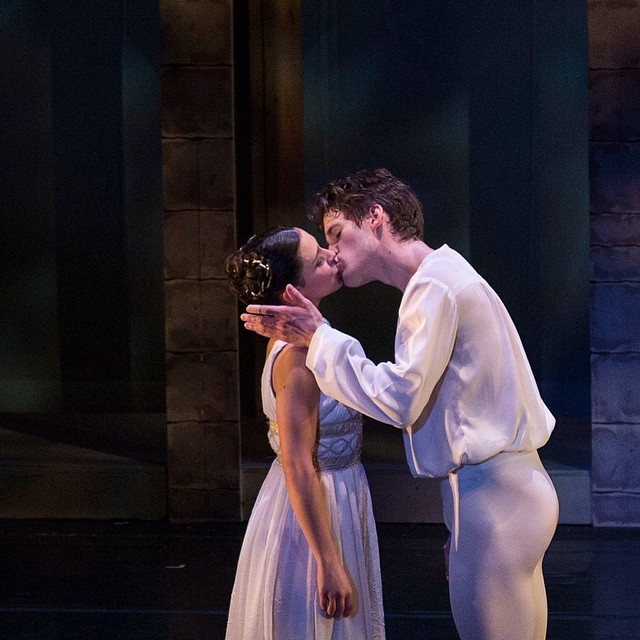
Lucia Rogers & me performing Romeo & Juliet at Fort Wayne Ballet (Photo: Jeffrey Crane)
As a freelancer, you are constantly meeting new people and developing fresh relationships throughout gigs and networking that leads to work. While a shy dancer may take their time to develop relationships once they feel comfortable within a group, a freelancer doesn't always have this luxury. A freelance artist needs to be adept at adapting quickly in the studio, as well as within the culture of the group with whom they are working. For instance, when I was brought in to dance with Fort Wayne Ballet, I had less than two weeks to prepare the role of Romeo. Due to the short period of time to prepare this full-length classic, Juliet and I were already kissing in rehearsal by the second day. If you have issues getting comfortable with your colleagues quickly, you may have challenges adapting to the constant environmental and social changes that are a major part of a freelance career.

Does self-promotion come easily to me and/or am I willing to work to build that?

A popular Instagram post creating choreography at my gym
There are few dancers that are naturally good at promoting themselves for employment. Most of us were taught to speak with our bodies and technique, not our mouths or keyboards. Can you find effective ways to market yourself and the quality of performer you are without appearing that you are an egotistical maniac of a dancer? Do you love or hate social media? Even if you don't enjoy it, you need to be willing to put daily effort into (at least) Facebook and Instagram to keep your face and product on the minds of those in your career field.

Can you stand up for yourself in the studio? What about when it comes to contract negotiations and pay?

Are you a compulsive pushover? Most people don't like pushing too hard when it comes to accepting terms of work. We all want to be working, so we will all be pushovers at a certain point. What I am talking about is speaking up when you are not comfortable with the compromise (or lack thereof) given. It is important that you know how to stand your ground in contract negotiations or how to approach an employer when certain work places issues arise. It is never comfortable speaking up to protect yourself or telling an employer that you aren't comfortable with certain items. As a freelancer, you are responsible for your physical, emotional, and financial health. If you don't think you can handle this type of pressure, you may need to seek work with a company that offers a union contract or an advocate for its dancers.

Are you ready to wear more hats than the word "dancer" implies?

One of the biggest shocks I had after entering my freelance career was the multitude of duties I had to take on in order to become successful in my field. While dancing for a company, all I had to worry about was showing up for class, rehearsing repertoire, and taking care of my body. The last few years I danced with Pacific Northwest Ballet, I added university classes to achieve my Associates of the Arts degree and union delegate duties as a liaison between company dancers and management.

Playing the role of Businessman
Luckily, these activities outside of my role as a dancer began to prepare me for the life of a freelancer. Once I began working as an independent contractor, my focus had no choice but to spread over a vast amount tasks that are necessary to build and maintain this style of career.  Now, instead of having the luxury to completely focus on fine-tuning my technique and preparing for performances, I found myself maintaining this blog and taking on work in my own marketing, research, managing, negotiating, cross-training, physical maintenance, teaching, promotion, and more. A few years into my travels, there was a point when I really missed the luxury of company life that allows dancers to focus solely on their work in the studio and on the stage. While this was quite an adjustment, I am very grateful for the vast education and experience I have received from having to wear so many hats.

Are you truly passionate about dance or is it just something that you've always done?

One thing that really strikes me about freelance work is how revealing the stresses of this career-style are to an artist. Dancers are greatly unique, but especially so in the sense that almost all of us started our path to professional as children. Some of us asked our parents to take dance classes. Others were put into ballet by our parents who thought we needed to burn energy. And there are certainly some dancers who were forced into the studio by overbearing dance parents hoping to live out their unrealized dreams through their children. Due to the range of reasons dancers begin training, many are only dancing because they were good at it and have never known anything else. Like other artists who have been honing their craft since early childhood, a handful of professionals find that they really aren't passionate when the going gets tough. I can almost assure you that there will be intense challenges at some point in your freelance career. If you know nothing but an easy path, you may not realize that you don't have the passion to push through intense difficulties. I have experienced firings, injuries, famines, transitions, losses, more injuries, burnt bridges, burn out, and much more. But I am still here and I can't imagine doing anything else. How about you?

4.19.2016

Over-Promoting on Social Media


If you read my last post, you are already aware that I launched a podcast as a part of the brand new Premier Dance Network. Since that launch, I have had some very exciting things happen. At this very moment, Pas de Chat: Talking Dance is listed as "New & Noteworthy" on the iTunes charts ranking #49 in Arts and #63 in Business. We have had a few hundred downloads and I am really, Really, REALLY excited about it! Of course, I am happy to share this excitement (and continue promoting) on my social media networks; which range from Facebook (my most heavily used) to Instagram (next down the list) to Twitter (my least favorite). And, initially, I saw a mirror-reflection of my excitement in the number of likes, loves, and comments on my accumulating podcast postings. Then, perhaps, the most exciting thing of my launch week happened. Dance Magazine wrote up an article about both my podcast and my sister podcasts (which even included an image of me dancing). In my thrill and happiness, I shared this, too. As I sat back waiting for the scroll of likes to appear on the locked screen of my iPhone, nothing happened. A few minutes passed and making the assumption that there must be something wrong with my connectivity, I opened my screen and tapped on that trusty blue "F" app to see how many notifications I had. None. And nearly 24 hours since I posted, 6 likes. What happened?

I am no stranger to the string of events that happened yesterday. Each time that I have launched a new project (like this blog), I have to remind myself that there is a fine-line between sharing something exciting, using social media as a tool for promotion, and over-saturating my feed with excessive impersonal, promotional content. I have gotten pretty good at the wildly obscure balancing act that is engaging social media. But even experts like myself can fall victim to the circumstances they study and understand.

When I first started using social media back in the days of Myspace, these self-producing content systems seemed like the next best thing to living in the same house with all of your friends, old and new. It was engaging, quick, and direct. And being an artist at the young age of 21, who had lived in 5 states in 5 years as I finished out my training, it was a great way to stay in touch with my peers who also scattered across the country to pursue their passion and art. Once I got spammed off of Myspace and opened the pages of Facebook, I felt that it became even more personal. At one point, I remember watching the news and listening to a story about how social media was beginning to be used as a marketing tool for certain target markets. I remember turning to my Danya and saying, "I can't imagine Facebook becoming one giant commercial." Well, those days have arrived and passed. And for the most part, it is us every day people creating those commercials.

Today, most social media sites share two things. The, sometimes, facade of a personal connecting of people with people and the reality of providing a platform for free (or inexpensive), personalized marketing. Content is most often curated based on complex, mathematic algorithms. We are no longer connected to others and their content completely by choice, but instead see friends content strained through a network of computers that make complex, programmed decisions. Manipulating this system into thinking that we were completely in charge of what was coming to us, opened up the doors for users to see carefully curated content and marketing. Whether promoting a cause, spreading awareness of an ill friend's GoFundMe, or kick-starting a brilliant entrepreneurial idea, people started noticing that they could use social media sites to promote most anything.

I never wanted to use these web sites and apps to promote an idea, a product, or even myself. But then I found myself suddenly without a job and needed to make things work quickly. Once I came up with the idea for this blog, I reluctantly began posting my writings in my feed. I remember the first day that I introduced Life of a Freelance Dancer, I didn't have as much of a following as I do today and my posting received a small amount of excitement and attention. Over the next week, I posted about this new creation of mine, multiple times. And slowly, but surely, people that once seemed quite engaged in my daily musings became disinterested. At one point, I remember posting, "I promise that this is the last time I will promote my new blog this week, but you should check it out," and seeing a friend comment, "Oh, Thank God!" I had a feeling that I was over-promoting, but at that point I knew for sure.

What is one to do when they have a great new project and they want to garnish excitement or support from their friends, family, peers, and acquaintances? By all means, don't be afraid to promote on all of your social media channels. But remain keenly in tune with the response that you get from your networks. If your first post gets 30 likes and a handful of comments, maybe give it a day or two before posting again. If you see the number of responses declining rapidly, even to your regular, non-promotional updates, you are likely posting too often about your project. If you find that you have overreached your friend's promotional limits, step away from sharing for a few days and get back to posting personal content. Remember, like me, most of us first joined these social media networks to connect with our friends. Get back to the basics and remind your friends that they are connecting with a person, and not a business or salesman/saleswoman.

My Instagram Feed
There is no set guideline on how to promote different projects or causes that you are a part of on social media. The challenge of using these apps and networks is that you have to constantly remain aware of the reaction you are getting on your feed. Spikes in excitement don't last for long. But if you notice that the volume of likes, comments, clicks, shares, etc., that you usually get begin to fade to silence, reconsider how you are approaching your marketing and promotional techniques. Remember, Facebook, Twitter, Instagram, and beyond were first and foremost created to connect people to people. If you forget this idea, you may lose one of the greatest sources of support and excitement for your art, work, and self. Your Friends. While you may get a financial or career reward out of it, your dividends in friendship may take a hit. So, don't make the same mistake as I did this past week in a blind leap of excitement. Follow my simple rule for social media success. Post. Pause. Post Again. Happy social media-ing and good luck on using these amazing networks to help you reach your goals and greatest successes!

3.27.2015

8 Way to Renew Your Inspiration

Whether you are dancing in a full-time company or have taken to running your career on your own as a freelancer, there will be times that you may feel like you are losing your motivation. Sometimes, it can be a slow period when it comes to casting and, at other times, it can be the challenge of finding inspiring work. There are many experiences throughout a dancer's development that can push oneself off track to enjoying a sustained and successful career. Often, dancers just need a new perspective or experience to get them on the right track to building and growing their passion. Below I've listed a handful of ways that I have given my dance career motivation a shot in the arm.

- Youtube:

One of the best innovations to change the dance world was the creation of Youtube. Now, I know that this social media platform which focuses on short videos was never meant to specifically work as a venue for dance, but it has surely changed people's access to quality dance footage. When I was a kid, if I wanted to seek inspiration, I either had to raid my dance teacher's video cabinet or look at still pictures of dancers in periodicals. Today, if I want to see an inspiring performance or check out a specific artist, but don't have the money to pay for tickets or travel, I can easily search for the most inspiring performances online.

- Mentors:

Climbing mountains w/close friend & mentor, Boyd Bender
One thing I know for sure is that I would never have had a career if it weren't for a handful of very special adults that took interest in offering me opportunities and advice in my journey from pre-professional to professional. While I am now a full-fledged adult and completely in charge of my own career, when times get hard I know who to turn to. Maybe it was your first dance teacher, a former dancer, a former colleague, a random arts connection you met at a donor party, or a multitude of other people. These people are often the best to turn to for inspiration, as they probably have inspired you many times in the past.

- See a show:

This one can be tricky. A few months ago, a friend asked me if I was going to see a certain performance. I told them, "No. Being injured and seeing a show would probably only be depressing." Well, a few weeks later, I finally decided to see a dance performance and was really glad I had done so. Very few dancers were inspired to have a career without having seen some type of professional performance. If you are feeling a little uninspired, dress up, grab a drink, and go be a spectator in the audience. It may help you find the inspiration you are looking for. 

- Take class from a new teacher:

Sometimes, a lack of inspiration is purely situational. This can happen a lot when you are dancing in a full-time company, taking from the same instructors all the time. When I was a kid, I used to take class from multiple teachers a week. Then I would leave for the summer and have a whole new set of teachers. Add in master classes, summer program auditions, and pre-performance warmups, I had a variety of options to take class. Often, in a company, the instructor options are very few, especially if you live outside of New York City. Many dancers won't leave company class because they are afraid that the Artistic Staff will think that the dancer isn't taking class. If you don't live in New York City, where it is common to go to Steps on Broadway to warm up for your day, do some research about instructors and classes offered in your area. If you are concerned about your boss being upset, maybe try out their class on a day off. Often, a dancer only needs a new perspective to gain new inspiration.

 - Hang out with dance friends:

If inspiration is lacking, sometimes you need to be reminded of who you are. There is no better way to do this than to spend some time with friends who are involved in and equally passionate about your art form. Whether you are sitting and talking about dance or just enjoying the energy of other artists around you, your friends will understand and inspire you to continue growing.
  
- Take class in a new style:

When dancers are students, they often dabble in a multitude of different dance styles. As a youth, I remember thoroughly enjoying differing styles of dance, like Salsa, Flamenco, African, Hip Hop, Irish Step and more. Then we become professionals and we tighten up greatly. One thing I have found, as a pro, is that once we become very good in a niche of our art, we become afraid to step out of that niche and do something that we aren't as good at. Young students have no problem throwing themselves into a class and looking/feeling imperfect. But professional adult dancers tend to stay in their own style and fear looking bad in another. Well, give that up and run to a dance studio to take a hip-hop class or a salsa class. New inspiration is rarely found on a one-way road that you drive down day after day.

- Visit New York City:

This may not be a possibility if you are on a tight budget or live too far away, but a nice visit to New York City is often enough to light that fire that every dancer feels when they visit the Dance Capitol of the World. A few weeks ago, when I was having a less than inspiring time trying to figure out my injury, I hopped on a bus to spend a few days in this amazing city. Almost every professional dancer has some connections here. You can accomplish essentially every topic listed in this post in a short trip. Walk around, feel the vibe, see a show, take from a new teacher, try a new style, hang out with dance friends, and so much more. A trip to New York City is like drinking a few shots of espresso all at once!


- Take a few weeks off:

If all else fails, maybe you just need to take a few weeks off from your art. If you don't have the funds to do this, either start saving or ask around for random, small jobs (Task Rabbit, Craigslist, friends&family, etc.) that may be able to support you so you can take that break. Don't take a few weeks off without a plan to reenter the dance world because it may lead to more time off than you planned, which may be more damaging to this cycle. Plan how you will occupy some of your time and don't put the physical and mental stress that dancers are known to place upon themselves. If you do this appropriately and effectively, you'll come back hungry for more. As they say, "Absence makes the heart grow fonder."

11.29.2014

Why blog when it brings me no income?


A typical blog-writing situation for me
One of the first questions people usually ask me when I tell them that I have a popular blog is if it makes me lots of money. When I answer, "no," many people are baffled that I spend so much effort creating and working on such a time-consuming, journalistic venture. It was never my intention to use this social media platform to roll in the dough. I, initially, thought it would be nice if I could make a little extra cash through my writing. But I always had different, non-monetary motives.

A few years ago when I found myself unemployed mid-season, I immediately had to find a way to keep working. I didn't have a financial cushion to wait until the new dance season started. I desperately needed to find a way to make a living and continue on with my career. At that time, freelancing seemed like the only way to survive. I knew if I wanted to find employment, I needed to market myself. But I didn't know many other ways to sell my product outside of Facebook. While brainstorming up ideas, I remembered how much I used to enjoy blogging on Myspace. From that moment on, I knew that I had to create Life of a Freelance Dancer.

When I first started blogging here, people constantly told me I needed to include Google Adsense to my postings. But I always felt that I needed to spend a solid period of time developing my writing and audience before adding this money-making tool to my site. Additionally, I never really wanted my readers to feel that I was using them to make money with the facade of a blog. So, I gave myself a number, 10,000 views, before I would try to add these ads to my pages of writings.


It took me about six months to reach my goals on viewership, which was right on track for my best-case scenario. Right as I reached my mark, I wishfully opened my browser and started going through the application process to place Google Adsense advertisements on my blog. After a few days had passed, I received an email that unapologetically denied me use of this popular revenue tool. Why? Because the unique niche that made my blog so popular was also so unique that they didn't feel that they had any products that would appeal to my audience.

When I got the news, I wasn't really that disappointed. I didn't really want aimless, materialistic ads flashing at dancers and independent contractors around the world. In fact, I was afraid that the appearance of ads would not only deter building my audience, but that it could turn away the audience I had already cultivated from reading my content.

Lacking any instant financial reward leaves many who have inquired about my blog confused about why I would put so much effort into such a time-consuming activity. There are a few reasons why writing about working as a freelance dancer without any compensation is so worthwhile. The easiest and corniest reason (but still true) would be that I get to help people around the globe. Whether using my blog as a tool in one's own dance career or an unrelated career as an independent contractor, I get to help people move forward in their vocation and navigate tricky situations that are not all that common in the gainfully employed world. Beyond that, I am humbled by the numerous people that have sent me messages from the US to Iran to India and beyond about how my openness has helped them in their careers, times of need, and searches for inspiration.

Beyond all of this sappy stuff, writing about my experiences, successes, failures, and evaluations of situations does help me make a living. While I've never made a penny directly off of LOFD, developing a public persona on an online platform has helped me greatly. I can't tell you how many employers have told me that they have felt much more comfortable hiring me sight unseen and trusting my product because of this blog. Not only that, thanks to all of this, I have been featured in Dance Magazine and Dance Informa magazine and received professional writing jobs, too.

While blogging technically gives me no income, it creates the basis for me to make a majority of my income. Other than all of this joy, warmth, and glory, writing is one of the best ways that I have found to express myself. I get so much out of writing and have learned so much more about myself as a dancer, businessman, and person. For all of these reasons, having a well-read blog is way more valuable than having my readers make money for me by clicking on ads. 

9.23.2014

Why Post So Openly on Social Media

A movement from my ballet, Distinct Perceptions, inspired by a friend sharing about his severe OCD on Facebook (Dancer: Jackie McConnell - Photo: Dave Friedman)

My partner and I have this very specific conversation pretty regularly. "Did you see what Jimmy-Jam wrote on Facebook yesterday?" "Of course I did! How could you miss something like that?" "I can't believe that they would post that for the public to see!" "Well, how is that any different than what I post online?" "It's not...I could never do something like that! I like my privacy..." And that is how it goes. Every day, some people feel the temptation to post anything from their dance movements to their bowel movements, while others will barely share an ounce of their happiest pleasures. When somebody shares information that is socially acceptable, usually something positive (only once or twice though without appearing egotistical) or something mundane, most people move on without mentioning a word. But if somebody posts their lowest point, their biggest vice, their most embarrassing moment, or their struggles, they are often met with uncomfortable opposition or the socially appropriate cold shoulder (with whispers abound). I am definitely an over-sharer when it comes to my online presence. And while it has benefited me and hurt me, at times, I continue to share my thoughts, my lessons, and my life for friends and strangers to read. Why?

Let's start off here. I am a performer. A majority of my life, I have put myself out there on a stage. Sometimes, I get to play myself. Other times, I get to play a character. As a ballet dancer, one thing I rarely get to have is a voice. In the studio, dancers are generally told what to do. On the stage, a dancer doesn't get to tell the audience how they are feeling, what choices they've made, or what decisions were made for them. Beyond that, dancers are judged by their bodies, their strength, and their physical intuition. Rarely their mind.

When I first started blogging on Myspace, I guess I just wanted an outlet. I had just moved to a brand new city 3,000 miles away from home. I had very few friends and very few outlets. If I wanted to express myself, there weren't many people with whom I could openly discuss and assess my new-found adulthood. At the ripe old age of 20, I started using social media. It was almost like having a conversation with somebody who was a really good listener. On top of that, it was kind of like a mini-stage where I could present a performance. But that performance was my reality, my inner thinking, and my real-life personality. Having that outlet made me feel relevantly normal. I could share simple personal things with whomever felt like listening. And since very few actual people wanted to listen at the time, it filled the void and relieved the stress of being somewhere foreign with little support.

I'd take photos when I felt lonely in Seattle - Elliott Bay
As social media has grown over the years, nearly every American has at least dabbled in some form of online platform. This has led to a wide variety of ways people approach online networking. When I first started blogging, I would post about my inner dialogue while sitting on the bus system in Seattle. Sometimes, I would post how I was feeling after a bad set of casting went up. People started criticizing me for sharing how I felt, but in the end I knew it was my choice. When a Principal with PNB came up to me and told me I need to stop writing my thoughts and feelings online, I found it wildly ironic that she was admonishing me while clearly reading a majority of the posts I was writing.

After nearly a year of blogging, I made my first big social media mistake. After a really bad break-up with my first love, an attempt of friends to get us together to potentially reconcile, and another friend dabbing my fresh wounds with bounds of alcohol, I posted a nasty attack towards my former love. It was probably about 3 AM in the morning and by the time I had woken up nearly 6 hours later, that post had been read well over 100 times. I immediately deleted the post and felt ashamed for letting myself stoop to that level. It's the only post I've ever deleted. I learned a lot from that error. But I didn't stop approaching my public posting from the most honest and open place I possibly could.

Over time, I have had a handful of experiences that have been affected by my social media presence. I find that people are initially excited by my postings. It lets them have a better idea of who I am as a person without really knowing me at all. I also find that companies love it when you post something positive. Like, "Such an inspiring day working in the studio today." But, the moment that things start to go negative,  the formerly projected excitement turns into disdainful judgement.

When I hurt my back in 2012 and was having a rough week in the studio with a choreographer who was treating me badly, I wrote a single sentence update about how lost I was feeling. A few days later, my boss (who had previously lauded my social media presence) pulled me aside and said, "You need to watch what you post online. Everybody knows that you are talking about us." The funny thing was that I mentioned no names, mentioned nothing of work, mentioned nothing of my injury. I was just feeling lost. But the second that there wasnt a big :-D on my Facebook, I was committing a foul act.

Sometimes, life is stormy - Mount Baldy, Alaska - 9/21/14
Recently, I have been watching an old friend on Facebook going through a hard time (I can also see that they are getting the support they need). Whether they are dealing with real life issues or having a complete emotional break down, I don't know. But watching this person post the darkest of life's moments for all to see online has been very interesting to watch. My partner keeps saying, "They really need to stop putting all of this for the public to see. It's mortifying!" While my reaction was, "Well, what if somebody else is going through something like this? Why should they be so ashamed to have this experience in public?" There is no right or wrong. But people learn from people. When one person smiles, often you will smile. When you watch somebody in pleasure, you often want to feel that pleasure. When a person cries, how often do people start crying around them? People are moved by people. And for some reason, people will often look down at other people who are experiencing something tragically moving because they don't want to be brought down by that experience.

What living a publicly present social life comes down to is that sentence in the above paragraph, "People are moved by people." Why should someone share what they are experiencing? Because it moves people to feel, it moves people to think, it moves people to act. Sometimes life is amazing. And sometimes, life just downright hurts. Sometimes, your boss makes you feel horrible. Sometimes, your organization gives you an award for being an upstanding employee. By reacting to life publicly, people are offering a real life cinema across the widest web of the world. And there really isn't anything wrong with that as long as you are willing to be open to the judgements, positive and negative, of all of those that interact in your web.


6.19.2014

Create Your Own Blog

Writing this blog
When I started this blog a little over two years ago, I had little idea that it would become a great platform for me to share, educate, and speak out about issues while on the journey of my dance career. In fact, I only really started this blog because I was scared shitless about finding my own work. I knew that I had writing skills and a unique perspective. But I saw blogging more as a personal journal that could potentially be used as a marketing tool instead of a platform for sharing my experiences, thoughts on dance politics, or a handbook for independent contractors of all professions. Yesterday, Life of a Freelance Dancer reached over 50,000 views. And as it approaches 100 posts (this will be #99), I have decided to share some of my secrets about creating a blog and how to write compelling posts that draw your audience into your unique world.

I don't know if it's our age or more of a popular trend within the ballet world, but I have had a great many friends mention to me that they want to start freelancing. Since I started a blog that is unique and contains material that has generally been untouched in the past, I get a lot of people reaching out to me about working as an independent contractor. During a handful of these conversations, more than a few of these dancers have told me that they are considering starting their own blog. They see that I have been successful with it and figure, "If he can do it, I can do it." The problem I often find, though, is that not much more thought has gone into something that can be a monumental task.

The first thing I do when somebody mentions that they are going to start a blog is ask questions. I always begin with, "What is your niche?" The obvious answer for us is dance. But is that enough to be compelling? There are many styles of dance, different types of dancers, and a multitude of tracks that somebody can be on throughout their career. The first thing that a potential blogger needs to think about is finding their niche. This special place one hopes to hold in the blogosphere needs to be one topic in which the blogger has endless knowledge and exponential passion. It may seem like an easy task to sit down and write about a subject here and there, but it is absolutely impossible to maintain one's writings over an extended period of time if the topic doesn't mean the world to you. This is the ultimate reason that most bloggers fizzle out within the first month or two of writing.

Once a writer chooses their niche, they need to take other things into consideration. How often do you plan on blogging? If a blogger plans to write whenever they feel inspired, they are not going to be able to maintain an audience. Even things that people are most passionate about usually swing up and down on the scale of inspiration. When I started LOFD, my plan was always to write one blog post per week. I didn't know if this was feasible, but it seemed often enough to keep people coming back to check in and infrequent enough to keep me from burning out. Two years later, the longest I've gone without writing has been two weeks. And while I wasn't posting during that period, it wasn't because I was uninspired. It was because I was too busy rehearsing or performing to sit down and create content. It is extremely important to post with regularity, as it will help you to maintain your audience. And, believe it or not, if nobody is reading your blog, you are that much less likely to continue writing.

Now that you have considered your niche and time management, why would somebody want to read your blog. Just writing about a specific area of expertise doesn't mean that everybody who has interest in that topic will read what you have written. I have heard people tell me, I'm going to write about me doing this and my review of that and my experience with this and my thoughts on that. My response can come off pretty offensively, but it is one of the most important things to consider. What makes you so interesting? So, you are a ballerina that likes fine dining. Or you have a special knack for knitting leg warmers. But just because you are passionate about something and you shared it on a public platform doesn't make you or your writing interesting. What makes a writer compelling is finding their own unique voice. When you talk to somebody in person, you can hear their vocal inflection as they speak. But reading a smattering of letters jumbled together on a blog with pretty colors in the background and IPhone photos in the foreground does not draw an audience into a story. Creating a unique writing style within your own content will make one far more interesting. Beyond the way that I phrase my posts, I am known to be too openly honest for most of today's common social standards. But the combination of these two things give me a unique voice that makes my writings stand out in ways that others may not. The tendency is for people to watch somebody do something successfully and to attempt to become successful by copying how that person garnered their success. This rarely works. Find what is unique about you, put yourself out there, and people will read what you have to say.

At this point you've created your blog, so the next step is to write your first post. What are you going to write about and how many topics have you already compiled? Most first-time bloggers think that they are going to come up with all of their topics on the fly as they find inspiration. Some people can do this. But for most of us bloggers, we need to compile a list of possible topics for the future. I generally write about what I am experiencing or inspired by in the moment. But as I stated above, you don't always feel equally inspired to write. How are you supposed to write when you don't feel any motivation and it has been days since you last planned on posting? Nothing can destroy your drive to blog more than writing a handful of forced entries. Not only do these posts take too much energy to write, but they often come off as uninspired to readers. And as for maintaining readers with humdrum content, you can think of it like this. If you go to a restaurant once and the food is bad or the service was poor, how likely are you to return to that restaurant? Unless you have already pulled in a loyal following of readers, this can force people to stay away from your content before they even get to the entree. I always have a list of, at least, ten blog topics that I could write about if I can't think of any other subjects. I have gotten to the point where I rarely need to touch that list. But every once in awhile, I'm too busy to be imaginative or in too little of a writing mood to conjure up a new topic.

When trying to summon new material to write about, I find that I write best when I am inspired. What inspires you? I can be inspired by something that I have experienced at a gig, a conversation with a friend about dance politics, or even a random person walking down the street having a conversation with a fire hydrant. I find that when I am truly inspired by a topic, I can write a blog in a wildly short period of time. If I'm less inspired, the task is more tedious and takes a lot more effort. Keep in mind that inspiration doesn't always have to be positive. But, if you are inspired and passionate about something, people will be more likely to enjoy your content. How many times have you seen a street performer present an act skillfully with passion and stood in the street smiling to yourself. If you can write passionately inspired posts, people will respond the same way. And they will come back for more. Who doesn't feel good when they are pursuing something that they feel passionate about?

The main reason that bloggers continue posting in a public forum is because they want people to read their content. If you post and don't tell anybody about your writing, nobody will know it exists. Most people figure that they will simply post their blogs on their Facebook or Twitter. And they think that all of their friends will read what they write and then their friends will share with their friends and their blog will become famous. It unfortunately doesn't work like that. The more you sell your blog in your own social media feed, the more likely your friends are to get annoyed with you. I do post every blog on my accounts, but I don't post about it much more than that. When I first started blogging, I oversold myself to my friends and I instantly saw fewer comments, less likes, and some even deleted me. Using social media successfully is a delicate balance of posting enough, not posting too much, and delivering interesting content that isn't too sad or self-indulged. The best way I find to draw in readers is a combination of social media and Search Engine Optimization (or SEO).

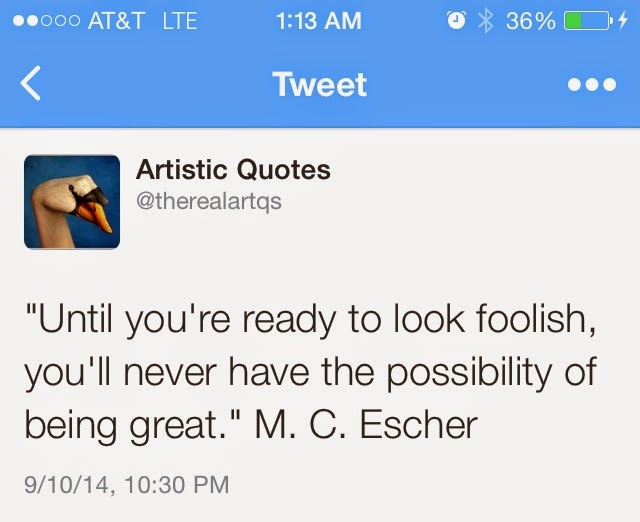
One of my recent Twitter posts
For social media, I always post a link to my most recent blog on Facebook, Twitter, and Pinterest, typically with a quote from my writing. On Twitter, I always make sure that I use hashtags for #dance, #ballet, #freelance, and/or #blog. This allows people that are interested in these topics to find my tweet, even if they don't follow me. Beyond that, I have each individual post linked on a separate LOFD fan page on facebook and on a board in Pinterest. The way my blog is set up, you can only see the most recent post at the top of the page. Most of my other posts are hidden on the sidebar or on other pages of my blog. Since I have spent so much time writing each post, I don't want them to disappear into the blogosphere only to be found when somebody searches a specific topic. On Pinterest, each blog post is pinned to the board like a post it. This makes it easy to scroll through individual pieces versus scrolling through entire pages of writing.

As for Search Engine Optimization, this is where things get a little trickier. I am still on a bit of a learning curve when it comes to SEO. But using blogger, I have a few tricks that I use to increase traffic to my website. SEO is essentially creating pathways to have search engines, like Google and Bing, move your site closer to the top when somebody searches a topic that may relate to your blog. In my posts, I try to find ways to insert links to articles and businesses that are related to my writings. Make sure that you are being honest to your writing with these links. Don't add a random link that has no relation to your work because it is popular. But adding links to other searchable subjects may have your blog showing up when somebody searches for a place, like the School of American Ballet. Also, be sure to add labels/keywords after you have finished your post. In Blogger, there is a sidebar with post settings that allows you to add labels to your content. During my editing process, I search for words in my writing that really stand out as important to the post or names/subjects that are highly searched. For instance, if I wrote a post that included a story about working with Christopher Wheeldon, I am surely going to include him in that list. The more searchable your blog is, the more likely you are to gather readers. And the higher the viewership, the longer the life of your blog.

At the end of the day, you may ask me why I spend so much time sitting at my computer having a conversation with my keyboard? I never thought of myself as a writer until recently. Obviously, the excitement of seeing the number of views on my content tick higher and higher contribute to my long stream of writings. But the reason that I continue blogging from week to week is because it gives me a platform to express my thoughts, views, and explorations to people that I don't even know. I can help somebody I've never met learn how to get a job or cope with shitty conditions in their workplace. I always tell people that criticize me for sharing so much about my personal and not-so-personal life online this. There are so many times in life that we feel alone, like we are experiencing something all by ourselves. Those of us that have a platform to share MUST do so for those people. At some point, somebody has experienced what I have along my journey through my career and life.  Sometimes, though, they don't realize that they weren't the only one to have ever experienced it. If putting a little too much of myself out there helps somebody else in their time of need, I'm more than happy to help. With all of this said, if you've got it in you, GET STARTED WRITING!

Don't be afraid to express yourself

10.09.2013

What I learned during my week off social media

I've talked about it before. I am a social media whore. I started on Myspace back in 2004 and was blogging a few weeks later. Since that first fateful day that I logged in, I haven't logged out since. That equals nearly nine years without more than one or two unplanned days without changing my status, checking up on an old friend that I haven't talked to in years, or adding a fun photo to Instagram. Well, this all changed a week ago. I was feeling down, perhaps even in a weird funk. I tried changing my routine, I discussed details with friends for insight, and I stared at the ceiling whilst laying in my bed for hours trying to figure out why I had been feeling off for months. After changing things up over and over again, I finally decided to take a last resort stance. Whenever I felt down, I turned to social media. But this time, I would turn away from it. My comfort. My outlet. My avenue for communication to all of my friends since I travel so much. One week without it. And boy did I learn a lot. I was surprised that all of these lessons were not about my social media use. The extra time that I had available allowed me to evaluate other aspects of my life.

My first time back on Facebook in a week
 - I try to focus in on my more interesting or off-the-wall thoughts just so I can post them to get a reaction from people on social media.

- Life without social media forced me to spend more time with my own thoughts and my own issues. Sitting on social media for hours is almost numbing.
 
- I interact so much because few people reach out to interact with me. I seek this because I don't have a regular workplace to have face-to-face interactions.

- I actually hate self-promoting, but need to do it to keep my name out there and find work.

Dressing room Puck says "HIRE ME!"
- One of my non-social media specific realizations. Dance is like any relationship, it requires a lot of work, physically and emotionally.

- The notifications and messages you receive die down very quickly once you stop posting. Interaction actually slows down almost immediately. When you start posting again, it takes time for people to start noticing.

- In using social media often, I assume that I have an interesting perspective that people want to hear.

- Only one person reached out to me beyond social media during the week that I was off (Big ups, Emily!). I even posted my email address and offered my phone number before signing out to anyone who wanted to communicate with me.

- I waste a lot less time and am early to arrive places at least 50% more often than when I am using social media regularly.

- I, surprisingly, only really started missing social media on the fifth day after stopping.

- I don't really enjoy Twitter...at all! I only use it because so many other people insist on it's usefulness.

- I don't even have to think about going on social media. I, even, typed it into my browser a few times and clicked enter before I even knew I had arrived on a site.

- Sometimes, social media use is just like having too many drinks. I will sit on it for hours, so I don't have to be mindful of the way that I am feeling at that moment.

- I love Instagram because I feel like it is like implanting a camera inside my head for everybody to get an idea of what life looks like through my eyes.

My view walking home from teaching at Koresh via Instagram
- I didn't care about the content in my Facebook feed nearly as much once I returned. I started to scroll down and, before I knew it, was clicking on my browser to go to another website. In fact, my eyes glazed over and I got bored almost immediately. I still haven't figured out why I continue scrolling down endlessly. Habit?

- I had way less use for my smart phone and would sometimes sit and stare at it trying to figure out what to do with it. If I didn't use social media, I'd consider getting a cheap phone with few perks.

- Looking at Facebook after a week off is like getting the mail. You get a few pieces of good mail, some bills, and a bunch of circulars that you wish you never got and want to throw away immediately.

- Everybody lauds your exit, cheering you on and congratulating your achievement. But by the time you return, most people have already forgotten you exist.

- Articles that are posted on Facebook tend to be less fact and more social commentary articles. Almost as if it is a platform to make a statement about one's beliefs, morals, and character.

- Instant gratification is never as rewarding as patience.


10.03.2013

Why artists are expected to have little self-value?

I have been taking a hiatus from all forms of social media for the past week. Riding on the sweet success of Life of a Freelance Dancer accruing 25,000 views, I felt that it was time to take a week away from marketing myself as a product and to sit back, relax, and assess where I am going in this career. My first week without any form of social media in my daily life since 2004 has taught me a lot and given me a fresh new perspective on my intentions and actions, which I am grateful for at this time in my life. In less than a week, I leave for Los Angeles to rehearse for and perform in the launch of Barak Ballet. And in less than two weeks, I turn 30 years old. As I grow older, I grow wiser and my dancing has more value. But what I've also learned over the past week is that certain parts of the dance world don't agree with this.

(I would like to start this post with a disclaimer. This writing has some delicate moments and harsh realities that could be seen in the wrong light. I have no intentions of harm or dischord in publishing this, but I feel that this is a sensitive topic that needs to be discussed.)

Guesting w/Ballet Nova for Nutcracker (Photo: Ruth Judson)
Tis the season for Nutcracker to start calling. I have had a handful of offers through friends and employers that found me through my website. While I always appreciate being contacted to perform, I can't take every offer that comes my way. Sometimes, I am already booked during a period that my services are requested. At other times, an offer may not be substantial enough for the work that I need to put in. While I am passionate about what I do, this is how I make my living and I need to be picky about choosing the best option for myself, artistically and financially.

Last week, I was blown away by a situation that I found myself in. I had been contacted with a request to perform in a school's Nutcracker. While their offer was very generous, their consideration of what constituted a paid performance was not cohesive with mine. In typical fashion, when an offer is not agreeable for me, I either counter-offer or gracefully step out of the negotiation. On this occasion, I felt we could work something out and decided to counter-offer. Instead of receiving a response of agreement, negotiation, or decline, I was sent a scathing four paragraph email that badgered me, tore apart my resume, and tried to devalue my worth. This was all from somebody I had never met and that had never seen me dance. To be completely honest, I was so shocked I couldn't even be upset. Instead of reacting to this difficult response, I ingested the content as a learning experience and replied with a brief note thanking them for taking me into consideration and suggested that they move on to their other options.

While I didn't take this unprovoked attack as a truth, I did gain a lot of insight from my many days of processing this unnecessary response. As a dancer, you are expected to be open, available, and humble. While you are expected to respect the process and the system, that process and system does not have to respect you. I've learned during my 11 years as a professional that while there are human emotions involved in the interactions that take place in the creation of a performance, that in the end, the production takes full precedent over any situation that may involve emotion. Casting, injury, life events, arguments, money, and more. In the end, nothing matters except that the best product be put forth onstage.

When I was in my final year of training at the School of American Ballet, I very clearly remember ingesting one of the most shocking statements made by one of my most respected teachers. "Ok. So you're grandma died this morning. But that person sitting in the audience paid $200 for their ticket. They don't care how you are feeling inside. They want to see a good performance." As difficult as this was to hear, it was true. I've seen this exact scenario play out. I've experienced this scenario myself. Most dancers that have made it to a professional level understand how this system works. And along with all of the other difficulties dancers face, they still put on a good show.

Now, this is where things get complicated. When a dancer works for a company, they only have to deal with production aspects of putting on a show. As a freelancer, there is a bit of work that needs to take place before both parties get to move on to the production stage of dance. Negotiations take place, which can be as simple as an accepted offer or a fine-tuning of details. While some employers understand that the art of negotiating is impartial, others can feel it is an attack on an organization's character. In these situations, where you determine pay, terms of your stay, your workload, and more, certain emotions can be brought forth that have nothing to do with a negotiation. And more often than not, these feelings come from a place that we all started. Our training.

I have discussed this before, but it is important to reiterate it again. Dancers are taught from a young age to be submissive. They are taught that they are expendable and that there are hundreds of other dancers that want their job. For this reason, a majority of the dance world feels that one should be grateful for any job opportunity that arises. It is common for a company to feel that it is a privilege to work with them, less so an accomplishment of one's hard work. But when a dancer leaves the submissive role and tries to stick up for their value or rights, they are suddenly egotistical, hard to work with, and a diva. A prime example of this would be when I worked for an employer that loved me dearly and that I loved dearly as well. While we had a mutual respect for each other, there were often jokes that I was a diva when I would bring up situations that were not commonplace in most of the companies I have danced for. While we were able to laugh at this, I was still gently nudged that I was breaking "dance code" for speaking up for things like not having a break for nearly two hours.

As freelancers, we have to take care of ourselves. If we get hurt on the job, we don't have the privilege of having worker's compensation pay our salary and provide our medical care. If we don't negotiate a comfortable living environment at a home-stay, we have to sit tight or uncomfortably complain to try to find a more agreeable resolution. If we don't negotiate a respectable salary, we can't pay our bills. But it is not uncommon for dancers to be made an offer and expected to accept with full appreciation that they were even given an opportunity to dance. This needs to change.

One of my audition shots - circa 2002 (Photo: Roe O'Connor)
When I was 18 years old, I was offered a contract in the corps of Colorado Ballet. My starting salary was $500 per week. By the time I left Pacific Northwest Ballet, my salary was well into four figures per week. The company I left PNB for offered me nearly one third of what I had been making out northwest and I graciously accepted without negotiation. I began freelancing while dancing with that company. During this time I realized that not only could I barely sustain myself on that salary while I was working, but I couldn't save any money to sustain myself when I wasn't working. And now that I am freelancing full-time, aside from Nutcracker season, most of the work that I am offered usually pays at or below the offer I was made for my very first job. Eleven years after starting my career, I am performing at a higher level than I did at 18 years old and I am, at times, forced to feel ashamed for trying to ask for a livable wage. It is not a matter of asking whether or not this is fair. It is more a matter of asking when those that were once in this position and moved up to leadership roles will respect and appreciate what dancers go through in this career and that their survivability should come before their production.

I am not writing this post to call anybody out and there are some employers that I have worked for that have been greatly generous in their efforts to support me and the other artists that they employ. I think it is important to raise awareness that artists and their value are often abused by the ideals that are imposed by their very training. While some of the ideals that are taught as a student are necessary to create beautiful artists in the most difficult of fields, these ideals need not to be imposed upon fully-grown artists that have worked years to develop and perfect their craft. An artist's value should not be taken lightly. Be grateful when offered work, but don't accept work that is not grateful back. Take a job where you will grow or find value in raising the level of a production, but don't let somebody tell you that your experience doesn't qualify you to respect yourself. Dance as if nobody is watching, but don't dance if nobody wants to foot the bill. While you can't control who is going to value you and your work, the best one can do in their career is to do exactly that for themselves.

(This post is dedicated to James Fayette, former New York City Ballet Principal and current New York area dance executive for AGMA, who was recently injured in a senseless attack in Riverside Park in Manhattan this past week (article). James and I worked together when I was a union rep at PNB. He taught me a great amount of what I know about fighting for dancer's rights. LOFD wishes him a speedy recovery)