Showing posts with label Colorado Ballet. Show all posts

3.11.2017

Checklist: Do You Have What It Takes?

Ali Block performing w/Columbia Ballet Collaborative (Photo: Eduardo Patino)
I was sitting in the hallway of Barnard Hall at Columbia University last week waiting for my rehearsal to begin. Per usual, one of the dancers in my new work for the Columbia Ballet Collaborative's 10th Anniversary production showed up a little early to prepare for rehearsal. Ali Block, a former dancer with Eugene Ballet and Texas Ballet Theater, is now studying at Columbia while enjoying a freelance career in New York City. As she was preparing for rehearsal, we struck up a conversation about her transition from full-time company work to school and freelance life. I was taken aback (and maybe blushed a little) when Ali mentioned that she had been considering freelancing for awhile, but didn't think she could do it until she found my blog here. It has been really heart-warming over the past year as more and more dancers and non-dancers alike have told me that my work here on Life of a Freelance Dancer has inspired them to push themselves inside and outside of their own careers. I've always written on here to help dancers, artists, and independent contractors walk the tricky path that is a freelance career. But I never really considered that I might be helping people make the decision to launch their freelance career until Ms. Block used those exact words.

In typical LOFD fashion, I'm letting this moment inspire the content I'm creating to share with you. And I figured why not head back to the root of this media platform, helping freelancers freelance. So, inspired by the word that I inspired this lovely dancer to cross that line and embark on a career in freelance work, I would like to offer you a checklist of items to ask yourself if it is time for you to jump into the freelance pool to drive your own career and success.

Have I completed enough of my training to offer my best product possible? Am I anxious to start dancing professionally when I could really benefit from more time refining my technique and skills?

If you have already danced professionally or have auditioned for companies and received interest without solid offers, you may be ready to take the plunge. If you are still in the pre-professional period of your training, don't mistake your intense drive to have a professional career as a reason to embark on seeking employment as an independent contractor too early in the game. Many dancers are willing to forgo pertinent training in the formative late teens and early 20's because they feel like they should already be working. Try to be realistic about your training and skill level and don't be afraid to train an extra year or two. You can make up for time in your career, but you can't always make up for lost training. In fact, I gave up a corps contract with Colorado Ballet at 18 years old to train for a year at the School of American Ballet. The next year I was offered a position with Houston Ballet, which was a nice step up. I would say it was definitely worth the wait and additional education.

Do I have the motivation to make sure that I am taking class and cross-training regularly or do I need the push of an employer/potential casting to keep me coming to class to stay in shape?

Not every dancer is able to stay self-motivated to stay in shape. Just like taking an educational online/correspondence course, some people don't perform well without direct, in-person oversight to stay on track. If you find that you easily fall off track without outside motivation or if your response to feeling down is to avoid the activities necessary to perform at your highest level, you may want to reconsider freelancing or work on ways to improve your self-reliance. The best freelancers are the most self-motivated, driven people you will meet.

Am I outgoing or extremely sensitive when being thrust into new environments?


Lucia Rogers & me performing Romeo & Juliet at Fort Wayne Ballet (Photo: Jeffrey Crane)
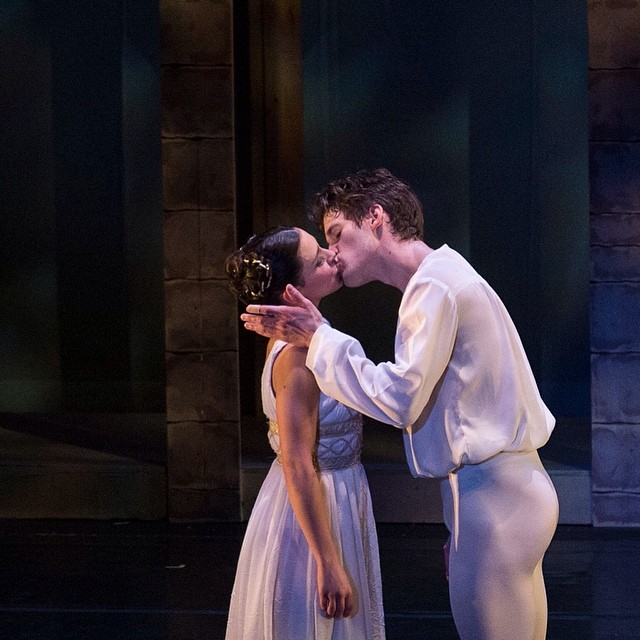
As a freelancer, you are constantly meeting new people and developing fresh relationships throughout gigs and networking that leads to work. While a shy dancer may take their time to develop relationships once they feel comfortable within a group, a freelancer doesn't always have this luxury. A freelance artist needs to be adept at adapting quickly in the studio, as well as within the culture of the group with whom they are working. For instance, when I was brought in to dance with Fort Wayne Ballet, I had less than two weeks to prepare the role of Romeo. Due to the short period of time to prepare this full-length classic, Juliet and I were already kissing in rehearsal by the second day. If you have issues getting comfortable with your colleagues quickly, you may have challenges adapting to the constant environmental and social changes that are a major part of a freelance career.

Does self-promotion come easily to me and/or am I willing to work to build that?

A popular Instagram post creating choreography at my gym
There are few dancers that are naturally good at promoting themselves for employment. Most of us were taught to speak with our bodies and technique, not our mouths or keyboards. Can you find effective ways to market yourself and the quality of performer you are without appearing that you are an egotistical maniac of a dancer? Do you love or hate social media? Even if you don't enjoy it, you need to be willing to put daily effort into (at least) Facebook and Instagram to keep your face and product on the minds of those in your career field.

Can you stand up for yourself in the studio? What about when it comes to contract negotiations and pay?

Are you a compulsive pushover? Most people don't like pushing too hard when it comes to accepting terms of work. We all want to be working, so we will all be pushovers at a certain point. What I am talking about is speaking up when you are not comfortable with the compromise (or lack thereof) given. It is important that you know how to stand your ground in contract negotiations or how to approach an employer when certain work places issues arise. It is never comfortable speaking up to protect yourself or telling an employer that you aren't comfortable with certain items. As a freelancer, you are responsible for your physical, emotional, and financial health. If you don't think you can handle this type of pressure, you may need to seek work with a company that offers a union contract or an advocate for its dancers.

Are you ready to wear more hats than the word "dancer" implies?

One of the biggest shocks I had after entering my freelance career was the multitude of duties I had to take on in order to become successful in my field. While dancing for a company, all I had to worry about was showing up for class, rehearsing repertoire, and taking care of my body. The last few years I danced with Pacific Northwest Ballet, I added university classes to achieve my Associates of the Arts degree and union delegate duties as a liaison between company dancers and management.

Playing the role of Businessman
Luckily, these activities outside of my role as a dancer began to prepare me for the life of a freelancer. Once I began working as an independent contractor, my focus had no choice but to spread over a vast amount tasks that are necessary to build and maintain this style of career.  Now, instead of having the luxury to completely focus on fine-tuning my technique and preparing for performances, I found myself maintaining this blog and taking on work in my own marketing, research, managing, negotiating, cross-training, physical maintenance, teaching, promotion, and more. A few years into my travels, there was a point when I really missed the luxury of company life that allows dancers to focus solely on their work in the studio and on the stage. While this was quite an adjustment, I am very grateful for the vast education and experience I have received from having to wear so many hats.

Are you truly passionate about dance or is it just something that you've always done?

One thing that really strikes me about freelance work is how revealing the stresses of this career-style are to an artist. Dancers are greatly unique, but especially so in the sense that almost all of us started our path to professional as children. Some of us asked our parents to take dance classes. Others were put into ballet by our parents who thought we needed to burn energy. And there are certainly some dancers who were forced into the studio by overbearing dance parents hoping to live out their unrealized dreams through their children. Due to the range of reasons dancers begin training, many are only dancing because they were good at it and have never known anything else. Like other artists who have been honing their craft since early childhood, a handful of professionals find that they really aren't passionate when the going gets tough. I can almost assure you that there will be intense challenges at some point in your freelance career. If you know nothing but an easy path, you may not realize that you don't have the passion to push through intense difficulties. I have experienced firings, injuries, famines, transitions, losses, more injuries, burnt bridges, burn out, and much more. But I am still here and I can't imagine doing anything else. How about you?

11.02.2014

How Failure and Risk Helps Me Succeed

A few months ago, when I walked into the advanced ballet class at Alaska Dance Theatre on a warm summer afternoon, I am pretty positive that I caught a few of the kids off guard. I am far from an easy instructor. In fact, I can initially come off a bit harsh in my teaching methods. I'm no bullshit and I will tell a student exactly what I saw. If I truly think they did well or if I have seen marked improvement, I will tell them. But I don't really care to coddle students, patting their backs with comfort, or telling them that it is OK and maybe they'll get it next time. At the time, there wasn't much room for nonsense, anyway, because I wasn't even sure how long these kids would get to have me as their instructor. After what was probably a shockingly difficult barre that required exact precision or a restart to the beginning, I stood in front of the class and told them this. "I want you to fail in my class. Ballet class isn't about succeeding. It's about trying the same step incorrectly multiple ways until you find what works for you. Trip, fall, hold your leg until it is shaking with exhaustion. The studio isn't a place to constantly succeed. It is a place to fail, so that you can ultimately become successful." I don't remember if an instructor ever put it to me this way, but perhaps I feel this way because this is how I live my life outside of the studio.

Attempting to get a good shot as the sunrises over Masada & the Dead Sea in Israel
I've been dancing my whole life, but I didn't fall in love with ballet until I was 15 years old. I was a jazz competition kid who just happened to get bit by the ballet bug while working with choreographer and former New York City Ballet and American Ballet Theatre principal Robert Lafosse. Once I fell in love with ballet, there was no stopping me from achieving a career. With that said, there were countless times that I was told to give up my ballet dreams and head in the direction where I excelled, jazz and musical theatre. Each time I was given that talk, sometimes from the people I most respected, it pushed me to work harder. After finally succeeding at getting into Houston Ballet's year-round program, I probably took the first major risk of my career. After accepting my offer to attend and an August summer intensive with ABT, I came home with three days to pack and head to Texas. As I tried to mentally prepare for a move that I had been waiting over a year to do (I was accepted the year prior, but my mom wouldn't let me go), I slowly began to feel that I shouldn't isolate myself in the middle of the country during the last year or two of my training. I begged my mom to let me risk this opportunity and we drove to New York City to audition for the School of American Ballet year-round program. We drove to Lincoln Center, I auditioned, and the next day I got my results directly from the horses mouth. "No. The notes say, generally poor technique and extremely large quadriceps. Goodbye." I was beside myself!

After this crushing failure, I could have easily jumped on that flight and began training. But I just couldn't bring myself to leave. One day later, we drove three hours south to the Kirov Academy of Ballet. After a private audition, the late director stated in broken English, "Very slow year for boys. One third scholarship." This was far from my full ride to the Houston Ballet Academy and way out of the financial abilities of my family, but we were able to get a sponsor for my first month in the academy. As I headed down to the Kirov, I knew that I had to get greater sponsorship to continue my training at the school, but I felt hopeful that I was still close enough to New York City to feel connected to the center of the dance world. Then, two days later, September 11th happened, my sponsor froze their assets and I was left with an impossibility to continue my training. After the school graciously allowed me to remain for the first two months, they eventually decided to put me on full scholarship and I finished out my year of training.

At the end of my time at the Kirov, I had obtained a corps de ballet contract with Colorado Ballet. While I was ecstatic to begin my career as a professional. I had also been accepted to the School of American Ballet on full scholarship for their summer intensive. SAB was my dream and it had eluded me until this point. Seeing four students who trained at SAB perform in the Nutcracker that Robert Lafosse had choreographed was the defining inspiration that changed the trajectory of my career. I knew that I had to take this summer opportunity to see if a year-round option opened up. If this happened, I was willing to delay my career to live my dream. I called SAB and asked if they were considering me for the year-round program. They told me to take the job with Colorado Ballet because they couldn't promise me anything. So, I excitedly, yet reluctantly, signed my contract and started looking for a place to live in Denver.

A few months later, I arrived in Lincoln Center to finally realize a 5-week version of my dream. After three amazing days working with teachers I had only read about in Dance Magazine, I was pulled into a conference room along with one other classmate. There I was with one of my peers being the first two dancers asked to stay for this world-famous year-round program. I was committed to Denver, but my dream had just arrived. There was no way I could turn down this opportunity, even though it meant I had to train for another year, as well as destroy a very positive connection in the dance world. I promptly called up the director of Colorado Ballet and profusely apologized as I explained that I had to follow my dream. That next year at SAB changed my life as a dancer.

SAB workshops 2003 (Photo: Paul Kolnik)
One ironic part of my path is that turning down Houston Ballet Academy to train at two other schools only led me to get a job dancing with Houston Ballet. I had an interesting year working as one of Stanton Welch's first hires as an Artistic Director. At contract time, Stanton doesn't typically offer re-engagement to any apprentice across the board. AGMA states that dancers can only spend one year with the company as an apprentice, so they either need to be promoted to corps or let go. Typically, the director waits to see amongst the corps who will stay or leave and, only then, starts to promote the apprentices into the corps. When we all were"let go," I didn't feel comfortable waiting around to find out if I would get hired or not. I quickly obtained a contract with Pacific Northwest Ballet and Boston Ballet and signed with PNB. I still wonder to this day if I would have been offered a corps contract, but I was ready to move on to a more positive environment in a more metropolitan city.

My time at PNB has been well-documented in this blog. It had it's mix of highs and lows. While I was secure in my position and well-respected as a union delegate, I was itching to experience something new. I risked all of this security and seniority to try my hand at working with a fledgling, start-up company. After a great first few months, I injured myself and the company didn't support me. I was eventually fired by that company, which I consider one of my greatest failures. It wasn't so great only because I had moved my life to Philadelphia, but more so because I had given up so much to take such a huge risk.

Taking risks daily
While I gave up all of my security and lifestyle to expand my reach and possibilities as an artist, I was now stuck in Philadelphia, burgeoning on poverty, and injured. In these dark circumstances, I had to find a way to survive. This brought me into freelancing, choreographing, writing, teaching, and traveling. If I hadn't experienced the failure that I did, I don't know if I would ever have traveled the country to dance, written articles that have been published in periodicals, been featured in dance publications, or directed an organization 4,000 miles away from home. If I had stayed at PNB, I would probably be stuck in similar circumstances that I was in nearly four years ago.

As I begin to close the chapter on my most recent risk-taking failure, I am curious where life will lead me next. I took a chance to do something that I wasn't sure if it would be a great or poor decision. While I could look at the whole experience as an utter failure, what I am realizing is that my life is much like a dance studio. I spend each day of my life exploring different ways of experiencing this wild career and testing out ways of achieving my best through trial-and-error, or failure. Some things have worked out perfectly on the first try and some things have failed immediately. But in the end, the knowledge that I have gained and the growth I have had will only make my future experiences more successful. Failure can have such a negative connotation in our culture. But I just don't really see it that way. It takes practicing a pirouette ten-thousand times to finally achieve the perfect one. And, sometimes, right after that perfect pirouette, you fall hard on your ass, get back up, and try to make it perfect again.

My greatest success at Alaska Dance Theatre

12.04.2013

Is it ever appropriate to burn a bridge?


A beautiful bridge I found while freelancing in Rochester, NY
Growing up in a small local school, I gained a different perspective than what I may have gotten had I been part of a large institution. Being the only male at my studio over the age of 10 meant that I got a lot more push and direct advice than most dancers get during their training. While I received multitudes of direction throughout the years I spent honing my passion for dance at the Chester Valley Dance Academy, the most repetitious guidance I received was from the director of the studio. "Barry, you must never burn a bridge. The dance world is small and you never know who knows who."

This advice is greatly true, and I fully agree with it. Yet, I disagree, as well. Before I get to my point, let me put myself on the line. Hello. My name is Barry Kerollis and I may be one of the more controversial dancers you have ever met. This statement will take some explaining. While I have always relied on the above advice, I haven't necessarily followed it, albeit unintentionally. Avoiding burning bridges is a priority and fear of mine. Yet, I have done it more than many other dancers. Each time it has happened, it was never my intention. Perhaps, a misunderstanding, hunger for maximum achievement, or out of self preservation. I want to share my honest story openly to explore this subject objectively and help others understand and learn from my experiences. And, is it even possible to never burn one bridge in this dance world?

Perhaps, the first time I ever burnt a bridge, I was a mere 18 years old. I was on the verge of graduating from the Kirov Academy of Ballet. I was kind of an underdog. Upon entering the school, I was technically behind everybody and my body lacked the beautiful classical line of every other male in the school. It came as a surprise when the director of Colorado Ballet came to watch class and offered me a full company, corps de ballet, position for the upcoming season. At the same time, I had finally made it into my dream school, the School of American Ballet, for their summer intensive. Gaining acceptance into SAB is actually what inspired me to focus on ballet at the age of 15. Three years later, it finally happened and I was set on getting the full experience.

As soon as I received my letter of acceptance, I called SAB and mentioned that I had been offered a contract with Colorado Ballet. I told the school that I had dreamed about spending the year there and would turn down the offer to become a professional to have that chance. They told me that acceptance into the summer program didn't guarantee a spot in the year-round program. They suggested I not risk losing my job offer and to sign the contract to ensure that I had something to do the following season. So, I signed my contract, sent it in, and started searching for an apartment in what I thought to be my new home, Denver.

At the end of June, I moved into my summer home in the dorms at Lincoln Center. After the first few days of the program, Jock Soto pulled me into a conference room with Michael Breeden, current Miami City Ballet dancer, and Peter Boal. They told us how much they enjoyed seeing us in class and offered both of us to stay for the year to study with them. These talks usually didn't happen for a few weeks, so the two of us were extremely excited to get "the talk" so soon. For me, I was filled with mixed feelings. Excitement that I had finally achieved a dream and goal of mine, mixed with fear and confusion that I had to choose between my dream of training at SAB or starting my career as a professional. I spent a few days mulling over this decision and determined that I couldn't turn away from what inspired me to focus on ballet in the first place. I called up the director of Colorado Ballet and, as apologetically as I could, broke my contract for the upcoming season. The director told me that he understood my decision, but was very disappointed
Puss & Boots w/ Cassia Phillips - SAB workshop 2003
that I was breaking a promise that I had put in writing. I still feel awful that it had to happen this way, but I couldn't live with the regret that I would have if I had missed this opportunity. In the end, I believe it was one of the best career decisions that I have made. Not only did I get a great school to add to my training experience, but I learned a completely different style of ballet and made new connections that wouldn't have been available to me in a classical company that was more isolated than many other companies.

The second time I burnt a bridge was less complicated than my first. After a very productive year training at the School of American Ballet and doing 14 auditions for companies, I had been offered a handful of contracts. The offer that most piqued my interest was to join Pennsylvania Ballet's 2nd company, as it was the best company I had been offered to dance with and close to home. I emailed the director of the 2nd company and stated that I accepted their offer and asked that they send a contract to me. The day that my contract arrived, I received a call from Stanton Welch offering me an apprenticeship with Houston Ballet. Not only was this a more substantial company, but the position they offered was with the company and not a smaller training arm of a company. I promptly called Pennsylvania Ballet and told them that I was going to accept the offer with Houston Ballet because I had not yet signed the contract to dance with their 2nd company. The response was not the understanding that I expected. I expected there to be disappointment when I called, but I didn't expect to be told that they weren't pleased that I had made the decision and fully expected me to follow through with my word. Being a naive teenager, I thought they would understand why I would take a higher position with a better company. Alas, they didn't. While they didn't completely put me off in the years to come, after auditioning again for the company years later, they eventually stopped allowing me to take company class. Essentially, the term many of us have heard, I am blacklisted.

A few years ago, I had the unfortunate experience where I didn't realize a bridge was being burnt until it had already burnt, collapsed, and fallen into a deep lake of despair. I had experienced an injury with the company that I was dancing with in Philly. They had kept information secret from me that prevented me from getting assistance to recover from this injury. After working through a freelancing opportunity in pain with assistance from that company to get therapy, I returned for the next program still in pain. I made the mistake of remaining quiet and trying to dance through it. I knew I couldn't afford to take care of it and I had already put myself out there asking for assistance. I was put off and learned to stay quiet. At the same time, a less experienced choreographer was creating a piece on us to be performed at a major dance venue in New York City.

Throughout the process, I was having difficulty with my dance partner, my pain, and the complexities of her style of choreographing that was newer to me than the other dancers in the company. Instead of supporting me through the process, the choreographer switched back and forth between ignoring me and making less than respectful comments towards me. I did my best to deal with the stress silently, as dancers are often taught and expected to do. But after a week of this situation, the pressure came to a helm. The choreographer yelled at me, claiming that I was marking a step that I had not been. The conversation went like this. Choreographer: "What is your problem? Me: "I don't understand what you are asking me." Choreographer: "You are really starting to piss me off." Me: "I really don't understand what you are talking about." Choreographer: "Why are you marking?" At this point, I lost my cool and started fighting back. The pressure of trying to be respectful and trying to respect myself became too much and I defended myself loudly in front of everybody else. After a long private conversation following the outburst, we returned to the studio with the agreement that the choreographer would be a bit more clear in her process. My efforts to ease the situation didn't work. To prove to her that I wasn't marking, I danced beyond my threshold of pain and made my injury far worse. This sped up the process of burning one bridge that eventually burnt many.

That day will always be a big day in my life. I broke dance law. I lost my cool, I lost my submission, and I created a sour relationship with a choreographer, teacher, and repetiteur of works by the very choreographer who inspired me to consider switching my focus to ballet. Not only that, the choreographer and the director of the company were close friends. Throughout all of this, I also came to realize that I really couldn't continue to dance through my injury. It was much worse than it had been prior to this argument and I feared that if I continued to dance, I would have to pull out of the program closer to the performance dates and that I could possibly incur permanent damage. I decided to take myself out of the program, which eventually led to the company unfairly, and I believe illegally, firing me. There were many complications that came out of the burning of this one bridge. But was it right for me to defend myself as a person, not a dancer? Was I valid in defending myself, effectively burning this bridge?


Dancing my own work in the Philly Fringe exploring the situation that led to me losing my job - Gated Lies (Photo: Bill Hebert)
Posing the above question brings up many more questions. When is it appropriate to burn a bridge? If you burn a bridge, how badly will it affect you? And, most importantly, in such a short, competitive career, is it impossible not to burn a bridge or two along the way? I'm still trying to figure all of these things out. When I burnt my bridge with Colorado Ballet, I felt that the company was isolated enough to avoid too much damage to my reputation. In the end, the director was fired from the company and my options grew exponentially from my decision. When I burnt my bridge with Pennsylvania Ballet, I had the chance to dance with 2 of the greatest companies in the country for 8 years. But, at the same time, I am back in Philadelphia without a company to call home, and there is no chance they would consider me to dance with their company as long as their director remains at the helm. In the last situation, I burnt a bridge protecting and defending my integrity and body as a dancer and person. But, in the end, I injured myself further (though revealing that they had been hiding workers compensation from me, which allowed me to get better), lost a potential avenue to working on choreography that inspires me, lost my job, lost some friends who didn't want to be seen associating with me, and lost a handful of opportunities to dance in Philadelphia (since the company directors are so closely tied to a handful of dance organizations in the city).

So with all of this information, I ask if it is ever appropriate to burn a bridge? And returning to the original question: Is it possible to never burn one bridge in this dance world? I feel that it is impossible to give a proper answer. If you burn a bridge for a dream opportunity, is it worth it? If you burn a bridge to protect yourself from somebody that is treating you poorly, should you defend yourself? These are more questions of character than they are definitively yes or no answers. Are we dancers or are we human? When is it right to defend yourself as a human in a dance studio? If you are offered the opportunity of a lifetime, do you let it pass you up to honor a contract that can be filled by another dancer that will value the opportunity more?

What it comes down to is that these decisions are not about a right or wrong answer. Instead, the act of burning a bridge is very personal. And it is unfortunate, that in certain circumstances, one may not be aware that they are burning a bridge until after the moment happens. I will leave my readers with this. While these unfortunate happenings are to be handled at the discretion of each individual dancer, one should not fear burning a bridge if an action is damaging to oneself physically or emotionally. We can only hope that instead of burning a bridge, it can be left damaged and open to repair. For we are only human. Tread lightly.

10.03.2013

Why artists are expected to have little self-value?

I have been taking a hiatus from all forms of social media for the past week. Riding on the sweet success of Life of a Freelance Dancer accruing 25,000 views, I felt that it was time to take a week away from marketing myself as a product and to sit back, relax, and assess where I am going in this career. My first week without any form of social media in my daily life since 2004 has taught me a lot and given me a fresh new perspective on my intentions and actions, which I am grateful for at this time in my life. In less than a week, I leave for Los Angeles to rehearse for and perform in the launch of Barak Ballet. And in less than two weeks, I turn 30 years old. As I grow older, I grow wiser and my dancing has more value. But what I've also learned over the past week is that certain parts of the dance world don't agree with this.

(I would like to start this post with a disclaimer. This writing has some delicate moments and harsh realities that could be seen in the wrong light. I have no intentions of harm or dischord in publishing this, but I feel that this is a sensitive topic that needs to be discussed.)

Guesting w/Ballet Nova for Nutcracker (Photo: Ruth Judson)
Tis the season for Nutcracker to start calling. I have had a handful of offers through friends and employers that found me through my website. While I always appreciate being contacted to perform, I can't take every offer that comes my way. Sometimes, I am already booked during a period that my services are requested. At other times, an offer may not be substantial enough for the work that I need to put in. While I am passionate about what I do, this is how I make my living and I need to be picky about choosing the best option for myself, artistically and financially.

Last week, I was blown away by a situation that I found myself in. I had been contacted with a request to perform in a school's Nutcracker. While their offer was very generous, their consideration of what constituted a paid performance was not cohesive with mine. In typical fashion, when an offer is not agreeable for me, I either counter-offer or gracefully step out of the negotiation. On this occasion, I felt we could work something out and decided to counter-offer. Instead of receiving a response of agreement, negotiation, or decline, I was sent a scathing four paragraph email that badgered me, tore apart my resume, and tried to devalue my worth. This was all from somebody I had never met and that had never seen me dance. To be completely honest, I was so shocked I couldn't even be upset. Instead of reacting to this difficult response, I ingested the content as a learning experience and replied with a brief note thanking them for taking me into consideration and suggested that they move on to their other options.

While I didn't take this unprovoked attack as a truth, I did gain a lot of insight from my many days of processing this unnecessary response. As a dancer, you are expected to be open, available, and humble. While you are expected to respect the process and the system, that process and system does not have to respect you. I've learned during my 11 years as a professional that while there are human emotions involved in the interactions that take place in the creation of a performance, that in the end, the production takes full precedent over any situation that may involve emotion. Casting, injury, life events, arguments, money, and more. In the end, nothing matters except that the best product be put forth onstage.

When I was in my final year of training at the School of American Ballet, I very clearly remember ingesting one of the most shocking statements made by one of my most respected teachers. "Ok. So you're grandma died this morning. But that person sitting in the audience paid $200 for their ticket. They don't care how you are feeling inside. They want to see a good performance." As difficult as this was to hear, it was true. I've seen this exact scenario play out. I've experienced this scenario myself. Most dancers that have made it to a professional level understand how this system works. And along with all of the other difficulties dancers face, they still put on a good show.

Now, this is where things get complicated. When a dancer works for a company, they only have to deal with production aspects of putting on a show. As a freelancer, there is a bit of work that needs to take place before both parties get to move on to the production stage of dance. Negotiations take place, which can be as simple as an accepted offer or a fine-tuning of details. While some employers understand that the art of negotiating is impartial, others can feel it is an attack on an organization's character. In these situations, where you determine pay, terms of your stay, your workload, and more, certain emotions can be brought forth that have nothing to do with a negotiation. And more often than not, these feelings come from a place that we all started. Our training.

I have discussed this before, but it is important to reiterate it again. Dancers are taught from a young age to be submissive. They are taught that they are expendable and that there are hundreds of other dancers that want their job. For this reason, a majority of the dance world feels that one should be grateful for any job opportunity that arises. It is common for a company to feel that it is a privilege to work with them, less so an accomplishment of one's hard work. But when a dancer leaves the submissive role and tries to stick up for their value or rights, they are suddenly egotistical, hard to work with, and a diva. A prime example of this would be when I worked for an employer that loved me dearly and that I loved dearly as well. While we had a mutual respect for each other, there were often jokes that I was a diva when I would bring up situations that were not commonplace in most of the companies I have danced for. While we were able to laugh at this, I was still gently nudged that I was breaking "dance code" for speaking up for things like not having a break for nearly two hours.

As freelancers, we have to take care of ourselves. If we get hurt on the job, we don't have the privilege of having worker's compensation pay our salary and provide our medical care. If we don't negotiate a comfortable living environment at a home-stay, we have to sit tight or uncomfortably complain to try to find a more agreeable resolution. If we don't negotiate a respectable salary, we can't pay our bills. But it is not uncommon for dancers to be made an offer and expected to accept with full appreciation that they were even given an opportunity to dance. This needs to change.

One of my audition shots - circa 2002 (Photo: Roe O'Connor)
When I was 18 years old, I was offered a contract in the corps of Colorado Ballet. My starting salary was $500 per week. By the time I left Pacific Northwest Ballet, my salary was well into four figures per week. The company I left PNB for offered me nearly one third of what I had been making out northwest and I graciously accepted without negotiation. I began freelancing while dancing with that company. During this time I realized that not only could I barely sustain myself on that salary while I was working, but I couldn't save any money to sustain myself when I wasn't working. And now that I am freelancing full-time, aside from Nutcracker season, most of the work that I am offered usually pays at or below the offer I was made for my very first job. Eleven years after starting my career, I am performing at a higher level than I did at 18 years old and I am, at times, forced to feel ashamed for trying to ask for a livable wage. It is not a matter of asking whether or not this is fair. It is more a matter of asking when those that were once in this position and moved up to leadership roles will respect and appreciate what dancers go through in this career and that their survivability should come before their production.

I am not writing this post to call anybody out and there are some employers that I have worked for that have been greatly generous in their efforts to support me and the other artists that they employ. I think it is important to raise awareness that artists and their value are often abused by the ideals that are imposed by their very training. While some of the ideals that are taught as a student are necessary to create beautiful artists in the most difficult of fields, these ideals need not to be imposed upon fully-grown artists that have worked years to develop and perfect their craft. An artist's value should not be taken lightly. Be grateful when offered work, but don't accept work that is not grateful back. Take a job where you will grow or find value in raising the level of a production, but don't let somebody tell you that your experience doesn't qualify you to respect yourself. Dance as if nobody is watching, but don't dance if nobody wants to foot the bill. While you can't control who is going to value you and your work, the best one can do in their career is to do exactly that for themselves.

(This post is dedicated to James Fayette, former New York City Ballet Principal and current New York area dance executive for AGMA, who was recently injured in a senseless attack in Riverside Park in Manhattan this past week (article). James and I worked together when I was a union rep at PNB. He taught me a great amount of what I know about fighting for dancer's rights. LOFD wishes him a speedy recovery) 

10.06.2012

Ashlee Dupre - NY-based Musical Theatre Freelance Artist

Ashlee Dupre performing in Twyla Tharp's Movin' Out
I spent years training in famed institutions like the School of American Ballet and the Kirov Academy of Ballet (KAB) and beyond. As time has passed, many of my friends, peers, and colleagues have gone on to dance from major ballet companies to contemporary projects to So You Think You Can Dance. Oddly enough, very few of my friends have crossed over into the genre of musical theatre. One exception to that rule would be my friend and former KAB classmate, Ashlee Dupre. As a ballet student, Ashlee had these amazingly steely muscles that propelled her dancing. Something else I learned while training with her was that she also had a huge personality. I have only seen Ashlee dance one time since we graduated from KAB. In 2006, we were both hired to dance in First State Ballet Theatre's annual (and now defunct) Arabesque Festival. We didn't know that we were both hired to perform in this gala until we showed up onstage. Even though we have only seen each other this one time since school, we have always kept up with each other on Facebook. Ashlee is currently working in the Off-Broadway smash-hit Silence! The Musical. Read on to hear what it is like to freelance in the New York musical theatre scene.

Ashlee Dupre
I started dancing at a young age. My mother owned a dance studio. At 13, I was accepted into the Kirov Academy of Ballet, where I finished out all of high school. Right after finishing school, I booked my first job with Colorado Ballet as a corps de ballet member. During my time with the company, I realized that I wasn’t very happy doing just ballet. I felt limited in my movement. I decided to move to NYC the following year. 
Ashlee performing at the Kirov Academy of Ballet

While living in the city, I continued auditioning for various ballet companies. In an audition for Vienna Staatsoper Ballet, out of 200 women I made it to the final four. Alas, I did not make it into the company. Soon after, I became interested in musical theater. My sister got me into it. She encouraged me to audition for the national tour of Movin' Out, Twyla Tharp's musical. 

I had seen the show on Broadway and fell in love with it. Elizabeth Parkinson originated the female lead. She is my idol! The audition process was soooooo long. I seemed to be doing great, though. In the auditions for the show, Twyla would use me to demonstrate combinations. There were about 4 callbacks. In the final one, she announced the cast and I was a part of it!
Ashlee w/Adam Dulin-Tavares in Twyla Tharp's Movin' Out
My role was in the ensemble, but I also understudied both female principal roles. During the 2nd year of the tour, I was promoted to play both principal roles (Brenda 4x a week and Judy 2x a week) in our shows. I can honestly say, if my career ended today, I would be satisfied because I danced my dream role, Brenda! 

When the tour closed, I got back to auditioning and soon landed a role in a new musical choreographed and directed by Lynne Taylor Corbett in China. That’s when I joined the union, Actors Equity. I had speaking lines and had to sing in the production. I found out that I could sing, which opened doors for me. When I returned to NY, of course, I had to continue auditioning. I also started taking voice lessons. I would go to every audition on the Actors Equity website that I could possibly do. I finally got another job, Phantom of the Opera, in Las Vegas. That was incredibly exciting! I felt like I could actually make a career for myself in musical theater. 

It was tough living in Vegas. Even though I was working, I still had to look for my next gig. That’s the thing with musical theater, your job can end before it even begins. I am constantly auditioning. I would fly back and forth from Vegas to NY for invited calls. When Phantom finished I was back in NY. I went to Elizabeth Parkinson and Scott Wise's musical theater summer program as a chaperone, but was able to take all of the classes offered. It was such a wonderful opportunity because I got to network with some amazing people. And I landed my next gig, Where’s Charley?, in the Encores! program at City Center because of it. I was the featured dancer in the program. I LIVED!!! 

A couple months after that ended, I received a Facebook message to join the cast of Silence! The Musical. And here I am today, a working dancer, singer,  and actress in NYC. It is incredibly hard to be a part of this business. It takes a toll on your emotions and body. But in the end, it's absolutely worth it. I learn new things everyday and I'm so grateful to be where I am today.

  
Ashlee's Advice for Freelancers: "Networking is one of the many challenges of a freelance dancer. It is so important. I have found that half the gigs I have ever done were because someone recommended me. Always be kind and open, you never know who you're talking to or who's listening. Of course, stay true to yourself."