10.22.2013
Sometimes I write articles for website design companies
It is true. Sometimes I get asked to write articles on things I've experienced and learned. I recently wrote an article for Lyquid Talent about websites for dancers and why they are the wave of the future. Check out my article here!

10.16.2013
The rules of taking open class
I know that my last blog was a list post, but inspiration has struck and I feel that it is completely necessary to offer you another list. I was taking our morning warm-up class today at the Westside School of Ballet, where I am preparing a performance with Barak Ballet, and I found myself wildly frustrated. The annoyance I felt is actually not uncommon for me. In fact, I find myself needing to stifle my emotions often while taking open class. Most people that don't take open class don't understand what I am referring to. But any professional that has had to suffer through an open class knows exactly what I am talking about.
Open ballet classes are essentially the zoo of dance, but for people. I have taken open class in New York City, Philadelphia, Seattle, Los Angeles, Houston, DC, and beyond. So I have a pretty good take on this. There can be any combination of people taking class, from young students looking for an extra class to middle-age professionals (non-dance professionals) trying to stay in shape. Sometimes, you find tweens in class and, at other times, the dancers may be closer in age to your grandparents. Add a handful of professional dancers trying to stay in shape and you can only imagine the cast of characters that have arrived to partake in the art of ballet. For some reason, "dance-etiquette" is rarely taught in combination with the strict set of exercises that are given from barre to center and jumps . For this reason specifically, I feel that I need to speak up about the horrors faced and the lack of understanding and respect that occurs around the world daily in these classes open to all. When I teach class, I do my best to educate my students about an art that is borne out of respect. So, let's proceed and learn a lesson or two in the etiquette of ballet.
- Traditional ballet was founded by a king to be performed by those in the higher class. Royalty. There were many expectations in place when these royals interacted with each other and those considered to be below them. While things have changed as we have evolved out of this culture, there should still be a great sense of respect for those around you and their relationship to you in class.
- Look around the room. Yes, most everybody has paid an equal sum to partake in class. But each dancer is individual and has come from a different background. If a dancer looks like they really know what they are doing, they are likely professional dancers. They have put in a lot of time and effort, plus they have been highly trained in the rules of ballet. Don't assume that you have an equal standing in class as these professionals. Take a step back and take a lesson in humility. Watch these dancers and learn from them. Dance is an art that is passed on by spoken word and careful, visual observation. The next step down from the professionals are the regulars. They have put in their time at the studio, they have cultivated relationships with teachers, and they have a better understanding of the culture of their specific community. Next on the list are pre-professional students. These students are hopeful to achieve the status of professional. They are still learning the ins and outs of ballet and may not fully grasp the system that is commonly in place during a class. But they are on their way. Lastly, you have the drop-in students that come for fun and health. These dancers aren't necessarily interested in performing professionally or regularlity in attendance, but they stop by here and there to keep in shape and enjoy themselves.
- Show up to class before it begins. This doesn't mean you should walk in the door at the listed time. Arrive at least 10 minutes prior to the scheduled start time to sign in, pay your fee, and change. Here in Los Angeles, it is not uncommon for people to get stuck in heavy traffic and arrive late. This happens. But respect the fact that others showed up on time. If you are late, immediately look for a barre that is unused or the least full. DO NOT stand in front of somebody who has a direct view of themselves in the mirror. They probably arrived early to ensure that they could watch themselves and improve. If there are multiple barres in the room with two people on each side and one barre with 3 people on it, join one of the barres with fewer people on it and stand in the less comfortable spot. Whatever you do, if you are tardy, you should not place yourself somewhere that makes it harder for someone who arrived on time to work properly and effectively.
- It is perfectly fine to have a conversational moment with the teacher or your peers, but only for a short moment. Do not engage in loud, extended, or multiple conversations between combinations with the teacher. Also, if you have a question, by all means ask. But if you find yourself asking a question after nearly every combination, be more attentive and start watching other dancers. If you didn't catch a combination the first time in center, go in the second group. If you don't know how to execute a step properly, watch a dancer that looks like they know what they are doing. Ballet classes are a series of stops and starts to learn combinations, then execute them. Adding more time between the end of a combination and the start of the next one leaves time to get cold and to lose focus.
- Study the list of classes and ask the front desk questions before you enter a class at a level potentially higher than your ability. If you danced for years, but haven't taken class in five years, you should start in an intro or beginner class. Always take a level lower than you think you should before you consider moving up. There are constantly dancers taking the most advanced classes that do not belong in these classes. Not only are they a distraction to those that understand the intricacies of an advanced class, they are putting themselves in danger of potential injury. If you aren't sure where you should be placed, take the lower level classes and ask the teacher what they think after class. Also keep in mind that it takes a student years to progress to an intermediate, then advanced level.
- If you are not a regular or a professional, you should be weary of standing in the front or going first in groups. If you don't know the combination, you should definitely not go in the first group.
- Evenly space yourself in class. Do not stand in front of everybody while only moving forward halfway to the front. I always teach that the best way to respect others is to respect yourself. If you stand to close to a barre or person, you are making it more difficult for yourself to execute the combinations. You are offering yourself less of a chance to succeed. If you respect yourself by giving yourself enough space, you will also be respecting others because they won't be avoiding your limbs while they are dancing. Dance is based on ideals of respect. When you are at barre, if you are going to hit somebody, you need to turn the angle of your body away from the barre to the front and in towards the barre to the back. If you are doing center work, don't stand directly next to somebody. Stagger yourself. This means that one person stands forward and another stands back. If you are going from the corner, stand as close to the corner as possible in a triangle with the point towards the corner you are coming from or a square in two diagonals.
- If a professional or regular moves over, it doesn't necessarily mean that they are making space for you to move over as well. It likely means that you are too close to them and they are trying to gain more space to avoid hitting you.
- If you are not going to or unable to execute the combination in full, absolutely do not stand in front of anybody. It is disrespectful and prevents anybody behind you from fully executing the dance.
- One rule that is very important in ballet class is that you should never step in front of anybody. If somebody is standing in fifth position or B-plus, they are communicating that they are ready to perform. It is rude and disrespectful (and distracting) to step in front of or next to a dancer that has already expressed that they are going to do the combination.
- When a combination is over, it is proper to run forward, first, and to the side, second, as fast as possible to allow the next group of dancers to run into place. This will help you avoid collisions and keep class flowing.
- Most of the time, professionals are in class to stay in shape and improve their abilities. They are not in class as a hobby or to hang out. Think twice before you start talking to them. Chances are, if they don't approach you, they are working very hard and trying to concentrate on improving their art. If you want to start a conversation with one of these dancers, wait until class has ended.
- All dancers enjoy a compliment for executing a step exceptionally. If you absolutely feel the need to express your appreciation or awe, clap for that dancer or say something at the end of class. To constantly walk up to a dancer after each combination because you are impressed with them is a distraction and changes the compliment into a frustration.
- After class, a professional is likely running to rehearsal or a job. Class is a warmup for them. Feel free to engage them in conversation, but be aware that they are probably trying to leave the studio. Make sure that your conversations are appropriate and not asking too much. Don't corner a dancer and remain unaware that they are trying to gracefully exit the conversation. Most dancers are glad to offer helpful advice, but in small pieces.
- If I have one rule that is extremely important to maintain, it would be to remain aware of your spatial awareness. Not to be dramatic, but there is an epidemic of ignorance towards spatial awareness in open classes. Learning how to dance within a certain confined amount of space is just as important as learning how to point your feet, lift your legs, and develop a floating sense in your port de bras. Nearly every professional dancer starts their career in the corps de ballet. Twenty four swans can not exist on a stage without having an acute sense of what is happening around them. Learn how to look around your body while you are dancing. Use your peripheral vision. Don't battements your leg toward a person if they "may be" too close. If there is any chance that you could hit somebody, you are too close. You can practice spatial awareness by dancing in a small, confined room and avoiding hitting the walls with your limbs.
If more dancers understand this set of rules before entering an open class, you will be more likely to enjoy yourself and improve faster. While it is important for many professionals to take open class daily to maintain their technique, it is equally important that anybody who wants to partake has the option as well. Not only do these classes fund schools and companies, but attendance of non-professionals keep numbers up, which allows class to keep happening. Attending ballet classes also develops certain appreciations for those that won't necessarily have a career in dance. These "open-class" dancers come to performances, spread the word to those less educated in dance, and may even be inspired to donate to professional companies to keep them up and running. While it is important that open class remains open to all, it is also important that we begin to educate dancers in the codes of conduct and the finer details that are involved in a ballet class beyond the steps.
Open ballet classes are essentially the zoo of dance, but for people. I have taken open class in New York City, Philadelphia, Seattle, Los Angeles, Houston, DC, and beyond. So I have a pretty good take on this. There can be any combination of people taking class, from young students looking for an extra class to middle-age professionals (non-dance professionals) trying to stay in shape. Sometimes, you find tweens in class and, at other times, the dancers may be closer in age to your grandparents. Add a handful of professional dancers trying to stay in shape and you can only imagine the cast of characters that have arrived to partake in the art of ballet. For some reason, "dance-etiquette" is rarely taught in combination with the strict set of exercises that are given from barre to center and jumps . For this reason specifically, I feel that I need to speak up about the horrors faced and the lack of understanding and respect that occurs around the world daily in these classes open to all. When I teach class, I do my best to educate my students about an art that is borne out of respect. So, let's proceed and learn a lesson or two in the etiquette of ballet.
 |
| King Louis XIV |
- Look around the room. Yes, most everybody has paid an equal sum to partake in class. But each dancer is individual and has come from a different background. If a dancer looks like they really know what they are doing, they are likely professional dancers. They have put in a lot of time and effort, plus they have been highly trained in the rules of ballet. Don't assume that you have an equal standing in class as these professionals. Take a step back and take a lesson in humility. Watch these dancers and learn from them. Dance is an art that is passed on by spoken word and careful, visual observation. The next step down from the professionals are the regulars. They have put in their time at the studio, they have cultivated relationships with teachers, and they have a better understanding of the culture of their specific community. Next on the list are pre-professional students. These students are hopeful to achieve the status of professional. They are still learning the ins and outs of ballet and may not fully grasp the system that is commonly in place during a class. But they are on their way. Lastly, you have the drop-in students that come for fun and health. These dancers aren't necessarily interested in performing professionally or regularlity in attendance, but they stop by here and there to keep in shape and enjoy themselves.
- Show up to class before it begins. This doesn't mean you should walk in the door at the listed time. Arrive at least 10 minutes prior to the scheduled start time to sign in, pay your fee, and change. Here in Los Angeles, it is not uncommon for people to get stuck in heavy traffic and arrive late. This happens. But respect the fact that others showed up on time. If you are late, immediately look for a barre that is unused or the least full. DO NOT stand in front of somebody who has a direct view of themselves in the mirror. They probably arrived early to ensure that they could watch themselves and improve. If there are multiple barres in the room with two people on each side and one barre with 3 people on it, join one of the barres with fewer people on it and stand in the less comfortable spot. Whatever you do, if you are tardy, you should not place yourself somewhere that makes it harder for someone who arrived on time to work properly and effectively.
- It is perfectly fine to have a conversational moment with the teacher or your peers, but only for a short moment. Do not engage in loud, extended, or multiple conversations between combinations with the teacher. Also, if you have a question, by all means ask. But if you find yourself asking a question after nearly every combination, be more attentive and start watching other dancers. If you didn't catch a combination the first time in center, go in the second group. If you don't know how to execute a step properly, watch a dancer that looks like they know what they are doing. Ballet classes are a series of stops and starts to learn combinations, then execute them. Adding more time between the end of a combination and the start of the next one leaves time to get cold and to lose focus.
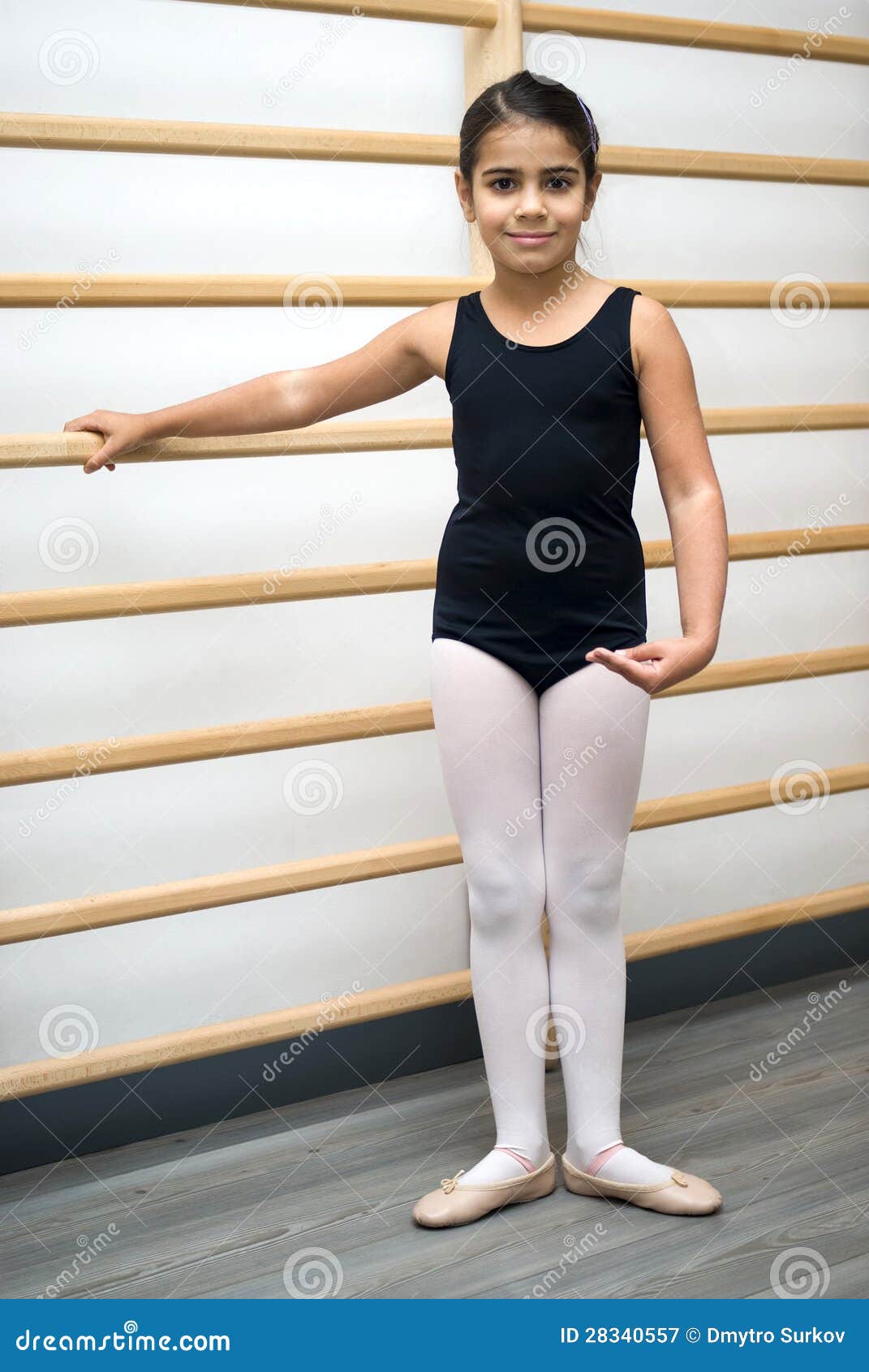 |
| She does not belong in an advanced class |
- If you are not a regular or a professional, you should be weary of standing in the front or going first in groups. If you don't know the combination, you should definitely not go in the first group.
- Evenly space yourself in class. Do not stand in front of everybody while only moving forward halfway to the front. I always teach that the best way to respect others is to respect yourself. If you stand to close to a barre or person, you are making it more difficult for yourself to execute the combinations. You are offering yourself less of a chance to succeed. If you respect yourself by giving yourself enough space, you will also be respecting others because they won't be avoiding your limbs while they are dancing. Dance is based on ideals of respect. When you are at barre, if you are going to hit somebody, you need to turn the angle of your body away from the barre to the front and in towards the barre to the back. If you are doing center work, don't stand directly next to somebody. Stagger yourself. This means that one person stands forward and another stands back. If you are going from the corner, stand as close to the corner as possible in a triangle with the point towards the corner you are coming from or a square in two diagonals.
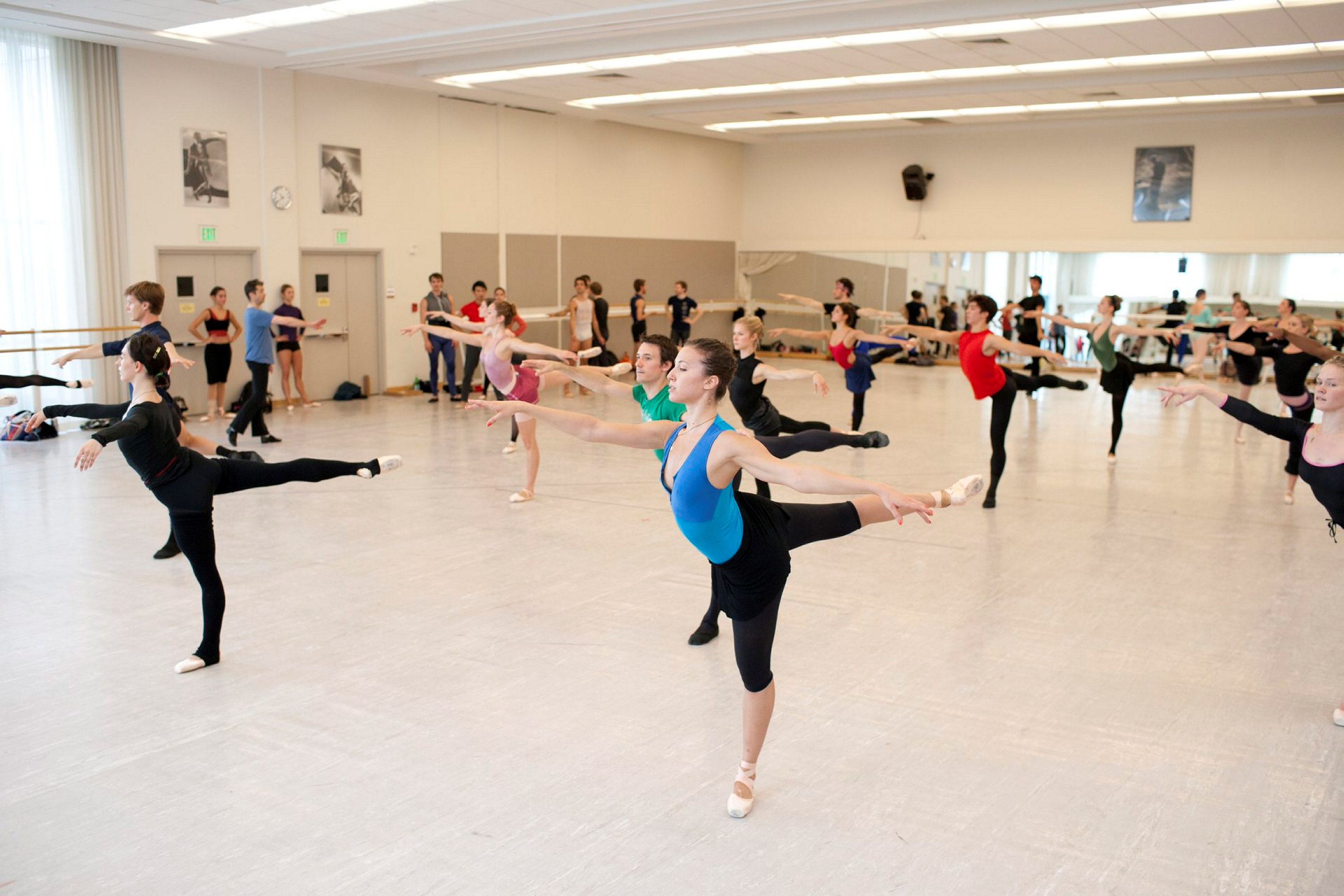 |
| San Francisco Ballet dancers properly staggering themselves |
- If you are not going to or unable to execute the combination in full, absolutely do not stand in front of anybody. It is disrespectful and prevents anybody behind you from fully executing the dance.
- One rule that is very important in ballet class is that you should never step in front of anybody. If somebody is standing in fifth position or B-plus, they are communicating that they are ready to perform. It is rude and disrespectful (and distracting) to step in front of or next to a dancer that has already expressed that they are going to do the combination.
- When a combination is over, it is proper to run forward, first, and to the side, second, as fast as possible to allow the next group of dancers to run into place. This will help you avoid collisions and keep class flowing.
- Most of the time, professionals are in class to stay in shape and improve their abilities. They are not in class as a hobby or to hang out. Think twice before you start talking to them. Chances are, if they don't approach you, they are working very hard and trying to concentrate on improving their art. If you want to start a conversation with one of these dancers, wait until class has ended.
- All dancers enjoy a compliment for executing a step exceptionally. If you absolutely feel the need to express your appreciation or awe, clap for that dancer or say something at the end of class. To constantly walk up to a dancer after each combination because you are impressed with them is a distraction and changes the compliment into a frustration.
- After class, a professional is likely running to rehearsal or a job. Class is a warmup for them. Feel free to engage them in conversation, but be aware that they are probably trying to leave the studio. Make sure that your conversations are appropriate and not asking too much. Don't corner a dancer and remain unaware that they are trying to gracefully exit the conversation. Most dancers are glad to offer helpful advice, but in small pieces.
- If I have one rule that is extremely important to maintain, it would be to remain aware of your spatial awareness. Not to be dramatic, but there is an epidemic of ignorance towards spatial awareness in open classes. Learning how to dance within a certain confined amount of space is just as important as learning how to point your feet, lift your legs, and develop a floating sense in your port de bras. Nearly every professional dancer starts their career in the corps de ballet. Twenty four swans can not exist on a stage without having an acute sense of what is happening around them. Learn how to look around your body while you are dancing. Use your peripheral vision. Don't battements your leg toward a person if they "may be" too close. If there is any chance that you could hit somebody, you are too close. You can practice spatial awareness by dancing in a small, confined room and avoiding hitting the walls with your limbs.
If more dancers understand this set of rules before entering an open class, you will be more likely to enjoy yourself and improve faster. While it is important for many professionals to take open class daily to maintain their technique, it is equally important that anybody who wants to partake has the option as well. Not only do these classes fund schools and companies, but attendance of non-professionals keep numbers up, which allows class to keep happening. Attending ballet classes also develops certain appreciations for those that won't necessarily have a career in dance. These "open-class" dancers come to performances, spread the word to those less educated in dance, and may even be inspired to donate to professional companies to keep them up and running. While it is important that open class remains open to all, it is also important that we begin to educate dancers in the codes of conduct and the finer details that are involved in a ballet class beyond the steps.
10.09.2013
What I learned during my week off social media
I've talked about it before. I am a social media whore. I started on Myspace back in 2004 and was blogging a few weeks later. Since that first fateful day that I logged in, I haven't logged out since. That equals nearly nine years without more than one or two unplanned days without changing my status, checking up on an old friend that I haven't talked to in years, or adding a fun photo to Instagram. Well, this all changed a week ago. I was feeling down, perhaps even in a weird funk. I tried changing my routine, I discussed details with friends for insight, and I stared at the ceiling whilst laying in my bed for hours trying to figure out why I had been feeling off for months. After changing things up over and over again, I finally decided to take a last resort stance. Whenever I felt down, I turned to social media. But this time, I would turn away from it. My comfort. My outlet. My avenue for communication to all of my friends since I travel so much. One week without it. And boy did I learn a lot. I was surprised that all of these lessons were not about my social media use. The extra time that I had available allowed me to evaluate other aspects of my life.
- I try to focus in on my more interesting or off-the-wall thoughts
just so I can post them to get a reaction from people on social media.
- Life without social media forced me to spend more time with my own thoughts and my own issues. Sitting on social media for hours is almost numbing.
- I interact so much because few people reach out to interact with me. I seek this because I don't have a regular workplace to have face-to-face interactions.
- I actually hate self-promoting, but need to do it to keep my name out there and find work.
- One of my non-social media specific realizations. Dance is like any relationship, it requires a lot of work, physically and emotionally.
- The notifications and messages you receive die down very quickly once you stop posting. Interaction actually slows down almost immediately. When you start posting again, it takes time for people to start noticing.
- In using social media often, I assume that I have an interesting perspective that people want to hear.
- Only one person reached out to me beyond social media during the week that I was off (Big ups, Emily!). I even posted my email address and offered my phone number before signing out to anyone who wanted to communicate with me.
- I waste a lot less time and am early to arrive places at least 50% more often than when I am using social media regularly.
- I, surprisingly, only really started missing social media on the fifth day after stopping.
- I don't really enjoy Twitter...at all! I only use it because so many other people insist on it's usefulness.
- I don't even have to think about going on social media. I, even, typed it into my browser a few times and clicked enter before I even knew I had arrived on a site.
- Sometimes, social media use is just like having too many drinks. I will sit on it for hours, so I don't have to be mindful of the way that I am feeling at that moment.
- I love Instagram because I feel like it is like implanting a camera inside my head for everybody to get an idea of what life looks like through my eyes.
- I didn't care about the content in my Facebook feed nearly as much once I returned. I started to scroll down and, before I knew it, was clicking on my browser to go to another website. In fact, my eyes glazed over and I got bored almost immediately. I still haven't figured out why I continue scrolling down endlessly. Habit?
- I had way less use for my smart phone and would sometimes sit and stare at it trying to figure out what to do with it. If I didn't use social media, I'd consider getting a cheap phone with few perks.
- Looking at Facebook after a week off is like getting the mail. You get a few pieces of good mail, some bills, and a bunch of circulars that you wish you never got and want to throw away immediately.
- Everybody lauds your exit, cheering you on and congratulating your achievement. But by the time you return, most people have already forgotten you exist.
- Articles that are posted on Facebook tend to be less fact and more social commentary articles. Almost as if it is a platform to make a statement about one's beliefs, morals, and character.
- Instant gratification is never as rewarding as patience.
 |
| My first time back on Facebook in a week |
- Life without social media forced me to spend more time with my own thoughts and my own issues. Sitting on social media for hours is almost numbing.
- I interact so much because few people reach out to interact with me. I seek this because I don't have a regular workplace to have face-to-face interactions.
- I actually hate self-promoting, but need to do it to keep my name out there and find work.
 |
| Dressing room Puck says "HIRE ME!" |
- The notifications and messages you receive die down very quickly once you stop posting. Interaction actually slows down almost immediately. When you start posting again, it takes time for people to start noticing.
- In using social media often, I assume that I have an interesting perspective that people want to hear.
- Only one person reached out to me beyond social media during the week that I was off (Big ups, Emily!). I even posted my email address and offered my phone number before signing out to anyone who wanted to communicate with me.
- I waste a lot less time and am early to arrive places at least 50% more often than when I am using social media regularly.
- I, surprisingly, only really started missing social media on the fifth day after stopping.
- I don't really enjoy Twitter...at all! I only use it because so many other people insist on it's usefulness.
- I don't even have to think about going on social media. I, even, typed it into my browser a few times and clicked enter before I even knew I had arrived on a site.
- Sometimes, social media use is just like having too many drinks. I will sit on it for hours, so I don't have to be mindful of the way that I am feeling at that moment.
- I love Instagram because I feel like it is like implanting a camera inside my head for everybody to get an idea of what life looks like through my eyes.
 |
| My view walking home from teaching at Koresh via Instagram |
- I had way less use for my smart phone and would sometimes sit and stare at it trying to figure out what to do with it. If I didn't use social media, I'd consider getting a cheap phone with few perks.
- Looking at Facebook after a week off is like getting the mail. You get a few pieces of good mail, some bills, and a bunch of circulars that you wish you never got and want to throw away immediately.
- Everybody lauds your exit, cheering you on and congratulating your achievement. But by the time you return, most people have already forgotten you exist.
- Articles that are posted on Facebook tend to be less fact and more social commentary articles. Almost as if it is a platform to make a statement about one's beliefs, morals, and character.
- Instant gratification is never as rewarding as patience.
10.03.2013
Why artists are expected to have little self-value?
I have been taking a hiatus from all forms of social media for the past week. Riding on the sweet success of Life of a Freelance Dancer accruing 25,000 views, I felt that it was time to take a week away from marketing myself as a product and to sit back, relax, and assess where I am going in this career. My first week without any form of social media in my daily life since 2004 has taught me a lot and given me a fresh new perspective on my intentions and actions, which I am grateful for at this time in my life. In less than a week, I leave for Los Angeles to rehearse for and perform in the launch of Barak Ballet. And in less than two weeks, I turn 30 years old. As I grow older, I grow wiser and my dancing has more value. But what I've also learned over the past week is that certain parts of the dance world don't agree with this.
(I would like to start this post with a disclaimer. This writing has some delicate moments and harsh realities that could be seen in the wrong light. I have no intentions of harm or dischord in publishing this, but I feel that this is a sensitive topic that needs to be discussed.)
Tis the season for Nutcracker to start calling. I have had a handful of offers through friends and employers that found me through my website. While I always appreciate being contacted to perform, I can't take every offer that comes my way. Sometimes, I am already booked during a period that my services are requested. At other times, an offer may not be substantial enough for the work that I need to put in. While I am passionate about what I do, this is how I make my living and I need to be picky about choosing the best option for myself, artistically and financially.
Last week, I was blown away by a situation that I found myself in. I had been contacted with a request to perform in a school's Nutcracker. While their offer was very generous, their consideration of what constituted a paid performance was not cohesive with mine. In typical fashion, when an offer is not agreeable for me, I either counter-offer or gracefully step out of the negotiation. On this occasion, I felt we could work something out and decided to counter-offer. Instead of receiving a response of agreement, negotiation, or decline, I was sent a scathing four paragraph email that badgered me, tore apart my resume, and tried to devalue my worth. This was all from somebody I had never met and that had never seen me dance. To be completely honest, I was so shocked I couldn't even be upset. Instead of reacting to this difficult response, I ingested the content as a learning experience and replied with a brief note thanking them for taking me into consideration and suggested that they move on to their other options.
While I didn't take this unprovoked attack as a truth, I did gain a lot of insight from my many days of processing this unnecessary response. As a dancer, you are expected to be open, available, and humble. While you are expected to respect the process and the system, that process and system does not have to respect you. I've learned during my 11 years as a professional that while there are human emotions involved in the interactions that take place in the creation of a performance, that in the end, the production takes full precedent over any situation that may involve emotion. Casting, injury, life events, arguments, money, and more. In the end, nothing matters except that the best product be put forth onstage.
When I was in my final year of training at the School of American Ballet, I very clearly remember ingesting one of the most shocking statements made by one of my most respected teachers. "Ok. So you're grandma died this morning. But that person sitting in the audience paid $200 for their ticket. They don't care how you are feeling inside. They want to see a good performance." As difficult as this was to hear, it was true. I've seen this exact scenario play out. I've experienced this scenario myself. Most dancers that have made it to a professional level understand how this system works. And along with all of the other difficulties dancers face, they still put on a good show.
Now, this is where things get complicated. When a dancer works for a company, they only have to deal with production aspects of putting on a show. As a freelancer, there is a bit of work that needs to take place before both parties get to move on to the production stage of dance. Negotiations take place, which can be as simple as an accepted offer or a fine-tuning of details. While some employers understand that the art of negotiating is impartial, others can feel it is an attack on an organization's character. In these situations, where you determine pay, terms of your stay, your workload, and more, certain emotions can be brought forth that have nothing to do with a negotiation. And more often than not, these feelings come from a place that we all started. Our training.
I have discussed this before, but it is important to reiterate it again. Dancers are taught from a young age to be submissive. They are taught that they are expendable and that there are hundreds of other dancers that want their job. For this reason, a majority of the dance world feels that one should be grateful for any job opportunity that arises. It is common for a company to feel that it is a privilege to work with them, less so an accomplishment of one's hard work. But when a dancer leaves the submissive role and tries to stick up for their value or rights, they are suddenly egotistical, hard to work with, and a diva. A prime example of this would be when I worked for an employer that loved me dearly and that I loved dearly as well. While we had a mutual respect for each other, there were often jokes that I was a diva when I would bring up situations that were not commonplace in most of the companies I have danced for. While we were able to laugh at this, I was still gently nudged that I was breaking "dance code" for speaking up for things like not having a break for nearly two hours.
As freelancers, we have to take care of ourselves. If we get hurt on the job, we don't have the privilege of having worker's compensation pay our salary and provide our medical care. If we don't negotiate a comfortable living environment at a home-stay, we have to sit tight or uncomfortably complain to try to find a more agreeable resolution. If we don't negotiate a respectable salary, we can't pay our bills. But it is not uncommon for dancers to be made an offer and expected to accept with full appreciation that they were even given an opportunity to dance. This needs to change.
When I was 18 years old, I was offered a contract in the corps of Colorado Ballet. My starting salary was $500 per week. By the time I left Pacific Northwest Ballet, my salary was well into four figures per week. The company I left PNB for offered me nearly one third of what I had been making out northwest and I graciously accepted without negotiation. I began freelancing while dancing with that company. During this time I realized that not only could I barely sustain myself on that salary while I was working, but I couldn't save any money to sustain myself when I wasn't working. And now that I am freelancing full-time, aside from Nutcracker season, most of the work that I am offered usually pays at or below the offer I was made for my very first job. Eleven years after starting my career, I am performing at a higher level than I did at 18 years old and I am, at times, forced to feel ashamed for trying to ask for a livable wage. It is not a matter of asking whether or not this is fair. It is more a matter of asking when those that were once in this position and moved up to leadership roles will respect and appreciate what dancers go through in this career and that their survivability should come before their production.
I am not writing this post to call anybody out and there are some employers that I have worked for that have been greatly generous in their efforts to support me and the other artists that they employ. I think it is important to raise awareness that artists and their value are often abused by the ideals that are imposed by their very training. While some of the ideals that are taught as a student are necessary to create beautiful artists in the most difficult of fields, these ideals need not to be imposed upon fully-grown artists that have worked years to develop and perfect their craft. An artist's value should not be taken lightly. Be grateful when offered work, but don't accept work that is not grateful back. Take a job where you will grow or find value in raising the level of a production, but don't let somebody tell you that your experience doesn't qualify you to respect yourself. Dance as if nobody is watching, but don't dance if nobody wants to foot the bill. While you can't control who is going to value you and your work, the best one can do in their career is to do exactly that for themselves.
(This post is dedicated to James Fayette, former New York City Ballet Principal and current New York area dance executive for AGMA, who was recently injured in a senseless attack in Riverside Park in Manhattan this past week (article). James and I worked together when I was a union rep at PNB. He taught me a great amount of what I know about fighting for dancer's rights. LOFD wishes him a speedy recovery)
(I would like to start this post with a disclaimer. This writing has some delicate moments and harsh realities that could be seen in the wrong light. I have no intentions of harm or dischord in publishing this, but I feel that this is a sensitive topic that needs to be discussed.)
 |
| Guesting w/Ballet Nova for Nutcracker (Photo: Ruth Judson) |
Last week, I was blown away by a situation that I found myself in. I had been contacted with a request to perform in a school's Nutcracker. While their offer was very generous, their consideration of what constituted a paid performance was not cohesive with mine. In typical fashion, when an offer is not agreeable for me, I either counter-offer or gracefully step out of the negotiation. On this occasion, I felt we could work something out and decided to counter-offer. Instead of receiving a response of agreement, negotiation, or decline, I was sent a scathing four paragraph email that badgered me, tore apart my resume, and tried to devalue my worth. This was all from somebody I had never met and that had never seen me dance. To be completely honest, I was so shocked I couldn't even be upset. Instead of reacting to this difficult response, I ingested the content as a learning experience and replied with a brief note thanking them for taking me into consideration and suggested that they move on to their other options.
While I didn't take this unprovoked attack as a truth, I did gain a lot of insight from my many days of processing this unnecessary response. As a dancer, you are expected to be open, available, and humble. While you are expected to respect the process and the system, that process and system does not have to respect you. I've learned during my 11 years as a professional that while there are human emotions involved in the interactions that take place in the creation of a performance, that in the end, the production takes full precedent over any situation that may involve emotion. Casting, injury, life events, arguments, money, and more. In the end, nothing matters except that the best product be put forth onstage.
When I was in my final year of training at the School of American Ballet, I very clearly remember ingesting one of the most shocking statements made by one of my most respected teachers. "Ok. So you're grandma died this morning. But that person sitting in the audience paid $200 for their ticket. They don't care how you are feeling inside. They want to see a good performance." As difficult as this was to hear, it was true. I've seen this exact scenario play out. I've experienced this scenario myself. Most dancers that have made it to a professional level understand how this system works. And along with all of the other difficulties dancers face, they still put on a good show.
Now, this is where things get complicated. When a dancer works for a company, they only have to deal with production aspects of putting on a show. As a freelancer, there is a bit of work that needs to take place before both parties get to move on to the production stage of dance. Negotiations take place, which can be as simple as an accepted offer or a fine-tuning of details. While some employers understand that the art of negotiating is impartial, others can feel it is an attack on an organization's character. In these situations, where you determine pay, terms of your stay, your workload, and more, certain emotions can be brought forth that have nothing to do with a negotiation. And more often than not, these feelings come from a place that we all started. Our training.
I have discussed this before, but it is important to reiterate it again. Dancers are taught from a young age to be submissive. They are taught that they are expendable and that there are hundreds of other dancers that want their job. For this reason, a majority of the dance world feels that one should be grateful for any job opportunity that arises. It is common for a company to feel that it is a privilege to work with them, less so an accomplishment of one's hard work. But when a dancer leaves the submissive role and tries to stick up for their value or rights, they are suddenly egotistical, hard to work with, and a diva. A prime example of this would be when I worked for an employer that loved me dearly and that I loved dearly as well. While we had a mutual respect for each other, there were often jokes that I was a diva when I would bring up situations that were not commonplace in most of the companies I have danced for. While we were able to laugh at this, I was still gently nudged that I was breaking "dance code" for speaking up for things like not having a break for nearly two hours.
As freelancers, we have to take care of ourselves. If we get hurt on the job, we don't have the privilege of having worker's compensation pay our salary and provide our medical care. If we don't negotiate a comfortable living environment at a home-stay, we have to sit tight or uncomfortably complain to try to find a more agreeable resolution. If we don't negotiate a respectable salary, we can't pay our bills. But it is not uncommon for dancers to be made an offer and expected to accept with full appreciation that they were even given an opportunity to dance. This needs to change.
 |
| One of my audition shots - circa 2002 (Photo: Roe O'Connor) |
I am not writing this post to call anybody out and there are some employers that I have worked for that have been greatly generous in their efforts to support me and the other artists that they employ. I think it is important to raise awareness that artists and their value are often abused by the ideals that are imposed by their very training. While some of the ideals that are taught as a student are necessary to create beautiful artists in the most difficult of fields, these ideals need not to be imposed upon fully-grown artists that have worked years to develop and perfect their craft. An artist's value should not be taken lightly. Be grateful when offered work, but don't accept work that is not grateful back. Take a job where you will grow or find value in raising the level of a production, but don't let somebody tell you that your experience doesn't qualify you to respect yourself. Dance as if nobody is watching, but don't dance if nobody wants to foot the bill. While you can't control who is going to value you and your work, the best one can do in their career is to do exactly that for themselves.
(This post is dedicated to James Fayette, former New York City Ballet Principal and current New York area dance executive for AGMA, who was recently injured in a senseless attack in Riverside Park in Manhattan this past week (article). James and I worked together when I was a union rep at PNB. He taught me a great amount of what I know about fighting for dancer's rights. LOFD wishes him a speedy recovery)
9.18.2013
The art of continually reinventing yourself
 |
| A new option for my bio (Photo: Shalem Photography) |
I would say that I have contacted a majority of the numerous professional ballet companies and a handful of contemporary companies across the country at least once. While most of the emails I send out are ignored, a handful respond with, "we'll be in contact with you," or, "we would like to discuss using you." Most of those that speak of getting back in contact with me never do. Usually, it is only a company that has an immediate need that will respond. Just because a company didn't contact you doesn't mean that they didn't review your materials. It also doesn't mean that their needs haven't changed. It is the beginning of a new season and many companies are figuring out what they have and what their needs will be for the rest of their season. Also of note, just because a company says that they will keep your info on file if the need arises, doesn't mean that they will remember to contact you when that need does arise. For this reason, it is important to continue sending your information out to remind employers that you are still an available resource when needed. The only thing is that you don't want to appear to be the exact same person with the exact same experience each time you send your information. Dancers are built on the foundation that you must continue to grow and improve. How do you reinvent your marketing tools with limited material?
One of the most important items in your toolbox of marketing materials is your performance reel (You can check out this older post on how to create your own reel). Without any footage of your performance abilities, it will be difficult to obtain a job without going to a live audition or relying on word-of-mouth. As a freelancer, there may be times where you perform in a handful of works that you have easy access to footage from those performances. At other times, you may be working a great deal, but the performances aren't filmed. For instance, I was really hoping to get footage of myself performing as the Sugar Plum Fairy's Cavalier with Rochester City Ballet last season. But due to union rules with the orchestra that was accompanying the production, they weren't allowed to film the performances. Even if you have limited access to footage, your reel doesn't have to remain without an update for years at a time. I have set a loose rule for myself that I will update my reel every 6, or so, months. Not only does this give me an opportunity to add additional footage, but it gives me a chance to feel out what is working in enticing employers or when it isn't reading as effectively as I had hoped.
This past season, I had the wonderful opportunities to dance with Rochester City Ballet, Alaska Dance Theatre, Festival Ballet Providence, in the Philly Fringe Festival, and in a choreographic workshop of a piece that may potentially be Broadway-bound. Of all of these performances, I was only able to obtain footage from two of these organizations. Albeit the limited footage I had access to this past season, the film that I could get my hands on was plentiful. Last week, I sat on my couch and reviewed my previous 3 or 4 reels, evaluating what I did well and what could be improved upon. What I found was that all of my reels took clips of footage that were between 15 and 60 seconds long, which added up to anywhere from 7 to 10 minutes long. While I am proud of these reels, I realize that a potential employer that only watched the first minute or two of the reel would be missing out on the variety of dance works and styles that I excel at dancing. I needed to reinvent my approach to creating my reel and, so far, it seems to be working.
In creating my new reel, I decided that I should take smaller clips of my dancing and fuse them together into one work. What I like to call "highlights." Keeping the original music to these pieces would not be effective, since the music would change every few seconds. I started my 20-something hours of editing by seeking a piece of music that was interesting, but lacked any compelling vocal or moments that would draw you into the music. I wanted the focus to be on my dancing and not on the track that was playing. After finding a piece of music that fit the bill, I started by pulling all of the footage I had that showed me off at my best. I slowly began whittling down the hour of footage and finding moments in the choreography that were exciting or intriguing. This was a challenging process since it can be difficult to differentiate between something that looks great versus something that you had a special emotional attachment to performing. In the end, I was very happy with what I created. Not only do I feel that my new reel shows me in my best light. I feel that I have found a completely different way of showing employers what I can do. When I contact a company for the third time, they will likely recognize some of the footage. But they will be less likely to overlook me as a dancer that they have already seen and more likely to look at my new, fresh packaging.
Beyond recreating a reel every 6 months, I try to keep my resume and photos updated as well. It is much simpler to keep these fresh as your career flies by. Try to be patient with your photographs. The biggest temptation when you receive a brand new photo that shows off all of the hard work you've put in is to immediately post it to your Facebook, Instagram (Follow me), or website. Take one or two of these photos and satisfy your social-media urges. But hold a few back for future usage. If all of your photos are out there and you haven't been performing anywhere that has a photographer, you are going to run out of fresh material. These items are new even if they are 6 months old. That is if you don't show them to anybody. As for your resume, I would avoid any attempts to greatly change your format unless you see a friend's CV that you think would be an improvement. While you want to show that you've moved forward within your reel and photos, you want your resume to be easy to read and recognizable.
 |
| Me partnering Elizel Long (Photo: Shalem Photography) |
9.10.2013
The main pitfall of a freelance dancer
As Life of a Freelance Dancer nears a pivotal marker since its' creation nearly 17 months ago, I feel it is finally time to approach a very important topic. It took me a long time to feel that I could appropriately address this item, as I felt I hadn't had enough experience in the field. For many professionals who have found themselves freelancing after having some length of a career dancing with a company, there is one thought that haunts most of them day in and day out. While work can be quite slow or unfulfilling if one takes a job because they haven't any, being without exciting prospects may make one feel like they are burgeoning on the end of their career. In my time as an advocate for freelancing, I have been told by at least a dozen seasoned professionals that they think their career is driving off into the sunset. So many freelance dancers are burdened by the feeling that the end of their career is happening right now. But, is this statement true?
 The first thing that comes to mind when discussing this topic is the innate fear among dancers of the imminent end of their dancing and the lifestyle that comes along with it. The fear of having your dance career stolen from you before you are ready to bury it is ingrained in every dancer from a very young age. Dancers are told to train properly in order to prevent career threatening injuries, even though they don't know if they are even receiving proper training. At some point during every dancer's education/career, somebody in class sustains a traumatic injury. Horrified energy fills the room as that unfortunate dancer usually lays on the floor clutching their injured part. In that dancer's moment of need and privacy, nearly the whole studio surrounds and suffocates that person staring on in horror. Hopefully, they truly do feel bad for the person that is injured. But the truth really is that every dancer in that room knows that it could have been them and wonders if that injury is the big one. The one that ends their career.
I was quite surprised that once I entered the professional workforce, most of the non-dancers I met were only interested in talking about my diet, the probability of getting injured, and how long my career would last. News stories constantly come out stating that ballet dancers are more likely to become injured at work than football players, making us the most injury-prone profession. One of the most common questions I get asked is, "Well, what are you going to do after you're done dancing?" Dancers have to cope with their own fears about their career ending, while the world is constantly reminding them of that possibility. All of this fascination with the idea of recreating oneself between their 20's and 40's can make it impossible to focus on the fact that you are dancing right now. It is difficult being a dancer. Dancers live with a lot of fear. At one point, we will all lose what we have worked a lifetime to gain. And everybody knows it.
This is where freelancing can magnify this truth. All company dancers measure their lifespan by season, kind of like a school year. I am currently in my 11th season as a pro. At Pacific Northwest Ballet, our season consisted of 6 different sets of programming, which didn't include Nutcracker or any touring. Most seasons consisted of 40 weeks of work and anywhere from 80 - 120 performances. Currently, my upcoming season is up in the air. I have worked for 2 weeks already and have set up about 8 weeks of work through December. Freelancing work doesn't always line up beyond a month or two in advance. My current line-up consists of performing in the Barak Ballet launch in Santa Monica in October and a handful of Nutcracker performances that I will mention when contracts have been signed. After the holiday season is over, I have no idea what I will be doing. It may be a lot. It may be nothing. If it is nothing, aside from being a financially challenging winter, it could be an emotionally stressful time as well.
The reason that I can foresee a time without work being stressful is because I have experienced it this summer. Aside from 5 weeks during my last season, I spent nearly 7 months traveling between the months of November and May. When I had completed my last job, I knew that I wanted to spend a majority of my summer at home in Philly. I didn't really look for a great deal of dance work aside from my weekly work search and a few auditions (plus there is quite the lull in possible jobs since most people would rather be outside in the sun than inside a dark theatre). Then, we added the stress of a move that we had not prepared for, threw a few events, and I tried to stay in shape while giving myself a physical and mental break at the same time. Aside from the 2-week gig in August, I have not performed for an audience since May. This is quite possibly the longest period of time that I have gone without seeing a stage since I was a student. Now that I have had enough time to rest and reset, I am ready to start rehearsing tomorrow. Unfortunately, I don't have that option. It is quite apparent to me that this is why, lately, I have been struggling with the feeling that my career is ending. What did I do with my summer and, until October, what do I have to look forward to?
Living in this mindset is anything but healthy and I know for a fact that so many freelancers exist in this state constantly. A dancer without a company can't gauge that their career will last, at least, as long as their current contract, barring any devastating injury. A freelancer's career isn't continuing until they have solidified that next job. If it is a slow period, one may not be able to see far enough ahead to realize that their career isn't ending. There is also the fear that if money runs out and a dancer needs to take a normal person job, they may be overwhelmed with the workload and their dancing will suffer? The reality of a professional-level freelance artist is that if you are maintaining a certain level professionally and can maintain your health, you ultimately get to choose when your career is over. You choose when to stop staying in-shape, looking for work, and taking work. It is true that you may not get respectable work opportunities or options that compel you to sign a contract. But only when you stop dancing and seek a new path has your career truly ended.
Just writing this down in a public forum doesn't necessarily help settle the emotional stress that is caused by this additional career fear. But there isn't much more to the career equation. Dancers must trust that their career isn't over until they choose or a doctor tells them (get a 2nd opinion, or 10) that it is truly over. And even if a dancer does decide to retire, they can always make a comeback a la Celine Dion. But all joking aside, most dancers feel their career is over because they are not pleased with the options presented to them. If you have lost the fight to make work happen or to put in the time to make better things happen, then perhaps it is time to hang up your slippers. Being a freelancer requires great dancing, great networking/promotional abilities, and even greater emotional fortitude. Patience and balance are key to this profession. While every freelance dancer will likely feel that their career is coming to an end at some point, those who continue to work through this stress and remain patient can have lengthy and sustained professional careers.
 The first thing that comes to mind when discussing this topic is the innate fear among dancers of the imminent end of their dancing and the lifestyle that comes along with it. The fear of having your dance career stolen from you before you are ready to bury it is ingrained in every dancer from a very young age. Dancers are told to train properly in order to prevent career threatening injuries, even though they don't know if they are even receiving proper training. At some point during every dancer's education/career, somebody in class sustains a traumatic injury. Horrified energy fills the room as that unfortunate dancer usually lays on the floor clutching their injured part. In that dancer's moment of need and privacy, nearly the whole studio surrounds and suffocates that person staring on in horror. Hopefully, they truly do feel bad for the person that is injured. But the truth really is that every dancer in that room knows that it could have been them and wonders if that injury is the big one. The one that ends their career.
I was quite surprised that once I entered the professional workforce, most of the non-dancers I met were only interested in talking about my diet, the probability of getting injured, and how long my career would last. News stories constantly come out stating that ballet dancers are more likely to become injured at work than football players, making us the most injury-prone profession. One of the most common questions I get asked is, "Well, what are you going to do after you're done dancing?" Dancers have to cope with their own fears about their career ending, while the world is constantly reminding them of that possibility. All of this fascination with the idea of recreating oneself between their 20's and 40's can make it impossible to focus on the fact that you are dancing right now. It is difficult being a dancer. Dancers live with a lot of fear. At one point, we will all lose what we have worked a lifetime to gain. And everybody knows it.
This is where freelancing can magnify this truth. All company dancers measure their lifespan by season, kind of like a school year. I am currently in my 11th season as a pro. At Pacific Northwest Ballet, our season consisted of 6 different sets of programming, which didn't include Nutcracker or any touring. Most seasons consisted of 40 weeks of work and anywhere from 80 - 120 performances. Currently, my upcoming season is up in the air. I have worked for 2 weeks already and have set up about 8 weeks of work through December. Freelancing work doesn't always line up beyond a month or two in advance. My current line-up consists of performing in the Barak Ballet launch in Santa Monica in October and a handful of Nutcracker performances that I will mention when contracts have been signed. After the holiday season is over, I have no idea what I will be doing. It may be a lot. It may be nothing. If it is nothing, aside from being a financially challenging winter, it could be an emotionally stressful time as well.
 |
| Performing in Ballet Nova's Nutcracker (Photo: Ruth Judson) |
Living in this mindset is anything but healthy and I know for a fact that so many freelancers exist in this state constantly. A dancer without a company can't gauge that their career will last, at least, as long as their current contract, barring any devastating injury. A freelancer's career isn't continuing until they have solidified that next job. If it is a slow period, one may not be able to see far enough ahead to realize that their career isn't ending. There is also the fear that if money runs out and a dancer needs to take a normal person job, they may be overwhelmed with the workload and their dancing will suffer? The reality of a professional-level freelance artist is that if you are maintaining a certain level professionally and can maintain your health, you ultimately get to choose when your career is over. You choose when to stop staying in-shape, looking for work, and taking work. It is true that you may not get respectable work opportunities or options that compel you to sign a contract. But only when you stop dancing and seek a new path has your career truly ended.
Just writing this down in a public forum doesn't necessarily help settle the emotional stress that is caused by this additional career fear. But there isn't much more to the career equation. Dancers must trust that their career isn't over until they choose or a doctor tells them (get a 2nd opinion, or 10) that it is truly over. And even if a dancer does decide to retire, they can always make a comeback a la Celine Dion. But all joking aside, most dancers feel their career is over because they are not pleased with the options presented to them. If you have lost the fight to make work happen or to put in the time to make better things happen, then perhaps it is time to hang up your slippers. Being a freelancer requires great dancing, great networking/promotional abilities, and even greater emotional fortitude. Patience and balance are key to this profession. While every freelance dancer will likely feel that their career is coming to an end at some point, those who continue to work through this stress and remain patient can have lengthy and sustained professional careers.
 |
| Relax! The sun isn't setting on your career. |
9.02.2013
Dancers and decisions in their dancing
 |
| Performing my work, "Gated Lies," in the Philly Fringe festival (Photo: Bill Hebert) |
When I first entered the professional ballet world, I pretty much did whatever I was told. I was late to the game with my ballet technique and I had to make up a great amount of time in my final two years of training. I would only do what I was told to do, never rebelling or questioning. I never made any choices about my dancing and I was afraid that my intuition was wrong. As my career grew, I realized that, at times, I had a little more leeway in making a few decisions. Perhaps, I chose to execute a step with a certain accent or I emoted a little differently than I was told. But when it came to steps, I didn't feel like I had the privilege of taking even minor artistic liberty. When I entered the contemporary dance world, my mind was blown when I was told that I should do it my own way. I wanted to be told exactly what to do since that was all I knew. It took me well over a year to adjust to this difference. It was difficult for me to pick up choreography because I was so stressed about perfectly replicating the execution of a movement that had no name or clearly defined position. I was eventually told that there was no perfect and that I should decide how it would look. If the choreographer didn't like the decision that I made, they would tell me and I would find a new way to execute. In the end, I ultimately had more leverage in deciding how I would perform a piece. With all of this in mind, as I started to watch other dancers perform, I began to be a little more lenient in my judgement of their decisions, especially on a ballet stage.
 |
| Dancing Balanchine's "Rubies" w/Leah Merchant (Photo:Angela Sterling) |
Unfortunately, for dancers, we are thrown onstage without any of the support that created our performance. Company class teachers, ballet masters/mistresses, artistic directors, stagers, colleagues, and anybody else that influences technique and the performance that happens onstage are largely left uncredited aside from a name and title in a program. When the reviews come out, a critic may say, "Stevie danced an unmusical, mannered performance that lacked emotion and spark. She seemed nervous and had multiple missteps." While the dancer receives and consumes the criticism, nobody points out that the artistic director didn't leave enough time for rehearsals and Stevie, being the 2nd cast, only had one run-through of the piece prior to performing. It wasn't mentioned that her coach told her that her character is generally unemotional or that the conductor played a completely different tempo than what was rehearsed. It is a great stress to dancers who are being told exactly how to perform to make their own decisions, even if they disagree with their instruction. Not only is their reputation on the line, it is also possible that their job may be on the line.
Why am I pondering all of this on a blog about freelance dancing?As a freelancer, aside from having leeway to make decisions about where you work, you have much more freedom to make your own choices within your dancing. Outside of class, most of the work that freelancers perform is fast-paced and transient. There generally isn't enough time to develop the typical submissive relationship between those in charge and yourself that is ever-prevalent in the dance world. It seems to me that there is somewhere around a month-long grace period where everybody is on their best behavior when entering a new workplace. Those in charge are less aggressive during this time and those subordinate are less likely to rebel. For this reason, corrections and style tend to be suggestions, instead of demands. This grace period allows for a dancer to explore their own decision making and to truly dance as they would choose to do so. This means that dancers take greater responsibility for their decisions. It also means that one has the opportunity to truly dance as the artist that they are.
 |
| "My version" of the "Nutcracker" variation (Photo: Ruth Judson) |
It is very freeing to be in charge of what choices you make while rehearsing and performing. Sometimes, a dancer can develop a relationship with a coach that brings out the best in that artist. At other times, an aggressive coach that has too little time with a dancer or is more interested in their own ego than developing an intelligent, confident artist can leave dancers suffering from decisions that weren't even their own. The next time you see a performance that leaves you befuddled, take a moment to think about the whole picture before laying all of the blame on the dancer for their performance. We exist in such a hard career. The more that artistic staff and critics can empower dancers to step out of the eternal student role, the better off the dance world will be as a whole.
Subscribe to:
Posts (Atom)