 |
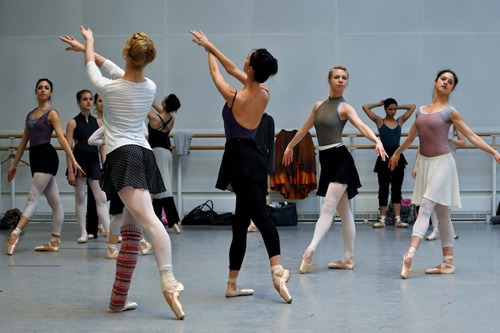
| The Royal Ballet in rehearsal (Photo: Unknown) |
Rehearsal etiquette is one of the many unspoken areas of our silent art
form. There is no particular way that each and every rehearsal studio is
run. But at the same time, there are general no-no's (and yes-yes')
that are taught within the culture of a company as they create,
fine-tune, and prepare a work for the stage.
Back a handful of
years ago I was working with a pickup company that employed enough
dancers to fill a small rehearsal room. In
other words, our athletic group of 8 had to get along considering our company's size. A few of us were more seasoned than the others. But one
dancer was enjoying the raw, empowering, and often shocking experience
of their first job as a professional. Previously, I talked about my
experience at my first full-time job with
Houston Ballet
and how I stepped on dancer's toes without even realizing it. After
watching this type of situation from the other side, as a senior dancer, I was taught a
lesson in kindness, patience, and humility.
Dancing for a big
company is very different than dancing for a small ensemble. In a bigger
company, dancers often feel more comfortable being up front (if not,
sometimes, mean) when trying to streamline a young dancer into their
place in the unique culture of a professional company. If any
interaction becomes tense, dancers can retreat into their clique for
comfort or hide behind other dancers who are more willing to stand their
ground. But in a small company, there is nowhere to hide, very little
hierarchy, and everybody has to interact frequently with one another in the studio.
 |
| Smuin Ballet in rehearsal (Photo: Chris Hardy) |
Back to the occasion of watching
this new dancer enter a rehearsal studio without the assimilation that
the rest of us dancers had. It was a generally difficult situation to
endure. The leadership wasn't very good at running a rehearsal studio
and they let the dancers have a bit too much control over what happened. This new dancer became a stressor for other
dancers as they were acting in ways that went way beyond the etiquette
of most professional environments. Things like actively telling other
dancers how to fix their dancing, counting over the choreographer, and
regularly interrupting the process to crack jokes became the norm. And
while the other dancers with more experience didn't approve of this
behavior, the director and ballet mistress chose to allow it to
continue.
Now, it is perfectly healthy to run a studio where
dancers feel that they are a valuable part of the process, where the
environment is light and friendly, and where a dancer feels that they
can speak up when they feel that something isn't working properly. But
this dancer started to become a distraction and affected the ability of
others to work to the best of their abilities. Due to the size of the
company, where another more experienced dancer may have talked to their
freshly minted colleague, this dancer was left continually breaking
"rehearsal-code" for the extent of the gig. This was most likely due to
the fact that, in such a small group, everybody knew that a small amount
of tension between two dancers would be felt by all.
In this
company, many of the dancers looked up to me and respected my work. And
for that reason, it was suggested by some that I speak to this dancer to
give them an idea of professional rehearsal etiquette. But, as I stated
before, I felt it would cause too much tension and that it was actually
the responsibility of those in the front of the studio to hone this
character in. Looking back, I'm glad I maintained this position. But
this is the advice that I would offer that dancer today if I were the
person at the front of the studio.
First things first, the way
you act in a rehearsal studio as a student is completely different than
when you are a professional. Most students who become professionals have
reached the top of the hierarchy of a school. Essentially, if the
school had a ranking, these dancers are the Principals of the school. In
a professional company, a top-level student most often enters at the
lowest rank and seniority. In most professional rehearsal setting, Principals have more leeway
and freedom in their choices, actions, and vocal interaction than
others. Not to say that a new professional can't have a voice or input.
But it is the job of an apprentice or first year dancer to sit back and absorb what is
happening around them. They don't have equal cultural standing to those
higher ranked or more senior dancers. Just like in medieval times, the
apprentice to the blacksmith didn't walk in on day one and start working
with the iron. It may have taken a long time before the mentor allowed
the apprentice to even touch any equipment, let alone lead the creation
of a work of art.
My next bit of advice is to keep an open mind
about your idea of what a rehearsal should look like. School rehearsals
are often much slower paced with more time to retain choreography,
fine-tune, and engage in conversation. Many professional environments
are much faster-paced and don't open up the room to ask questions or
discuss particular material until all of the material is already out.
This is to help streamline the process and may even be an effective
money-saver. In school, most of the students are paying to dance. In a
professional environment, time is money. The longer dancers are in
rehearsal, the more they get paid and the more time spent paying for
rehearsal space (esp. in freelance or project based gigs that don't have
a home studio). There are reasons for professional rehearsal culture
that go beyond personalities and people getting along.
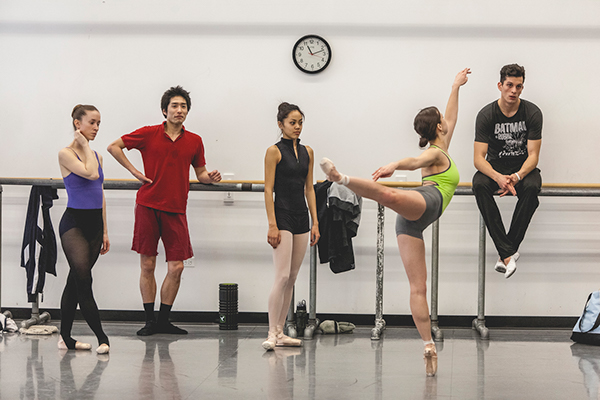 |
| Joffrey Ballet in rehearsal (Photo: Lenny Gilmore) |
The final
idea I'd like to share about rehearsal etiquette is a grey area that is
fluid from company to company, but generally recognized in some way or
another. I'd like to bring up seniority and respect for dancers with
more experience. One of the big issues with this fresh, new dancer was
that they felt their presence in the studio was absolutely equal in contribution to the
more experienced dancers around them. I'd love to say that this is the
perfect ideal, but it was actually one of the most challenging aspects
of working with this person. The difficulty laid in looking at them as a person
versus their job and position as a dancer. As a person, we all enjoyed this dancer very
much and wanted to give them a chance to find their place. But as a dancer, many of us felt disrespected by this person's
actions. For instance, a young dancer should never think it is
acceptable to offer unwarranted corrections to a more senior dancer.
Additionally, taking over a rehearsal space and telling dancers how to
count or how your exploration of the process is
more correct can be horribly
disrespectful and doesn't acknowledge a dancer's wisdom gained from time
put in. Whether a young dancer is more naturally talented than a
senior dancer doesn't play into the fact that dancers with seniority have
spent years fine-tuning their technique, movement, and rehearsal
practice. The value in hiring more senior dancers is that they have existed in
a professional dance studio much longer than younger dancers. They are brought back to dance for an organization because they have a very keen sense of how
to work effectively and professionally in a variety of work
environments. Even a dancer with immense talent can not innately
understand this. And for this reason, it is extremely important that
they take a step back and absorb the culture that experienced dancers
project. Because in the end, these senior dancers are not projecting
their own idea of the culture. They are projecting the culture that came
before them and taught them that culture and so on. You are essentially
being taught the cultural history of the company by learning from those
who came before you, absorbing it, and then will hopefully pass it on
when you aren't the young or new one any more.
As you can see, I
shied away from sharing too many specific items about how to act in a
studio. This is mostly because each and every studio functions differently and
most effectively per the needs of an organization. I don't want any dancer to ever feel
completely stifled by trying to fit in to the culture of a dance
company's rehearsal process. But if you approach a professional
rehearsal studio with respect for those around you and respect for what came before, it will be much easier to acclimate to dancing for a company. And,
if you are lucky enough, perhaps, you will have the staying power to
become one of those dancers that helps the next generation learn a
company's culture from your fine example.


