Showing posts with label Romeo and Juliet. Show all posts

4.24.2014

Performing for No Reviews

The Seattle Times - one of PNB's regular reviewing publications
It was Black Friday, November 23, 2007, and it was opening night of Pacific Northwest Ballet's The Nutcracker. I was cast in one of my favorite roles, the Sword Doll. And this was one of the first shows of the holiday season, so I hadn't moved into my seasonal Nutcr-apathy yet. I was really hoping to impress the audience in what was one of the few featured roles I had danced at that point in my career. Shortly after this performance, a regular reviewer for CriticalDance, Dean Speer, wrote a review assessing the upkeep of this oft performed production. Towards the top of the piece he stated that the "phrasing is slightly different than in years past – more push and pull; attacking something then letting it resonate. I first noticed this with Barry Kerollis’ Sword-Dancer Doll – punching a sauté développé à la seconde, for example, and then letting it ‘sit’ for a moment before pushing on to the next step. I really liked this, as it allows each thing to read." This was one of my first public mentions. The notice instantly hooked me on getting my name written in any and all publications that came to review our shows.

As a student, the only time you really get a chance to perform publicly are in school shows, lecture demonstrations, and youth competitions. Unless a dancer is in their final years of training, they are unlikely to be involved in any production that get much press beyond small local newspapers and proud parent's Facebook posts. Other than the largest, most prestigious academy graduation performances, reviews are generally non-existent. Once you enter a professional company, it is much more common and appropriate to be publicly scrutinized.

I started dancing with PNB in July of 2004 after spending a year with Houston Ballet. By the time the above review was written, I was already in my fourth season as a professional. It is almost impossible for a Corps member to be called out unless they perform a role that steps out of the group. Could you imagine a dance critic writing, "The 4th flower from the right, Dancey McDancerson, showed great emotion in her developpes." For obvious reasons, it can take awhile for a dancer to get noticed and for critical mention to be publicly addressed. Speer's posting was probably just another Nutcracker article for him, but for me it meant much more. Beyond the fact that I got mentioned positively in a featured role, the interpretation that he was talking about was my own signature. Every year, anywhere from 5 to 10 dancers performed this role. Due to the lack of rehearsal leading into these performances, dancers often had a bit more wiggle room for interpretation. My musicality was uniquely my own and Mr. Speer showed appreciation for that.

After receiving a positive review, many dancers start looking forward to moments that could bring them to the attention of the public and, potentially, the director. The thought in my head was, "If the public notices me, the director must surely see that." And while this may not have been the best way to approach my performances, it definitely offered some great motivation.

As I started to get better roles, more critics in the Seattle area started to take notice of me. I became hungrier for attention. There is a great online forum that is both loved and hated by professional dancers, Ballet Alert. This site is a moderated forum for balletomanes across the world. On the site's message boards, ballet lovers, reviewers, professionals, parents, and more can discuss and debate anything relating to this untouchable profession. PNB had a large base of local fans that were very vocal about dancers and productions (albeit through a computer screen) on this website. Beyond the critiques written in professional publications, Ballet Alert followers often wrote their own reviews and perspectives to discuss and speculate. More often, their words are positive and pensive. But at other times, writings can descend into gossip, speculation, and bullying. As much as company members liked or disliked this forum, many of us kept close tabs on what people were writing.

My next four years passed at PNB and I started to find myself more tied to the reviews I received. I was starting to feel stagnant in the company and assumed that receiving glowing reviews would change my boss' mind. I remember debuting as Mercutio in Romeo et Juliette and waking up each morning to see if anybody had written anything about my performance. The reviews came out and they were quite positive. As the season continued, I added more roles to my resume and received greater reviews. Then, contract time came. I wasn't promoted. And to make matters worse, dancers in the company started coming up to me asking if I had been promoted (most dancers find out that they are getting promoted when they receive their letter of re-engagement). While this was a great compliment, it also left me quite confused. I had performed well all season. Critics and dancers alike had seen my progression. But when it came to the one opinion that mattered, it seemed that I had made no progress.

Studio showing of Maan Singh - Photo: Philip Gardner
After spending one more frustrating year in the same position, I decided to leave my big company roots to try something new. As I started to freelance in medium-sized companies, small organizations, and a variety of projects, I found that I was still eagerly seeking reviews at the end of our production weeks. But now I was performing in less popular venues. At one gig, I performed in a small studio in New York City. And the next was at a performing arts center in Anchorage, Alaska. People were coming to see me perform, but few people were posting about it in print or online.

I remember the first time I danced with Houston Ballet and realized that I didn't have any family or friends in the audience. I felt that I had no cheering section for whom to dance. I learned then to dance for myself and not for the accolades I would be showered with after shows. Once I moved to Seattle, I slowly started to create a presence that was recognizable by critics and regular audience members alike. And while I didn't always get press, I had motivation to impress. All of a sudden, I found myself back at square one onstage at the Wortham Theater with no support system in the audience. It was almost as if the reviews had become my support system.

I had a bit of an epiphany back in March when I performed Romeo and Juliet for Fort Wayne Ballet. My performances with the company marked the first time I was brought in as a Principal Guest Artist to lead a full-length ballet for a company. I have been brought in to dance leading roles many places, but never to carry the entire production. After all of my hard work, I spent a couple of days googling my name, Fort Wayne Ballet, and Romeo and Juliet. But nothing showed up. Initially, I was quite disappointed that nobody had been around to record the occasion. The company didn't film any of the shows I did, so I figured the best way to preserve the feeling that I had during and after the performance was to get an amazing review. You can only imagine the let down of putting that much pressure on getting public recognition in a town of 250,000 that is more interested in sports than arts.

A few weeks ago, I did my final search for a review of the performance. It took one last disappointing look for me to finally get it. What I was seeking was a physical memory of my performance because I so enjoyed it and didn't want to forget the experience. But in my efforts to hold on to the memory, instead of relishing the performance, I was seeking validation that it was a good memory. If this performance is as special to me as it was, I won't forget it. I won't forget the first time that I stared into Lucia Roger's eyes and felt that I saw my love for the first time. Or when we danced the MacMillan version of the Balcony pas, a duet that I had idolized as a teenager. Or how I legitimately cried onstage for the first time over the dead body of Mercutio. Or how the audience instantly rose to their feet after we had experienced a wildly realistic rollercoaster of emotions.

What it comes down to is that we have very few records of our careers as dancers. Photographs, footage, and reviews are the few records we will have of our careers when they are over. As a result of this difficult detail, I was relying too heavily on physical record to validate my experience. What really matters in dance, as in life, is how we felt while we were doing the things that we love. And those memories will be with us forever. A review might remind us of how others perceived us, but only we dancers can remember how it truly felt standing in the glow of the spotlight putting everything we have on the line.

Elizel Long and me from an unreviewed performance in Alaska - Photo: Shalem Photography

3.28.2014

The Reinforcement Gig


Arts United Center - Home of the Fort Wayne Ballet
Throughout one's freelancing career, a dancer may experience a handful of different work situations. Some may be quite professional, while others may, sadly, burgeon upon frightening. We can do our best to cater our job choices towards a more professional atmosphere. But it is more common to have a middle of the line experience. After one too many rougher gigs, it isn't uncommon for a dancer to start asking themselves why they are holding out as a freelancer. Performing mediocre work for pennies when one could be working for a company or moving on to the next stage of their post-dance career can easily derail anybody's drive. Then, it happens! You jump on a plane, crash blindly into a new company, and have an incredible experience.

I really can't complain much about my performance season this year. My schedule has generally been booked up. I have danced in New York, Los Angeles, San Francisco, and a handful of venues in smaller cities. And while I really enjoyed a great many of these experiences, no single experience shot me over the moon as a whole. As I discussed awhile back, I have been thinking about moving out of freelancing and moving back to company work or attempting to get on Broadway. But then, I had the most reinforcing experience in, of all places, Fort Wayne, Indiana.

Around the same time that I got that frantic call to replace injured dancers with Company C Contemporary Ballet, I found an audition notice on Pointe Magazine's job posting page. Fort Wayne Ballet was holding auditions for their 2014 - 2015 season. In my typical search for work, I sent my information in to see if the company had any need for a guest dancer for their productions. Surprisingly, I received an immediate response to my inquiry. An old friend, David Ingram, that I met at Houston Ballet's summer program over a decade ago had taken over the position of Artistic Associate for the company. He called me up and told me that they are looking for a Principal guest art to perform the role of Romeo for their production of Romeo and Juliet. I was available and agreed to fly out a few weeks later.

At first viewing, it seemed like this would be like most of my typical gigs. I would be entering a new atmosphere, staying with a host family, and leaving after a couple of weeks. There were also a few bumps along the way. The first housing situation I was supposed to stay in had dogs, I only had one week to learn an entire full-length ballet, and communication was not always clear. I find that when you go into an experience with lower expectations, your concerns are either going to be reinforced by actions or you will be pleasantly surprised by what can actually happen. I am happy to say that my time with Fort Wayne Ballet was the latter.

I usually have most details lined up before arriving at a gig. Prior to arriving at Fort Wayne Ballet, the frantic period of time I spent salvaging the production with Company C in San Francisco and an unexpectedly bad sinus infection upon returning home to Philly kept me from lining everything up as I typically would. I actually flew to Fort Wayne without knowing the address of my host or if somebody would be picking me up at the airport. For some reason, though, I was calm about this. The moment I got off the plane and walked beyond the secure area of the airport, I saw a tall, nervous-looking blonde woman waving at me and a sweet, but shy-looking 14 year old staring at the floor behind her. I was tired and, in my mind, not at my friendliest, if not a little annoyed that I wasn't given more information about my arrival and accommodations. But my host family instantly began treating me in a way to ensure that I was as comfortable as I wanted and needed to be.

My host family's home
As we drove into the long driveway of my host family's house, I realized that I wasn't staying in a small side bedroom of a city-like home. The house was gorgeous with an arch over the driveway. My bedroom was actually a small apartment above the garage that was attached to the house. If I wanted my own space, I could have it. If I wanted to be surrounded by family, it was readily available. Delicious dinners were generously offered to me and I often took leftovers in for lunch, where lunching coworkers noses lifted into the air and eyes grew big as I started consuming the tastiness. There was a sauna in the basement to rest my weary body and plenty of fun space for some of the other dancers to come over and blow off some steam. But, most importantly, my host family gave me emotional support and a beautifully, familial atmosphere.

This was definitely one of my most stressful gigs. I started rehearsing on March 10th, had my first run-through of the ballet on March 15, had my first dress rehearsal on March 19, and performed two shows on March 21st and 22nd. Looking at that schedule, you can see that I learned the role of Romeo, one I had never performed before, in 5 days. All in all, I learned a little less than an hour of choreography in that short period of time. And while I should have been stressed like no other, my host family made me feel so at home that I was eerily calm. I don't think I could have succeeded in my effort if it weren't for their care.

Not only was my housing situation great, but the group of dancers that are a part of the company and the 10, or so, male guest artists that the company brought in for the production made me feel proud to lead the company. I have rarely felt as much of a support system leading into a production as I did here. My partner, Lucia Rogers, and I connected quickly (not that we had a choice) and developed a strong partnership within about 3 days. And all of the other dancers helped provide levity, emotional support, and information to help streamline the process of leading this production. It was quite heartwarming to see a brand-new community of dancers holding one another up and helping each other out.

The worst part of this gig was the amount of time that I had to get this production together. I sincerely wish that we had more time to delve into this adaptation of Shakespeare's play. But, surprisingly, one of the worst parts of the gig actually ended up being one of the most gratifying things. It was stressful, on my mind and body, to learn so much and perform with so little time or conditioning. But once my partner and I succeeded in completing our performances, my feelings changed greatly. A stressful situation and probable impossibility became a great accomplishment. Never in my greatest dreams did I think I was capable of what I did in such a short period of time. I left our final performance feeling so absolutely accomplished that I am still on cloud nine a week later. Beyond the execution aspect of the performance, I also found a new level of myself as an actor and artist. To share this with my partner, the company, and the audience was revelatory. All-around, I felt that this performance was a great leap for myself as an artist and I am grateful for the opportunity (though did I mention I would like more preparation the next time around ;-).

Bowing after performing as Romeo w/Fort Wayne Ballet
After contemplating leaving the freelance world for the past six months and experiencing gigs that were good but not career-altering, this opportunity is exactly what I needed to reinforce my work as a freelance artist. Getting to live with great people, dance with high-level artists in a supportive and positive atmosphere, and gaining great feelings of accomplishment gives me hope that I can find more opportunities like this that will leave me feeling wholly gratified in my work. We freelance artists must embrace these reinforcing experiences and hold on to them for the times that we feel that it is time to give up on this crazy lifestyle!

3.02.2014

Falling ill as a Dancer - Taking Care of Yourself

I missed class Friday morning and I'm stressed out about it. After my gig with Company C Contemporary Ballet, I spent a few days enjoying the great city of San Francisco. Upon my return home, I let my body have a bit of a rest. After the physical trauma of replacing a dancer at the last second in 2 ballets, my body really needed it. It was pretty wrecked, especially my shoulder, from the lack of build up, so I felt I deserved an easy week. I took two ballet classes, taught a few more (ballet and contemporary), took a yoga class, and went to the gym maybe 3 times.  Yes, that was an easy week for me. Unfortunately, I couldn't have foreseen that by the end of my easy week I'd come down with that bad cold virus that has been going around.

I'm pretty good at gauging how much time I need to prepare for a series of performances. I figured it would take about two weeks to gear up for my next job dancing Romeo in Fort Wayne Ballet's production of Romeo and Juliet. Today, I missed class for the second time in one week. I just felt too horrible to get out of bed. And while I know that my body desperately needed the rest, I still felt guilty and nervous that I won't feel perfectly prepared when I leave in a little over a week.

Sometimes, you just need a few extra hours of rest
The idea of being sick as a freelancer is quite frightening. Beyond having limited funds and, possibly, limited insurance, most independent dance artists don't have the benefit of taking a paid sick day. Between gigs, it may be easier to take time off and get necessary rest. But if performing other work, like the teaching job I hold at Koresh Dance Company's school, freelancers need to be present to collect that income. If one doesn't teach, they don't get paid. If a dancer is in preparation mode and gearing up for a gig, it can be stressful to miss out on the routine that one relies on to prep themselves physically and mentally for the work that is to come. Getting sick while working a gig can be all the worse.

When I was guesting with Rochester City Ballet for their 2012 performances of The Nutcracker, I came down with a horrible case of bronchitis. I resisted going to the doctor for awhile, but, beyond my energy levels being depleted, I could barely breathe my way through rehearsals. I have had pretty severe asthma since I was a little kid. It is much better as an adult, but when I get sick my condition can go downhill fast. I was huffing and puffing through rehearsal, coughing, and barely making it through my short rehearsal days. My mindset was that this company had never seen me dance before and I needed to prove to them that they hired who I said I was. And I was who I said I was, just an ill version of him. I finally went to an urgent care center, where I was diagnosed with bronchitis. I was given a breathing treatment on-site, an extended oral steroid treatment, and some opiate cough syrup to let me sleep. While I felt like death, often struggling to breathe, and felt lightheaded from the steroid medication, I still showed up for rehearsal every day and pretended like everything was fine. In fact, I never even considered asking to take a day off to rest.

Me in the front on the right - I was sick during this rehearsal (Photo: Bill Hebert)
One common issue with freelancing gigs is that the hired dancer is only brought in for a brief period of time. Arts organizations are often cash strapped, so they don't bring in a dancer with a cushion of extra time to ease into rehearsals or in the event of an unforeseen issue/delay (illness, injury, weather, etc.). For this reason, dancers are often only given the exact amount of time that it would take to prepare themselves to learn the choreography and put the product onstage. If I had taken a day off, the company may have felt that they were wasting their financial resources or were losing valuable preparation for their performances. I am sure that if I asked to take a day off, it would have been met with an uncomfortable yes. But it is ingrained in our culture to fight any struggles within our body and push forth for the sake of our art.

While this issue is widespread in the freelance dance world, it is just about as common in the unionized dance world; where companies must provide sick and personal days to their employees. When I danced with Pacific Northwest Ballet, it was almost frowned upon to take a day off if you weren't feeling well. Although the organization did have more money, the dance art's financial mindset remains the same. With more performance programs offered throughout the year and, at times, multiple casts performing, there is still limited rehearsal time for productions. This time-crunch puts a lot of pressure on dancers, who feel that they already have a time-crunch to fit as many roles into their short career as possible. If a dancer feels too ill to come in for a day or two, they often miss strategic rehearsals where choreography is taught. If the artistic staff doesn't feel they have enough time to catch that dancer up, there is great possibility that they may take them out of a hard-earned role. That role could very well be the one that pushes their career forward. For this reason, I have seen dancers, who may be extremely ill and highly contagious, show up to rehearse for a full 6-hour day. And even worse, people often applaud their effort, from a healthy distance, of course.

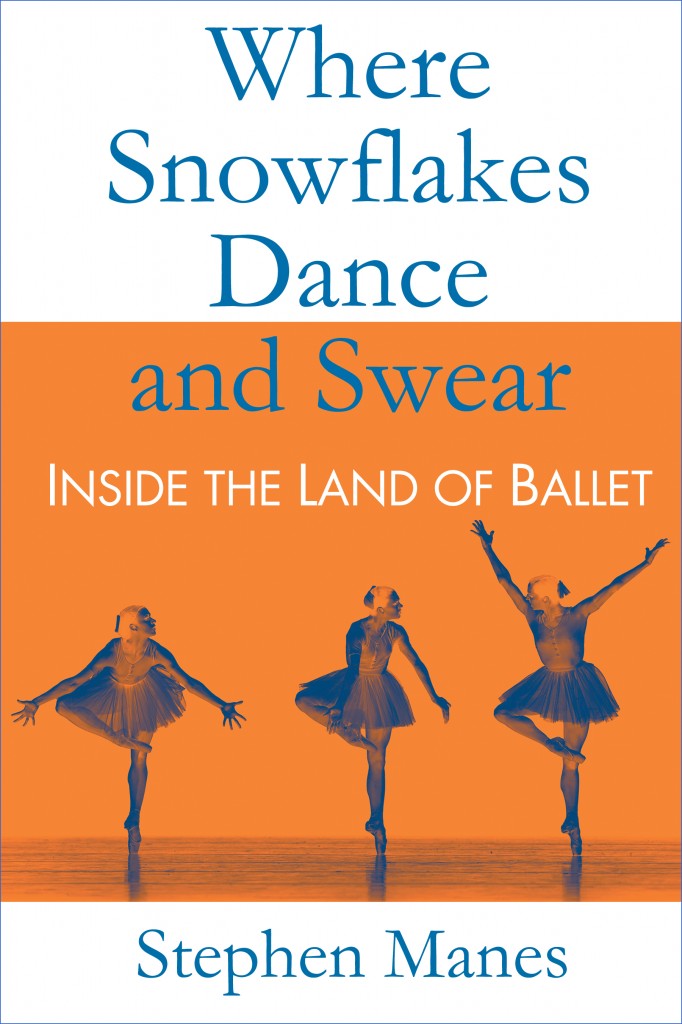
The best example of this is shown in Stephen Manes book, Where Snowflakes Dance and Swear, which catalogs a year in the life of PNB during my third season with the company. While preparing for our company premiere of Jean-Christophe Maillot's Romeo et Juliette,  a flu epidemic struck the company. Due to scheduling and finances, the company only had about 2 1/2 weeks to learn the production, adapt to a foreign style of dance, and fine-tune the choreography. We barely got this production onstage and the company barely survived this illness. I don't remember exact numbers, but at any point during this 3-week period, at least 1/4 of the dancers had spiked fevers well over 102 degrees, lost their voices, had coughing fits, and more. But people still showed up. And if they tried to stay home for a day, like me, they were given a call by the artistic staff begging them to come to the studio to finish learning the ballet. While they didn't force anybody to come in, the pressure was immense. Beyond slowing down each dancer's ability to get healthy, this also risked spreading the highly contagious virus. And boy did it spread!

Dance training is already mildly to aggressively masochistic. But beyond the physicality of the profession, this shows part of the emotional masochism that exists in the dance world. Looking back to my post about emotional training in ballet, it is evident that dancers didn't just happen to turn out and act in this manner. It is taught. We are supposed to sacrifice all for our art. Stories aren't told about dancers who were wildly ill and took a few days to themselves and got better, which allowed them to dance better the next week and prove themselves ready to promote. How common is the story of the dancer that was so sick during a performance that they had to put trash cans in every wing for them to puke into during their exits from the stage? I have heard this same story from so many different dancers, I can't even count on both hands how many times I've been told it. And while the thought of this is gross and repulsive, these dancers tell this story with a sense of pride.

But this experience should not be lauded. I have said this time and time again and I am going to repeat it one more time. We are humans first and dancers second. Our health stays with us beyond our time as dancers. Beyond illness, there is injury. And while this isn't an injury post, it works all the same. The best way I can explain this is through a conversation I had with a friend a few weeks ago. As dancers, we are supposed to be a blank canvas which choreographers can paint a picture of dance on. A painter will never hear the canvas tell them that their brush strokes are too hard. A choreographer expects the same of a dancer. But if a painter pokes a hole through a canvas, they can still hang it on a wall and the canvas feels no pain. Where we differ as dancers is, if the process of our art "pokes a hole" in our bodies or health, we still have to live our lives and experience our non-dancing hours in pain and poor health. It is very difficult to make a reasonable decision about fighting through illness or pain. How does one determine whether it is workable or pushing into a danger zone? It is individual.

As dancers, we can't open up our computer and perform satellite work from home. We need to be present to retain information, study intricate combinations, and gain stamina. The ironic part of the whole situation is that the work of a dancer is one of the most hands-on and communal work experiences available. We touch each other, hold hands, and talk very closely throughout the entire rehearsal process. It would seem obvious that employers should want to keep sick dancers away from healthy dancers to prevent the spread of illness. But in the end, the dancer makes the decision to show up to work ill, and employers rarely send dancers home for being sick. Beyond this, when a dancer is not fully present in rehearsal or lacking energy, they are more likely to injure themselves or their partners. There are many aspects of being ill that would reasonably point to the concept of letting dancers rest at home until they are feeling somewhat better. Employers should want to give an ill employee a chance to get healthy before returning to the studio.

As I evaluate and analyze this issue in dance, I can't say that I necessarily follow my own advice. In the above story about my time with Rochester City Ballet, I obviously worked through a dangerous illness, especially as an asthmatic. As a freelance artist and a performer, I didn't feel that I had a choice in the matter. Over the last week, I was able to take time to let myself rest because of the intermittent period between gigs. But even without the requirement of showing up to work each day, I felt guilty and anxious. This is greatly due to our emotional training. While I did what any sane person would do and increased my chances of getting healthy faster, I couldn't allow myself to rest emotionally. This is one of the great challenges of a dancer.

I was perusing my Facebook this morning and there was a status update that sprung to my attention. The post was about Jenifer Ringer, who recently retired from New York City Ballet as a Principal for many years with the company. She talked about seeing a puddle of snowy slush on the street in New York and contemplated jumping over this puddle that was blocking her path. But then she stopped herself to consider what could happen if she performed such a feat. What if she slipped and fell and hurt herself? But then, instantly, she realized that she was retired and could do whatever she wanted, even if it could potentially cause injury. She stated, "Finally, my body was my own." And how true that statement is. As dancers, we have more control of our own bodies than any other beings on Earth. But as dancers, our career responsibilities and emotional upbringings take away our freedom to do what we wish, or need, to do with our bodies.