Showing posts with label ballet alert. Show all posts

5.15.2016

Developing Your Networking Skills

I've been taking a lot of trips on Greyhound the past month. Getting up way before my usual waking hour to sit among a group of strangers ready to flood New York City the moment we get off this inexpensive commuter bus. Maybe some of my seat mates are going on vacation or maybe a few actually commute regularly to work, but I doubt any of my fellow northeast corridor travelers share the same intention that my visits hold.

Nancy Bielski working with a student at Steps on Broadway (Photo: Dancemedia.com)
I made the decision to exchange subletting in New York and paying two rents for the less expensive, more exhaustive option of commuting into the city bi-weekly (or more often). Other than feeding my soul and technique in my favorite ballet guru Nancy Bielski's class at Steps On Broadway, it is to keep myself present in people's memories and to make new connections with my community. The power of networking is a great skill and resource, especially in our dance world. This was quite evident, if you remember, from our last post when Matthew Powell received the support of his mentor to work on Flesh & Bone, the Royal New Zealand Ballet, and the Slovak National Ballet. For this reason, I need to remain present to fulfill my ultimate goal of finding an institution (or a few) to call my career-home and to bring my choreographic and teaching career forward into their next phase.

In this day and age, one can easily apply to a million jobs and never receive a response. My husband-to-be (May 29 😊) experienced this modern day dilemma before he gave up on living the corporate life and chose to start his own business. While the dance world is a little bit different, many positions in our career field (outside of dancing) require one to submit their information electronically in the most impersonal and out of touch way. Most put in a great deal of time and effort to create a carefully curated representation of what they have to offer an organization, but there is often no guarantee that your information will even be looked at. While this can save these organizations a great deal of time and energy, it can leave the job seeker feeling at a loss when they don't get a response for their efforts. And, beyond this, a majority of higher profile positions often go to someone who already has some type of connection to the organization or their name is suggested by a reputable person who works for them.

The above reasons are why it is important in this dance world to be an ultimate networker. I don't know how I became savvy at this skill. Perhaps, it was innate. But, even at a young age, I would try to learn the name of every peer in the dormitories at summer programs I attended and ask them to share their email and phone number in a small journal at the end of our time together. Honestly, I just wanted to make friends. I didn't realize that I was actually cultivating this valuable skill of connecting with people.


Performing Mercutio w/friend James Moore in Romeo et Juliette at PNB (Photo: Angela Sterling)
Have you ever asked yourself why you don't have a vast network of professionals that you are connected with to offer support and help you navigate our tricky dance world? Are you too shy to talk to people you don't know? Let me offer you some tips to help open up and grow your network. It's funny, actually, when you first meet me I tend to come off as a bit shy. It's a complete facade that I have little control over. I'm a horribly anxious person and I get awkward about getting into conversations with people, even though I enjoy it immensely. I like to talk (a lot), and I know that every person I come across doesn't necessarily want to chat. So, at first, I tend to awkwardly sit back and wait for the other person to initiate.

There are multiple times throughout my days where I am surrounded by people that could become a part of my professional network or my circle of friends. For instance, when taking class with Nancy at Steps, there is an ever-changing array of professionals in class from Misty Copeland to Irina Dvorovenko, Katie Morgan, and beyond. Additionally, there are amazing instructors, former professionals, and non-dance professionals tendu-ing and pirouette-ing by my side. One doesn't usually want to strike up (nor is it really appropriate) a conversation during barre. But there is a bit more freedom for a short chat during the breaks and banter that take place in center. In reality, though, it is best to catch up or initiate a conversation well after you have exited the classroom. If you do try to meet connections through open classes, be respectful that a majority of the attendees are really just trying to focus and prepare for their day.

Beyond this time in open class when I am surrounded by people just like me, there are a few other times to network and make your community larger. If you aren't sure how to surround yourself with those in your field, go to a performance, attend a fundraising event, seek out educational arts programs in your community, or look online. 

Dancers networking freelance networking event
While networking in person at events allows simpler access to meet up, shyness is often a challenging factor for many. If you are going to an event and don't know how to initiate a conversation, bring a friend that is a little more outgoing (but who is aware of your intentions and not going to own all conversations). But be sure to avoid the pitfall that I often fall into, where I only end up talking to the person I came with. Grab a glass of wine (but not too many) if you need to loosen up a bit. Don't interject yourself into somebody's conversation, but don't be afraid to walk up to somebody who looks a little lonely and say "Hi. How are you today?" They may be feeling the same way you do. Once the ice is broken, be sure to ask the person more about themselves and their interests before you talk about yourself and your work. Be sure to bring your business cards in the event that you want to connect beyond your first meet or if a good conversation ends abruptly.

While I don't get to do this often enough, I find it easiest to connect with people at educational events and programs. When attending a pre-show lecture or an informational arts workshop, you know you are surrounded by people who are like-minded and seeking information. Whether they are seeking knowledge on something specific or looking for interaction with their peers, they are generally going to be on the same page as you. And as an added bonus, you will already have a topic in common to hit off a conversation. My only advice here would be to wait until the lecture or meeting is over until you attempt to begin chatting anybody up.
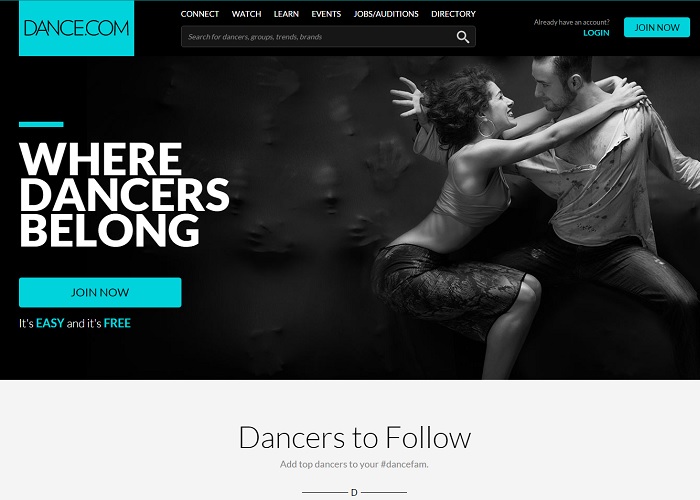
If you need online suggestions, check out Dance.com, BalletAlert, or look for community groups on Facebook. Dance.com is a brand new networking resource along the lines of Facebook, but for dancers. I'm not completely clear who they are catering to yet (professionals, organizations, or Maddie Ziegler wannabes), but you may find what you are looking for here. BalletAlert is an interactive forum of dance nerds. Whether looking for links to reviews of recent performances, discussing your favorite dancers, or digging into the history of ballet, this is a favorite of many. Just beware of falling into the pit of snark and negativity that sometimes runs rampant among certain posters. Lastly, if you are a Facebook junkie like me, use your search bar tool to seek groups catering to art in your city, organizations you love, or topics that interest you. As always, the internet provides a million and one resources if you know how and where to look.

The power of networking is more and more important as we grow more detached from in-person interactions. The Age of the Internet has given us access to most anything we seek. But, surprisingly, it has made it harder for us to actually access people. As I continue seeking ways to continue exploring my choreography and passing on my craft in New York City and beyond, I know that it is less likely to happen based off of cold-emailing and online submissions. My reality is that my network of friends and professionals that I have created and maintain will continue to help guide me on my path of sharing my art worldwide as a dance professional.

(Don't forget to check out my new podcast on the Premier Dance Network & iTunes!!!!)

4.24.2014

Performing for No Reviews

The Seattle Times - one of PNB's regular reviewing publications
It was Black Friday, November 23, 2007, and it was opening night of Pacific Northwest Ballet's The Nutcracker. I was cast in one of my favorite roles, the Sword Doll. And this was one of the first shows of the holiday season, so I hadn't moved into my seasonal Nutcr-apathy yet. I was really hoping to impress the audience in what was one of the few featured roles I had danced at that point in my career. Shortly after this performance, a regular reviewer for CriticalDance, Dean Speer, wrote a review assessing the upkeep of this oft performed production. Towards the top of the piece he stated that the "phrasing is slightly different than in years past – more push and pull; attacking something then letting it resonate. I first noticed this with Barry Kerollis’ Sword-Dancer Doll – punching a sauté développé à la seconde, for example, and then letting it ‘sit’ for a moment before pushing on to the next step. I really liked this, as it allows each thing to read." This was one of my first public mentions. The notice instantly hooked me on getting my name written in any and all publications that came to review our shows.

As a student, the only time you really get a chance to perform publicly are in school shows, lecture demonstrations, and youth competitions. Unless a dancer is in their final years of training, they are unlikely to be involved in any production that get much press beyond small local newspapers and proud parent's Facebook posts. Other than the largest, most prestigious academy graduation performances, reviews are generally non-existent. Once you enter a professional company, it is much more common and appropriate to be publicly scrutinized.

I started dancing with PNB in July of 2004 after spending a year with Houston Ballet. By the time the above review was written, I was already in my fourth season as a professional. It is almost impossible for a Corps member to be called out unless they perform a role that steps out of the group. Could you imagine a dance critic writing, "The 4th flower from the right, Dancey McDancerson, showed great emotion in her developpes." For obvious reasons, it can take awhile for a dancer to get noticed and for critical mention to be publicly addressed. Speer's posting was probably just another Nutcracker article for him, but for me it meant much more. Beyond the fact that I got mentioned positively in a featured role, the interpretation that he was talking about was my own signature. Every year, anywhere from 5 to 10 dancers performed this role. Due to the lack of rehearsal leading into these performances, dancers often had a bit more wiggle room for interpretation. My musicality was uniquely my own and Mr. Speer showed appreciation for that.

After receiving a positive review, many dancers start looking forward to moments that could bring them to the attention of the public and, potentially, the director. The thought in my head was, "If the public notices me, the director must surely see that." And while this may not have been the best way to approach my performances, it definitely offered some great motivation.

As I started to get better roles, more critics in the Seattle area started to take notice of me. I became hungrier for attention. There is a great online forum that is both loved and hated by professional dancers, Ballet Alert. This site is a moderated forum for balletomanes across the world. On the site's message boards, ballet lovers, reviewers, professionals, parents, and more can discuss and debate anything relating to this untouchable profession. PNB had a large base of local fans that were very vocal about dancers and productions (albeit through a computer screen) on this website. Beyond the critiques written in professional publications, Ballet Alert followers often wrote their own reviews and perspectives to discuss and speculate. More often, their words are positive and pensive. But at other times, writings can descend into gossip, speculation, and bullying. As much as company members liked or disliked this forum, many of us kept close tabs on what people were writing.

My next four years passed at PNB and I started to find myself more tied to the reviews I received. I was starting to feel stagnant in the company and assumed that receiving glowing reviews would change my boss' mind. I remember debuting as Mercutio in Romeo et Juliette and waking up each morning to see if anybody had written anything about my performance. The reviews came out and they were quite positive. As the season continued, I added more roles to my resume and received greater reviews. Then, contract time came. I wasn't promoted. And to make matters worse, dancers in the company started coming up to me asking if I had been promoted (most dancers find out that they are getting promoted when they receive their letter of re-engagement). While this was a great compliment, it also left me quite confused. I had performed well all season. Critics and dancers alike had seen my progression. But when it came to the one opinion that mattered, it seemed that I had made no progress.

Studio showing of Maan Singh - Photo: Philip Gardner
After spending one more frustrating year in the same position, I decided to leave my big company roots to try something new. As I started to freelance in medium-sized companies, small organizations, and a variety of projects, I found that I was still eagerly seeking reviews at the end of our production weeks. But now I was performing in less popular venues. At one gig, I performed in a small studio in New York City. And the next was at a performing arts center in Anchorage, Alaska. People were coming to see me perform, but few people were posting about it in print or online.

I remember the first time I danced with Houston Ballet and realized that I didn't have any family or friends in the audience. I felt that I had no cheering section for whom to dance. I learned then to dance for myself and not for the accolades I would be showered with after shows. Once I moved to Seattle, I slowly started to create a presence that was recognizable by critics and regular audience members alike. And while I didn't always get press, I had motivation to impress. All of a sudden, I found myself back at square one onstage at the Wortham Theater with no support system in the audience. It was almost as if the reviews had become my support system.

I had a bit of an epiphany back in March when I performed Romeo and Juliet for Fort Wayne Ballet. My performances with the company marked the first time I was brought in as a Principal Guest Artist to lead a full-length ballet for a company. I have been brought in to dance leading roles many places, but never to carry the entire production. After all of my hard work, I spent a couple of days googling my name, Fort Wayne Ballet, and Romeo and Juliet. But nothing showed up. Initially, I was quite disappointed that nobody had been around to record the occasion. The company didn't film any of the shows I did, so I figured the best way to preserve the feeling that I had during and after the performance was to get an amazing review. You can only imagine the let down of putting that much pressure on getting public recognition in a town of 250,000 that is more interested in sports than arts.

A few weeks ago, I did my final search for a review of the performance. It took one last disappointing look for me to finally get it. What I was seeking was a physical memory of my performance because I so enjoyed it and didn't want to forget the experience. But in my efforts to hold on to the memory, instead of relishing the performance, I was seeking validation that it was a good memory. If this performance is as special to me as it was, I won't forget it. I won't forget the first time that I stared into Lucia Roger's eyes and felt that I saw my love for the first time. Or when we danced the MacMillan version of the Balcony pas, a duet that I had idolized as a teenager. Or how I legitimately cried onstage for the first time over the dead body of Mercutio. Or how the audience instantly rose to their feet after we had experienced a wildly realistic rollercoaster of emotions.

What it comes down to is that we have very few records of our careers as dancers. Photographs, footage, and reviews are the few records we will have of our careers when they are over. As a result of this difficult detail, I was relying too heavily on physical record to validate my experience. What really matters in dance, as in life, is how we felt while we were doing the things that we love. And those memories will be with us forever. A review might remind us of how others perceived us, but only we dancers can remember how it truly felt standing in the glow of the spotlight putting everything we have on the line.

Elizel Long and me from an unreviewed performance in Alaska - Photo: Shalem Photography