Life of a Freelance Dancer

Life of a Freelance Dancer is a blog, journal, and tool for those who are interested in freelancing themselves, that want to know the ins and outs of freelance work, or are just curious about the life of a freelance dancer.

7.15.2015

"Create Your Own Project" series - Make a Crowdfunding Campaign


I know that my readers have eagerly awaited the next post in my Create Your Own Project series. Well, you are in luck! Today, I am here to write about a very popular fundraising tool that can be both wildly successful and embarrassingly abused. If you look up the definition of crowdsourcing, you will find something along the lines of, "obtain by enlisting the services of a number of people, either paid or unpaid, typically via the Internet." This simple idea eventually grew into crowdfunding, a way to reach out to many people for financial support via service websites. If you haven't heard the term crowdsourcing or crowdfunding, I am sure that you have heard of Kickstarter, Indiegogo, GoFundMe, and RocketHub. These are four very popular sites that any accidental (or quite intentional) entrepreneur can use to raise funds for everything from products to projects or to pay substantial medical bills or salvage financial emergencies. How does one go about running an effective campaign to raise financial resources for a project?

(Please take a moment to look at my own example on RocketHub and consider donating to my global dance storytelling project, "Core-ography," by clicking here)

Should I go the crowdfunding route?
One of the biggest downfalls of crowdfunding is that it quickly became an exhaustively saturated platform to raise money. Thousands of people have innovative thoughts and concepts every single day. Some of these people dream of making these innovations a reality. When the urge to create strikes, one needs to be realistic with themselves. Is this passing inspiration or is it something which you are really prepared to fully commit your energy?

Too often I see people with great (or less than great) ideas who create a Kickstarter campaign on a whim. They've put some amount of thought into their wishes and dreams, but very little preparation or hard work into the process that is necessary to be successful (like a business plan, budget, mission, target market research, audience, donors, etc.). I've seen campaigns seeking complete and total funding to start one's own business from the ground up. I have seen campaigns asking in upwards of $70,000 to fully fund one's new startup. When I see people asking the public to hand them a no-interest, no-effort gift, I feel hints of embarrassment that they assume people like them so much or think their idea brilliant enough that people will just throw money at them. In these cases, I'd suggest going to a bank and asking for a loan.

My best suggestion here is to tell you to take a moment before you go the easy road to success and consider whether you are being rational in jumping into your campaign. Chances are that your integrity and intentions will be put on display in your first foray into crowdfunding. And if you look greedy and lazy in your first campaign, it will be difficult to regain public trust for any future campaigns. Take the time to do your research on your project/product. Are you truly being innovative? Are there better ways to secure financing? Are there multiple avenues to approach funding your project? Have you done any budget research to assure it is realistic? Check all of these items off your list and, only then, see where a crowdfunding site may fit. Perhaps, like me, crowdfunding isn't your initial destination to seek support.

To finish up this section, I feel it is really important to be acutely aware that most people can see right through a crowdfunding campaign. Whether one chooses to be transparent or not, most potential donors can easily determine whether your ask is a well-conceived idea or a lazy approach at getting free money from people. You need to show that you are willing to put out an effort equivalent or greater than the gracious donations of your supporters.

How do I choose which crowdfunding site to use?
So, you've put a lot of thought into whether crowdfunding is the appropriate route and you've decided that all systems are a go. There are a handful of different sites to choose from and, for the most part, there are only minor differences between each individual service.
My "making-a-decision" face?

The most popular site to raise crowd-sourced money is Kickstarter, likely because it was first to break into the mainstream. Here is a great article produced by the Foundation Center (the best place to search for grants of all kinds - thanks Chris Rudd) that shares different criteria to consider when considering the best platform for your project. Each of these sites has a different look and a unique format, so it really comes down to preference when looking at their templates.

What is most important when considering a crowdfunding platform is the fees. There are generally two fee scenarios for a majority of these sites. These companies are providing a service for any entrepreneurial soul to seek funding, so they deserve payment for providing their services and for funneling donations back to you. The two most common fee types that you will find are either an all-or-nothing approach or flexible-funding that allows more leeway if you don't meet your goal.

The all-or nothing setup means that you either reach your goal and receive funding for your ask or fall short and get nothing. Essentially, this system is put in place to encourage fund seekers to project realistic fundraising goals. As I stated earlier in this post, I've seen crowdfunding projects with unrealistic goals fail so badly that I actually felt a hint of embarrassment watching the entrepreneur reach 3%-10% of their goal in the entire month of their campaigns. They had asked for such an exorbitant amount of money that it was clear to everybody except themselves that they weren't being realistic. Beyond that, they had shown no effort on their side other than putting together a project page. The plus-side of using an all-or-nothing approach to your fundraising campaign is that, if you are successful, you get a smaller percentage taken out of the money you raised when it is funneled back to you. For these websites, I have seen fees charged in a general range of 4%-7%. In other words, if you raise $100, the service will take $4 to $7 of what you raised.

The second type of fee charged for these services is typically called flexible-funding. This works with two possible outcomes of your campaign. Either you reach your goal or you don't. If you reach your goal, then you are charged a lower percentage similar to the all-or-nothing approach. If you miss the mark, then a larger chunk of the pie is taken out of what you raised. I have seen these charges range anywhere from 8%-12%. These higher fees are used as a deterrent to those setting unrealistic goals. In this situation, you need to determine if it is more important that you receive a larger chunk of the money you raised (and you are absolutely confident you will reach your goal) or if you are comfortable taking the risk of not meeting your goal but still receiving a (smaller) portion of the monetary reward of your efforts. Some platforms force you to make this decision at the launch of your fundraising, while others will wait until the end of your campaign to see whether you met goal or not.

Another item that you must consider when determining your fundraising platform will be your time frame. Some sites only allow you to hold a campaign for one month, while others will allow you to fundraise for anywhere from 30-90 days. If you feel a longer campaign may benefit you, this may be a determining factor. But keep in mind that the longer your campaign runs and the more often you post about your fundraising, the more desensitized and annoyed your audience may be with your ongoing sales pitch.

Lastly, if you want to offer tax-deductible donations as a part of your crowdfunding campaign, you need to check in with your fiscal sponsor to see if they have a required platform, different fee schedule, or approval period. In preparing my fundraising campaign for my upcoming Core-ography project, I was required to use RocketHub's platform. I also had to seek approval from New York Live Arts before RocketHub would allow my project page to go live.

How should I go about creating my project page?
In developing my fundraising campaign, there were many things to consider. I really appreciated the template that RocketHub provided for me to set up the details of my project, my background information, rewards for donating, and further items.

I started putting my project page together by placing and editing the description of Core-ography I had already developed when applying for fiscal sponsorship, grants, and scholarships. From here, I wanted to create a few topics for the body of the project page that felt relevant to share with potential donors. This will be different for each and every person. One thing I have learned is that you need to provide enough details to give a clear picture of your end goal, but be brief enough that those potential donors with limited time don't give up on reading about your project. It's a finely tuned process.

The content that I included in the body of my project page includes a description of my project, a statement explaining "why you should donate to Core-ography," a list of items that donations will be used towards (budget), the Core-Artists who will take part, and my qualifications to make this project a reality. Each of these items offer something unique. Aside from the project description, I am hoping to build trust and purpose in order to build a bond with my audience and make my work relevant to them. Core-ography does matter to more than just me, but I need to cultivate interest and relevancy. I also included some details about my budget. This way donors know where their money is going and trust that I have already planned where funds will go? Lastly, I felt it was important for donors to know the artists that they will be supporting and their qualifications? All of these seemed like questions I would ask somebody before giving them some of my hard-earned money. So, I went ahead and answered these questions ahead of time.

Perhaps, the most taxing part of creating my page was determining the scaling of donation levels and the rewards that would be offered for giving to our campaign. The challenge was in finding perks that were realistic and affordable, yet meaningful and worth their value. I suggest opening options for people of all walks of life to donate. I find simple delineations at $10, $25, $50, $100, $250, $500, $1000, $2000, etc., are the best way to go. For my campaign, I decided to add one more category at $175 to allow a smoother jump from $100 to $250. Having this many options allows for those that want to give but have little expendable income, as well as those that are more secure in their finances. Unless you are capable of providing rewards where you can pay for shipping, travel, or products, it is best to keep your offerings reasonable. For instance, I am offering recognition in credits of our videos and a personalized thank-you for lower level contributions and Skype sessions or signed shoes from our Core-Artists for higher level giving, among many other options.

Now, if you have ever taken a look at any crowdfunding project, you know that the one necessity for any campaign is a quality video speaking about what you are creating and your intent for the funds you are seeking. It is important to put a face to your campaign. I found that putting together my ask video was the most fun, yet tedious aspect of producing the project page. If you don't have high-quality film equipment, do your best or ask a friend for help. I filmed my speech using Photobooth on my Macbook Pro and spoke right into my computer screen. I found that it was easier for me to speak each paragraph and then edit them together, instead of trying to nail the whole speech in one fell swoop. Plus, giving this speech in my city apartment presented many challenges with noise being recorded from the streets outside my window. Also, an audience doesn't want to stare at a talking head for a few minutes. So, be sure to add images and footage into your videos. This will also help with the edits you will need to make inbetween your transitions of your speech. If you do choose to go ahead and use some music in the background make sure it is either extremely relevant or quiet and lacking any acoustic distractions.


Who should I ask to donate to my campaign?
The best thing about crowdfunding campaigns is that you can ask anybody you know to donate, from personal contacts to acquaintances on your social networks. Previously, I mentioned a range of monetary amounts to ask for and the appeal to donors of all walks of life. So, at this point, you can send out your campaign to whomever you feel comfortable. Send out personalized emails to those that you think can make a larger donation. Post on your social media pages. Ask your friends and colleagues to share your campaign.

Do whatever you feel is necessary to meet your final fundraising goal. Don't be shy, but be conscious of your campaign. Keep in mind that there is a fine line between getting people's attention and reminding them versus trolling your contacts and ignoring any social protocol whatsoever. Scrutinize the response that you get to your campaign and fine-tune your approach on a daily basis (don't be afraid to lay off selling your campaign for a few days). Personally, if you ask me to donate to your crowdfunding campaign once, I will consider it. If you check in with me a week later, I may welcome the reminder. But if you check in with updates every other day, I will probably ask you to take me off your list. Be socially conscious in this greatly over-saturated market.


Jackie McConnel in "Basic Disaster" - National Choreographers Initiative 2014 (Photo: Dave Friedman)
Now that you have the tools to start your own crowdfunding campaign, go ahead and start building a foundation to produce something that you love. That is exactly what I am doing right now. I have never done this before, and I don't plan on doing it again at any point in the near future, but I am going to ask my audience at Life of a Freelance Dancer to consider making a donation to my Core-ography project. For the past three years, I have written over 130 posts and received nearly 100,000 views from over 50 countries across the globe. I love writing and am so happy to offer my insights and share my passion for dance, choreography, and writing with all of you on the regular. If you appreciate my writing and believe in my project, please take a moment to consider making a donation of any amount to my global dance storytelling project (or, if that isn't feasible, a share of my project page). You can view my RocketHub campaign by clicking here. Every little bit helps!

Thank you for reading and for the support I feel from you all with every post that I write and share! Cheers!
Posted by Barry Kerollis at 1:30:00 AM 2 comments:
Email ThisBlogThis!Share to XShare to FacebookShare to Pinterest
Labels: campaign, crowd-sourcing, donation, entrepreneur, flexible funding, Foundation Center, funding, fundraising, GoFundMe, Indiegogo, Kickstarter, money, New York Live Arts, raise money, resources, rewards, RocketHub

6.27.2015

What Have I Been Up To? - AK-BK Contemporary Ballet Workshop


Hiking up Bird Ridge - Indian, AK
I know! I know! It has been three whole weeks since I have written a blog post. And for that I apologize. What I have been finding is that the older I get and the more elaborate my activities and projects become, the more intense my focus will be for the periods of time that I am working. Essentially, this is what happened since my last post at the beginning of June. I have been home for a whole three days and am finally getting situated again, even if not completely over the hump of my jet lag. So, here is an update on what I have been up to!

For the past few weeks, I had what I would consider my best experience in Alaska. Now, most of my time in the Last Frontier has been incredible. But this time around things were a bit different. First off, I got to do things on my terms. I wasn't being brought up to work for a company. I chose my housing. I created my own program. I brought my partner along for the whole ride. I even took a vacation at the end. All in all, it was a spectacular trip and I came home feeling invigorated, inspired, and ready to keep pushing forward with my Core-ography project, teaching, and the development of my art.

So, what have I been up to these past few weeks? When I left Alaska in December, I promised my students that I would return to Anchorage this summer. What I didn't foresee was that the terms expected to bring me back to this northern state would change and I would have to fulfill this vow on my own. When this became apparent to me, I sought out a way to make my own summer intensive a reality. Luckily, I found an amazing advocate for dance in the state's biggest city, Pulse Dance Company director Stephanie Wonchala, who graciously offered her studio space to hold the first (hopefully annual) AK-BK Contemporary Ballet Workshop.

Now, I have taught for many organizations. From teaching company class for Eugene Ballet to working as a guest instructor for Peridance Capezio Center, to teaching master classes at Los Angeles Ballet Academy and beyond, I have become quite comfortable with my teaching skills. But to undertake my own program was quite nerve-racking. Not only did I have to find my own studio space, I had to worry about marketing, enrollment, curriculum development, tuition payments, travel, accommodations, and legal aspects of running a program for students. I was lucky to have two helpful ladies in Alaska assisting me with a handful of these items. While I knew that this would be quite the undertaking for a one-man show, I felt responsible to follow through for these amazing teens and young adults who have limited local opportunities when it comes to training options. I always tell my students that it is not my responsibility to inspire them, but instead their responsibility to inspire me to want to push them further. And as a testament to these students and how they have inspired me in the past, I created a program just for them.

Classical Technique (Photo: Pamela Montgomery)
For two weeks from June 8 - 19th, Studio Pulse was full of intermediate and advanced level students from Anchorage, Palmer, Wasilla, Butler University, Colorado State University, and the University of Arizona. We began each day with a classical ballet technique class. Many people get confused when they hear the term contemporary ballet. I have oft been asked to teach classes in this genre, but have turned down the request because I don't fully believe in a contemporary ballet class. It is my opinion that contemporary ballet is the perfect fusion of classical ballet and contemporary dance techniques. To teach a class in contemporary ballet would endanger tainting the beautiful lines and necessary strength it takes to properly execute ballet technique. For this reason, I strongly believe in having classical technique separated from contemporary movement. So, we started each day with nearly 2-hours in ballet class.
Contemporary Technique (Photo: Pamela Montgomery)

Following morning technique, we either held pointe class, learned classical or contemporary variations, or explored improvisation techniques. After a short lunch, we spent our afternoons expanding our movement into the contemporary realm. In these classes, we worked through a progressive warm up, honed our classical work into a more stylized movement quality, and used choreographic techniques to develop a collaborative piece of choreography.

At the end of the two weeks, it was quite exciting to see the physical and emotional progress my students had made in this short period of time. In my classes, we don't only work on perfecting technique. I make sure that class is a conversation between my students and myself, where we discuss the reasoning for why things are taught a certain way and the emotional implications of tough pre-professional training. Also, I strongly believe that the studio is a place where it is perfectly acceptable (and encouraged) to fail. Without failure, we can not figure out how to succeed. My students were preparing to attend summer intensives at schools including Ballet Met, Kansas City Ballet, Ailey, Ballet Arizona, and Walnut Hill (to name a few), and my goal was to make sure that each student was wholly prepared to show themselves at their strongest for these programs.

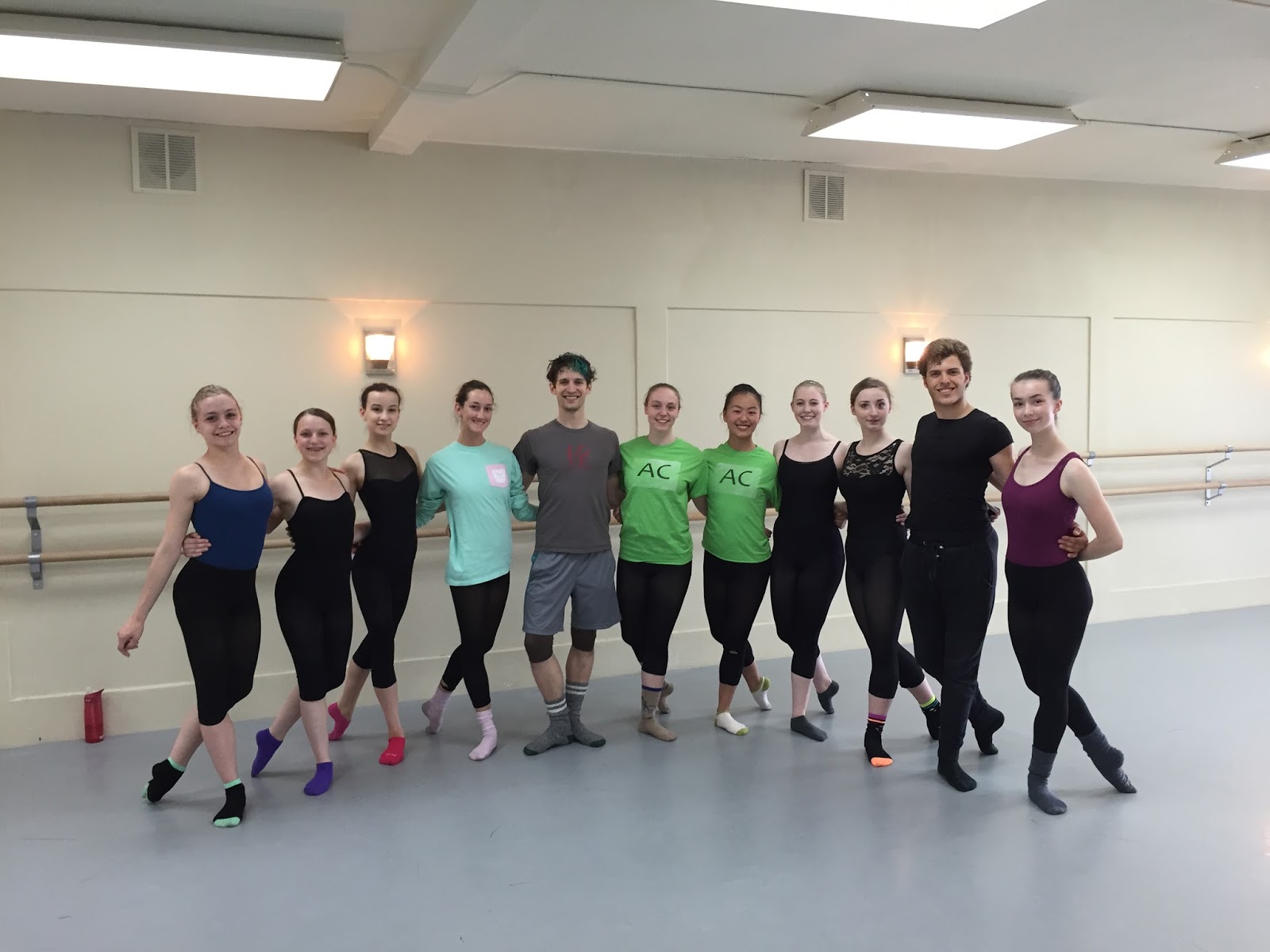
Students of AK-BK Contemporary Ballet Workshop (minus 3 students)
If you thought running my own summer intensive wasn't enough, I also wanted to offer something to the greater freelance community of Anchorage (yes, there is a small group of freelancers in the state's capitol). A few times during my program, I taught master classes to local adult dancers. I also spent some time staging a short piece that will be performed in Pulse Dance Company's upcoming season. Working with these dancers was inspiring. My hope for these dancers is that they can be major advocates for the arts and dance in a place that needs passionate people to educate their community about why they should attend performances and give to the arts. This is not an easy task, but I feel that they are up to the challenge.
Working w/ Pulse Dance Company

Usually, at the end of gigs I've been brought in for, I head home or onto the next job. But like my time in New Orleans, I chose to tag a few more days onto my trip in Alaska. While this was my 4th extended period of time in this great state, I was astounded by the numerous activities available that I still hadn't explored.

One of the brown bears we made friends with (about 10 feet away)
Along with my partner, a friend joined us in our continued explorations of south-central Alaska. Immediately after my last rehearsal with Pulse Dance Company, I ran to Ellison Air to fly on a 6-seater plane to the Lake Clark Wilderness Reserve. As we flew past Anchorage over Cook Inlet into the wild, we saw the incredible lay-out of this glacially carved landscape. With the color of mineral-rich soil staining water bodies, red-tinted tundra, and stunningly peaked mountains, we flew for nearly an hour in our hunt for bears. Yes. BEARS! After landing in a lake and transferring to a small boat, we floated for a few hours, where we viewed brown bears swimming and eating salmon (within a few feet of our boat), bald eagles flying above our heads, and fish jumping out of the water in preparation to run up Wolverine Creek. Perhaps, the most intense part of our journey was when two of us had to briefly depart the boat to walk a short trail in deep brush to an out house. We couldn't see left or right as we pushed brush out of the way and screamed at the top of our lungs in this forestry teeming with bears. We yelled and clapped to warn any that might be sleeping beside us as we walked by that we were heading their way. Next time, I'll just go off the side of the boat.

Beautiful glacial blue of Surprise glacier
The day after our adventurous bear outing we headed to the odd town of Whittier, where you must drive through the longest multi-use one-way tunnel in the world and nearly all of its denizens live in one tall apartment building. From here, we took a 26-glacier boat tour on Phillips Cruises. This 5-hour trip had us watching whale fins slapping the water, sea otters swimming on their backs with babies on their chests, and amazingly ancient endangered glaciers of all types. While the stunning beauty of this trip will definitely remain in my mind for years to come, the obnoxious nature of the people on these boats will hopefully fade. To see so many people stuffed on a boat to view endangered nature and to see how selfishly they acted to catch a selfie was a sad reminder of why many of these places are at risk for being destroyed or lost.

After our glacier tour, we headed across the Kenai Peninsula to the stunning town of Homer. I love this place and have fond memories of my 31st birthday here. I received a surprise from our friend who had secretly convinced my partner to cancel our accommodations. Instead, she had us stay with her at the top of the hill in Homer with a glorious view. For the next two days, I essentially rested my AK-BK exhausted mind while taking in the culture of this fishing town and sitting on the couch of our house staring at the incredible view.

Panoramic of our home and view while staying in Homer, AK
Once we had completed our two days of rest in Homer, we headed back to Anchorage to catch our flight home. But Alaska wasn't done with us yet. Along the drive back, multiple moose (bucks, moms, and babies) came to the side of the highway to eat a meal and pose for our cameras. We made a stop-off at an incredible artist's wood carving outpost in the middle of nowhere. We stopped in Soldotna before heading to the miniature, historic town of Hope for dinner. After enjoying too much time talking to the wood carver's wife and stopping to determine how to remove a bird from the grill of our car (as we left Hope, it flew in front of our car...I guess it had left Hope behind), we were feeling rushed to get back to our home-stay to repack before our 1 AM flight. But incredibly, at about 9:45 pm, as the sun still shined brightly, our lateness happened to run into a rare phenomenon known as the boretide (explained here) in Cook Inlet. As I dramatically threw the car into a U-turn on the Seward Highway, my car-mates didn't understand why I had acted so erraticly. As I threw the door open and ran away from the car screaming, "GRAB YOUR CAMERAS AND RUN!!!!" they quickly realized why I was so excited. Surfers and Beluga whales alike were riding this 6-ish foot wave that dramatically sweeps through Cook Inlet as it transitions past low-tide. Alaska was clearly waving goodbye to us after an incredible 3 weeks in the state.


I never expected to visit Alaska in my lifetime. When my partner and I decided to leave Seattle, we made a bucket list for our time left in the state. One item on our list was to visit Alaska since it was so close to Seattle. Unfortunately, that didn't happen and we wrote off visiting since it wasn't an easy possibility. Little did I know that only a few short years later, I would proudly call Alaska my 2nd home. I can't wait to return to this magical state, whether it be before or during my next AK-BK Contemporary Ballet Workshop!

Cheers to a successful trip to Alaska!!!!!

Posted by Barry Kerollis at 5:08:00 PM 1 comment:
Email ThisBlogThis!Share to XShare to FacebookShare to Pinterest
Labels: Ailey, Alaska, Anchorage, Ballet Met, bear watching, boretide, classical, glacier cruise, Homer, improv, Kansas City Ballet, Pointe, Pulse Dance Company, Studio Pulse, summer intensive, Technique, variations, Whittier

6.05.2015

Travel Post - It Is Only an Airport - CALM DOWN!!!!!

Many of you may have have been disappointed that I wasn't living up to my claim of being a nationally touring freelancer over the past few months. Honestly, I needed a break from the chaos of sitting amongst my fellow homo sapiens at airport gates from city to sparkling city, among other reasons. Yes, I traveled by bus to New York City a handful of times over the past 6 months (and luckily took the Bolt Bus instead of the train the night of the Amtrak crash), but I haven't existed amongst the rank and file economy class of aerial travelers for some time. It has been glorious to say the least. But, I'm back at it. In fact, I began writing this blog on my phone waiting in the security line at Philadelphia International Airport and continued while flying from Philadelphia to Phoenix. Now, during my layover in Phoenix on my way back to Anchorage, I am beginning to transcribe it from a random table at a random coffee stand with this beautiful image burning color into my eyes.

Looking out the window at the airport in Phoenix
With that said, I'm actually quite inspired by reentering the regular travel schedule of a freelance dancer and choreographer. I am heading back to Alaska to kick off my inaugural intensive training experience, AK-BK Contemporary Ballet Workshop. And, as I was attempting to check in for my flight with the ticket attendant waving me to the counter, not one of the three people blocking my path moved (or even turned their heads) when I kindly, but audibly spoke, "Excuse me." There is just something about airports that make most people lose their sensibilities and act like animals sitting around a watering hole, a la Mean Girls.


So, this time around, I've decided to have an interlude list blog between all of these "Create Your Own Project" series postings. With that said, I am here to offer you all of the advice you could ever need on how to CALM DOWN and act with civility when you are at an airport. Cheers!

- Keep this in mind at all times. It's just an airport. It is no different than the rest of life. In fact, the rules are almost exactly the same as they were in elementary school. Stand in line. Be nice to and aware of the people around you. Listen to the people in charge. And you will have few problems. Simple.

- If you are all like, "OMG!!! I get nervous before I fly...and sometimes it...umm...affects my stomach...but I need privacy...to...umm..." too much information, DON'T FRET! There usually are bathrooms located on the floor where you collect your ticket and drop your baggage off. These lavatories are usually completely empty and absolutely spotless. Aside from the occasional employee who goes in there to take a whiz, nobody goes in there or seems to know they exist.

(Note: at this point, my flight is probably already boarding...and I'm still sitting here in the cafe typing my blog. See how calm I am?)

- If you have a question or concern, ask an employee or TSA agent. They may seem to rudely ignore you, cut you off, or be short with you. They have a lot to tend to. Just wait patiently until they can find a moment to answer you. If you stand there and wait for them to assess the many situations in front of them, they will eventually give you a competent, attentive answer...even if they don't smile and say "Have a nice day!" They are more interested in maintaining all of the crazies running around than giving you their full attention and offering a smile. And, more often than not, when they realize that you get how it works, they will be nicer and more willing to help you out.

- Oh no! You raised your voice at or approached an airline worker or security agent with an angry tone. Be prepared for them to have no interest in assisting you in any way, shape, or form. It, honestly, is never ever acceptable to treat airport employees this way. No matter how in the right you are, they are in control and can make your trip miserable from start to finish.

In no rush...
(OK...I finally left the cafe at this point. I was one of the last people to board my plane. And I even had time to take a picture!)

- I have flown hundreds of times and my luggage has always shown up at my location...eventually. If your luggage doesn't show up with your person, unless you are carrying an organ for transplant or the hope diamond, calm down, take a breathe, and stop somewhere inexpensive like Target (and price-match) for a cheap new outfit and some toiletries. Chances are you'll have a good memory/story every time you wear it again. I always find that my best experiences come from working through adversity.

- Employees and TSA agents want you to make your flight. You aren't the only person that has somewhere to go. You honestly don't need to be at your gate until about 10 minutes before departure, when they close the door to your plane. If you are cutting it close, talk to an airport employee. Just understand that everybody's goal is to get you to your destination. If you miss your flight, not only are you a hassle to the airline, you are lost revenue.

- With the above said, you don't need to be at your gate an hour before your flight (if I haven't driven that point home yet). I usually show up about 5-10 minutes after boarding begins. What's the rush? And who really wants to be the first passenger on the plane to stake their claim and feel pride in their victory of knowing they made it on the flight. I'd rather be the last person on the plane and shorten the length of time I'm strapped into those damn uncomfortable economy seats. Everybody on that flight is going to get to their destination, whether you are first or last.

- Do you really want to drag your carry-on around that airport during your layover? And how often do you truly get up to pull something out of it during the flight? In fact, I don't think I've ever seen somebody pull their rolling luggage down into the aisle mid-flight, unzip it, pull something out, and put it back up in the overhead compartment. I always pack my heaviest items in my carry-on to save on baggage fees, then walk straight to the counter at the gate and offer my carry-on to be checked to my destination. It's free. It helps. It's not a hassle. The gate agents love you for it. And a majority of the time, I only needed that extra thing from my carry-on before I got onto the flight.

- You are not the most important person in the airport (unless, perhaps, you're an A-list celebrity). Just like driving or walking down the street, your time is not more important than everybody else's. Calm down and act with a sense of humanity.

- You've traveled more than once in your lifetime? Congratulations...you've been delayed. Now calm down, grab a beer, charge your devices, and do something practical. Write a blog ;-) or play a game. Or explore your terminal. Or find a quiet place in a corner of the airport and take that nap you need because you were too nervous about your travels to sleep.

- You've lost your ID or passport. Calm down. Think about the places you might have left it or put it down. Is it in your car? On the seat of the train? At the magazine shop's counter? Can't find it? PANIC!!!!! Honestly, this would be the only time I would really lose my cool.

- AHHHH!!!! I have to get scanned by an X-ray machine. Is it gonna give me cancer? How invasive! Chill! The shadowy silhouette of your penis or breasts are nothing the TSA agents are writing home about (or taking pictures of). Again, you are one of thousands of penises and breasts being scanned each and every day. Again, you are not the most important person walking through the airport.

- Rolling luggage rolls behind you. Turn your head around and look behind yourself every once in awhile. Also, don't walk into my rolling luggage. I just walked by you and you clearly saw it. But you lack enough common sense to slow down (or have lost it in your airport panic). And if you trip yourself over my luggage, don't give me a dirty look because I'm already flashing one back at you.

- If somebody says "Excuse me," look at them and determine what they are seeking. "Excuse me" does not mean "STAND YOUR GROUND" and ignore everybody around you."

- Not all security lines are created equal. Maybe you can go to a security line that is located a bit further away in distance, but has a much shorter queue. Most terminals are connected once you get past those pesky TSA procedures, anyway.

- If you have to suffer through a flight of loud talkers and crying babies, it is probably your fault for not making a playlist to block out the noises echoing back and forth in that happy tube we call a fuselage.

- I've mentioned this before, while you are waiting to go through security you should be emptying
your pockets into your bag, pulling out your ID and boarding pass, and prepping to remove your laptop from your carry-on. There is no excuse for being unprepared and imploding once you walk up to the conveyor belt. Maybe, mentally preparing in line will occupy your panicked thoughts about missing your flight or losing your luggage.

- Nearly everything you travel with can be replaced. If it can't, leave it at home or keep it on your person at all times. Though, if my phone or ID go missing you might see some frantic actions.

- Need to waste time in a terminal? If it is a big enough airport, treat the shops like the mall. Don't buy anything because it's likely overpriced, but go window shopping. Or, even better, download the game Ingress on your phone and run around the airport stealing portals for good or evil (just make sure to leave enough time to recharge your phone).

- If you don't plan on watching your kids or teaching them appropriate airport etiquette, don't conceive them in the first place.

- If you plan on having a bad attitude on the plane (reasonably or not), whether with a fellow passenger or a flight attendant, prepare to be shamed. A few years ago, I got snappy with an elderly man sitting in the seat behind me in the middle of Nutcracker season. He probably pulled on the back of my seat about 20 times throughout the flight. I was burnt out on traveling and exhausted from all of my gigs. Whether I was in the right or not, the death stares and shameful looks I got from those around me took away any gratification I got from having my seat stay in one position for the last 2 hours of the flight.

It's JUST AN AIRPORT!!!! and not worth the stress
Remember...airports and airplanes are not unique or uncommon experiences. While it may be that for you, at any given time thousands of people are flying miles above your very head. There is no reason to treat an airport experience like you are standing in a depleted food ration line after a natural disaster. As I like to say, CTFD (which isn't only an acronym for Career Transitions for Dancers...and may begin with the word calm and end with the word down).


Posted by Barry Kerollis at 5:23:00 PM No comments:
Email ThisBlogThis!Share to XShare to FacebookShare to Pinterest
Labels: airline, airport, AK BK Contemporary Ballet Workshop, Alaska, anxiety, boarding, carry-on, layover, luggage, national tour, nerves, Philadelphia, Phoenix, rules, security, stress, Target, travel, TSA

5.22.2015

"Create Your Own Project" series - Writing Your Own Budget

In the first two parts of our Create Your Own Project series, I talked about gaining fiscal sponsorship in order to accept tax-deductible donations and how to write a fundraising letter to obtain those investments. For the third part of this series, I will go into detail on how to write a budget for your project. As a dancer, you rarely have to worry about funding beyond, “Am I going to get paid by this presenter?” Now that you have decided to make art on your own, you have a lot more to worry about then simply collecting a salary. If you are following my series as a step-by-step process, you may find things a little backwards, as you will likely need to determine your budget in order to apply for fiscal sponsorship. In the end, there is no correct order to execute these items. But in order to gain the trust of donors and sponsors alike, you will need some semblance of a budget in place.

You want me to write a budget?
Where does one start when writing a budget? Again, I don’t think there is a proper place to start, but this is how I went about it. First, I looked at my project and picked apart major aspects of production that will require funding. Core-ography has a multitude of parts that need financing in order to execute the project fully. It involves dancers, film, editing, travel, choreography, and more. To make life easier, I broke my budget down into 7 categories. These areas that can't be executed without cost include equipment, artist fees, travel, legal fees, facility rental, salary, and unexpected costs. Each of these areas are important to the quality of my final product, so I took these broader subjects and broke them down a bit further.

One of the most difficult parts of writing a budget is the unknown. While there are methods to writing the financial requirements to fulfill your vision, it can be challenging to determine exactly how much money to seek out. If you create a plan that seems way out of proportion, you may turn off any larger-scale donors, grant-makers, or sponsors that see your financial plan as impractical. Especially for first time project-makers, if you create a budget that appears grossly over-projected, you may threaten losing the trust of those that want to see your project come to fruition. While funders give to artists because they want to share in their art, they also want to see the proposed product come to fruition.

Be practical when adding up the sum of your expenses, but don’t go too far in the opposite direction. If you plan for too little within your budget and later find that your expenses are much greater than you expected, you are going to run into some tight spots or risk failing to complete your vision altogether. Find a middle ground and try to come from a practical standpoint in your projections.

Now that I have shared the broader list of places that I need to raise money for Core-ography, let’s talk about how I broke down these categories. Since this project relies on my ability to film high-quality content, I know that I need a professional camera, lens, microphone, and tripod. There may also be additional accessories necessary; like an additional battery or travel case. Beyond this, I need a computer with high-quality editing software that can also handle loads of video footage.

In determining my needs, I didn’t suddenly become an expert on the essentials of a filmmaker. I reached out to my gloriously talented friend, Pacific Northwest Ballet videographer Lindsay Thomas (she is responsible for most of the videos from the PNB channel, like the one seen below), who is quite the expert at dance and film. She offered me suggestions for equipment, as well as less expensive second options in the event that I don’t meet my budget for costs. Whenever you find that you lack knowledge in an area of your project, brainstorm within your network to find friends and colleagues with expertise that can help guide you. The best projections come from somebody that has already been through what you are about to experience. Don’t be afraid to reach out.


Next, a major part of my Core-ography project is traveling on-site to work with each artist. My breakdown for this includes transport and accommodations. While I haven’t yet purchased my tickets for travel, I did a search on Orbitz of round-trip airfares to the cities I plan to visit. For some, traveling by bus or train is more feasible and much less expensive. Taking a general look at fares on plane, train, and bus, I projected that most round-trip plane tickets would cost about $500. Since 6 of my artists are outside of the northeast corridor, I must fly to work with them. When it comes to the other 6, it will probably be more financially responsible and even, possibly, easier to travel via train or bus. Beyond travel, I also researched the average cost of one week in a hotel room on-site. I may be able to defray costs by staying with friends. But I can’t project the possibility of this happening until I solidify travel plans. So, I included the cost of hotel accommodations with 8 of the 12 artists with whom I will be collaborating. Taking into consideration that I live in Philadelphia, have plenty of friends to stay with in New York and Seattle, and will likely figure out one more place, I projected 8 weeks worth of hotel stays.

From here, my next costs are artist fees, legal costs, and facility rentals. Obviously, you want to provide your dancers incentive beyond sharing their art and getting exposure. If an artist is providing you their time and skill, then you should be providing them with some compensation. Now, to get your artists on board and to make sure that they are committed to you and you to them, you need to have a contractual obligation between each other. Since this is your first time creating a project, it is highly unlikely that you understand how to write a legally binding contract. I do have a lot of experience with contracts, especially since I prepared and negotiated a three year contract at PNB. But this was with the assistance of AGMA personnel who negotiates contracts for a living. Even with my substantial experience with AGMA and working as a freelancer, I am still planning on reaching out to have an outside party take care of these documents. Lastly, I took into consideration that I need appropriate studio space to work with my artists throughout the weeks that we work together.

The final two areas that artists surprisingly leave out of their budget are salary for themselves and unexpected costs. If a dancer/choreographer is creating art and investing a great deal of time into their work, they must plan to pay themselves. Yes, artists often have passion projects. But passion doesn’t put food on your table or a roof over your head. It can feel selfish and pretentious to include a livable wage in your costs, but it is, perhaps, the most important part of your budget. Beyond this, I feel one should always include a bit of wiggle room for emergencies. Perhaps, I need to change my flight or the camera lens breaks after an accidental grand battement. For this reason, I would suggest that you always leave room for unexpected costs in your budget. Again, don’t be outrageous, but allow some wiggle room to assure yourself that a minor snafu doesn’t become a full-fledged crisis.

Keep your head from spinning and plan for unexpected costs (Photo: J.J. Tiziou)
One thing I keep in mind when sharing my budget with potential funders is that costs can be offset by donated equipment and space, shared accommodations, crowd-sourced funding campaigns, and grants. Rarely will an artist fund the entirety of their project through private donations. For this reason, it is important to project your budget to be fulfilled by an array of funding options. Just like a 401(k), the more diverse your portfolio of funding possibilities is, the more likely you will be able to meet or exceed your budget goals. Now, go ahead and project your financial needs and start figuring out how to get people and organizations invested in your art.
Posted by Barry Kerollis at 7:29:00 PM No comments:
Email ThisBlogThis!Share to XShare to FacebookShare to Pinterest
Labels: 401(k), art, artist fees, Core-ography, donors, editing, equipment, film, financial plan, financing, funding, grant-makers, investment, legal fees, Lindsay Thomas, project, salary, sponsors, travel

5.18.2015

Core-ography gains attention in Philly Magazine

Last week was a very exciting period for me, which had me teaching at Peridance Capezio Center in New York City. Beyond that, I received good news on multiple fronts that I will share with you when I am able. With all of that good stuff happening, I was really excited to have an article come out in Philadelphia Magazine's LGBT section, G-Philly, about my upcoming Core-ography project. For me, this article was so exciting because it is the first public mentioning of this Youtube project. Seeing it in print made my heart flutter a bit, in anxiety and excitement, because it validated the fact that I am really making this project happen. No longer a seed, not yet a flower. Anyway, check out the article by clicking the link below and stay tuned in the next few days for my next blog in the Create Your Own Project series about writing a budget for your project. Cheers!

Core-ography Project in Philly Magazine
Posted by Barry Kerollis at 11:12:00 AM No comments:
Email ThisBlogThis!Share to XShare to FacebookShare to Pinterest
Labels: article, choreography, Core-ography, G Philly, LGBT, New York City, Peridance Capezio Center, philadelphia magazine, philly mag, youtube

5.06.2015

"Create Your Own Project" series - Writing a Fundraising Letter


Speaking at a fundraising event for Alaska Dance Theatre (2013)

(Be sure to read to the bottom for a complete example of my recent fundraising letter)

In my first post of LOFD's Create Your Own Project series, I talked about the importance of fiscal sponsorship (which allows you to accept tax-deductible donations). Now that we are clear on the benefits of funneling your funds through a non-profit organization in hope of increasing the chances of more generous donations, your next step is to write a fundraising letter. Read on to find out how to fine-tune your initial asking campaign.

I don't know many dancers who outright enjoy asking people to donate money to their cause. Too often, artists live on the edge of poverty. So, when it comes to asking for money, many dancers shy away from this fearful act. Dancers are hard workers and often prefer to achieve their accomplishments through their own grit and determination. But there is nothing wrong with asking for assistance in creating your art and having the ability to survive financially throughout the creation process. Where is one to start in preparing correspondence with potential donors?

This may seem counterintuitive, but the first place any inspired artist should begin is with a business plan (the next topic in my Create Your Own Project series). To gain fiscal sponsorship, you will likely need to complete a loose proposal for your project; which should include your mission, project description, goals, budget, etc. By this point in the game, you need to have a more solid plan in place. You never want to be lacking in data when a potential donor asks you where their money will go. If a prospective sponsor catches you off guard and you aren't immediately prepared to explain the finely tuned details of your project, you will likely lose that prospect.

After your business plan is in place, it is time to begin writing. Of course, always start with a simple greeting, like"Dear Mrs. Johnson" or "Dear Dance Supporter." If you know their name, make sure to address the letter directly to them. But if you are going to ask a friend to share your letter with other potential donors, you may want to use a more general greeting to allow them freedom to send the letter on to their connections. Keep the length of your message down to one single-spaced page using a 12-point font of your choosing.

Now that you have the structure of your letter down, it is time to work on your content. When I first started writing my current fundraising campaign, my natural inclination was to prove my value to my audience and tell them why they should support me. Luckily, a great friend and supporter of mine, who just happens to be a professional dance writer, stepped forward and offered to mentor me through this process. Without their advice, I would have been lost. Throughout the editing phase, I learned that a first asking campaign usually goes out to people that love and support you. Therefore, less time needs to be invested in writing about your worthiness of their support. My friend kept returning to this statement,  "Why does this project matter to your audience?" Essentially, patrons are more likely to support your work when your subject means something to them.

Your letter should be very concise and to the point. Start the body of your letter by drawing your reader into the subject matter of the project and ask why it is relevant to your audience. Next, speak directly about the project. Only include key details, as the finer details may cause the reader to lose interest before they get to the ask. Since most projects are deeply personal to the creator, it is easy to go on a rant about aspects of the work that are only important to yourself. This is why it is pertinent to have a neutral party edit your first drafts. The last thing you want is to offer information that is meaningless to the person reading.

After sharing the details of your hopeful creation, you need to ask for an exact amount of money and explain why you need that amount. If you need $500, ask for $500. If you need $10,000, ask for $10,000. If you are shy about asking and somebody does decide to give, you will receive the lower amount. But if you ask for what you need, and they choose to invest at a lower level, you are still ahead of the game. Be sure to include clear details on the allocation of their donation.

Now that you have talked about money, you should give a short summation of your background and qualifications. This helps to build trust in the integrity of the final product and shows your ability to follow through with your promises. Keep in mind that a donation is an act of trust. People give out of trust that you will be honest about your intentions and follow through with a quality product. Again, don't go overboard, as most of the people you reach out to already know your achievements and work ethic.

The final paragraph of your letter should restate the need for public support and offer information on how to donate. If you plan to correspond via email, be sure to include links to your past work and donation page. Also, check with your fiscal sponsor to see if you are required to include any fine print, as many do. Be sure to mention that you are willing to accept any level of donation if they are not able to meet your exact request.

Once you have completed a few drafts of your letter and let another pair of eyes edit your work, you need to determine your audience. Look at how much you are asking for and be practical. If you know somebody has been having financial difficulties or recently encountered a major expense (medical, car repairs, etc.), wait until later in the campaign to reach out to them when you are seeking smaller amounts to cover lesser costs. Try not to ask for money around big holidays or in the midst of tax season. Don't be shy, but ask yourself, "Would this be a big or small stretch for Mr./Mrs. ______?" From there, determine whether you'll send this letter via email or physically. Keep in mind that sending a letter in the mail is more professional, but will incur greater cost before you have received funding. You will need to retroactively put this into your budget. If you are trying to cut down costs, send your letter via email. I actually prefer email because it allows me to add a link to my choreography and donation page.

Now that you better understand the art of writing a fundraising letter, keep scrolling down to check out the letter that I recently developed for my upcoming project. With that said, readers of Life of a Freelance Dancer, please allow me to introduce my upcoming project, Core-ography.

(I am offering this as a tool. This letter/project is my property and can/should not be replicated or reproduced in any way, part, shape, or form. I retain the rights to the letter/project/intellectual property below)

Greetings Dance Supporter,

We’ve all been through times when immense growth and significant challenge seem to go hand-in-hand. Commonly, we look back at these experiences as positive building blocks in our lives. But did you feel you had to keep private and deal with things all on your own? Did you worry how people would judge you if you admitted that you were less than happy and content all the time?

My new project, Core-ography, tackles these questions through dance. We’ll travel the globe to tell dancer’s defining stories and promote the idea that it can be positive to share life’s most revelatory moments. Our Core-ography channel will be easily accessible on Youtube, making it available to audiences worldwide. I am writing you to ask for your help in making this unique project come to fruition.

Each artist will be interviewed to pinpoint their most defining experiences. After, we will collaborate to create a choreographic expression of their personal story as public art. This project brings superhuman dancers down to their most human qualities and inspires people to share without judgment.

Here is where your support is crucial. The initial phase of Core-ography costs $50,000. I am seeking 12 Core-sponsors to make a tax-deductible donation of $2,000, which will give us solid footing to work from for our first 12 artists.  Dancers from companies in New York City, London, Philadelphia, Los Angeles, Seattle, Atlanta, Washington D. C., Richmond, and more are already prepared to work on this project.

My experience spans more than a dozen years working with some of the nation’s most prestigious dance organizations. I have choreographed for the National Choreographers Initiative and won an Outstanding Choreographer award at the Youth America Grand Prix international ballet competition. I am excited to use my skills to offer mental health awareness through dance and film.

Your generous gift will cover the cost of travel, accommodations, facilities, legal fees, compensation, and more. Core-sponsors receive direct acknowledgement in artist videos and insider updates. Your support gives us legs to lift this project off the ground and into the studio. The remainder of costs for Core-ography will be covered by grants and a crowd-sourced funding campaign.

Please help me make Core-ography possible by sponsoring an artist today! If you are unable to be a Core-sponsor, donations of any amount are welcome and greatly appreciated. Donations can be made online via this link or by check (see below). Checks can be mailed to: Barry Kerollis, PO Box 63723, Philadelphia, PA 19147.

Choreography Sample
 
Barry Kerollis is a member artist of New York Live Arts, Inc., a non-profit tax-exempt organization. Contributions in support of Barry Kerollis’ work are greatly appreciated and may be made payable to New York Live Arts, Inc., earmarked for “the New York Live Arts member project of Barry Kerollis.” A description of the work and current project activities for which such contributions will be used are available from Barry Kerollis or New York Live Arts, upon request. All contributions are fully deductible to the extent allowed by law. (Note: A copy of New York Live Arts’ latest annual financial report filed with New York State Department of State may be obtained by writing to the N.Y.S. Dept. of State Charities Registration, 162 Washington Avenue, Albany, NY, 12231, or to New York Live Arts, 219 West 19th Street, New York, NY, 10011)

Warm regards,
Barry Kerollis
Core-ography Founder/Choreographer
http://barrykerollis.com/
http://lifeofafreelancedancer.blogspot.com/


Greetings Dance Supporte
Posted by Barry Kerollis at 10:15:00 PM No comments:
Email ThisBlogThis!Share to XShare to FacebookShare to Pinterest
Labels: art, ask, audience, body, campaign, Core-ography, donations, edit, fiscal sponsorship, fundraising, greeting, money, non-profit, project, structure, tax deductible, trust, write

5.01.2015

Teaching at Peridance Capezio Center - May 6, 13, and 16

Contemporary Stylings at How Philly Moves photoshoot - (Photo: J.J. Tiziou)
Hey all! As you can tell from my last post, I am currently developing a choreography project. And it is taking up a great deal of my time. But fear not! I will have a new informative post in my Create Your Own Project series coming out in the next few days.

In the mean time, I want to share some exciting news with you guys. Over the next few weeks, I will be guest teaching a handful of Contemporary classes at Peridance Capezio Center. So, if you live in New York City (or anywhere nearby), want to meet the man behind the blog, and get your ass whooped into shape, come check out my classes. I will be teaching two Advanced contemporary classes on May 6th and 13th from 11:30 am - 1 pm. Then, on Saturday May 16th at 3:30 PM, I will teach an intermediate level class. (Peridance Class Schedule)

Thanks to Ashley Carter for reaching out to me for this opportunity. I'm super excited to bring a bit of Philly's movement style up to the city for these few days of classes! See you there!


Posted by Barry Kerollis at 11:53:00 AM No comments:
Email ThisBlogThis!Share to XShare to FacebookShare to Pinterest
Labels: advanced, Ashley Carter, choreography, contemporary class, dance classes, How Philly Moves, intermediate, J.J. Tiziou, Peridance Capezio Center, Philly, teach
Newer Posts Older Posts Home
Subscribe to: Posts (Atom)

Barry Kerollis

Barry Kerollis
(Photo: Brian Mengini)

About Me

My photo
Barry Kerollis
Philadelphia, PA, United States
It is every dancers dream to land a job in one of America's top dance companies. I did that twice, staying with one company for 7 seasons. I spent years successfully pushing forward to get the opportunity to perform featured and leading roles within the company. In 2011, I chose to exit the luxurious world of a major ballet company to enter the small concert dance scene. After less than a year in this new lifestyle, unforeseen circumstances thrust me out into the world of dance on my own with no company to call home. My name is Barry Kerollis and I am a freelance dancer (http://barrykerollis.com/)
View my complete profile

Blog Archive

  • ▼  2017 (14)
    • ▼  November (1)
      • Chapter Closed
    • ►  August (1)
    • ►  June (1)
    • ►  May (2)
    • ►  April (2)
    • ►  March (2)
    • ►  February (3)
    • ►  January (2)
  • ►  2016 (32)
    • ►  December (3)
    • ►  November (3)
    • ►  October (3)
    • ►  September (2)
    • ►  August (3)
    • ►  July (2)
    • ►  June (2)
    • ►  May (3)
    • ►  April (3)
    • ►  March (2)
    • ►  February (3)
    • ►  January (3)
  • ►  2015 (32)
    • ►  December (4)
    • ►  November (2)
    • ►  October (3)
    • ►  September (2)
    • ►  August (4)
    • ►  July (1)
    • ►  June (2)
    • ►  May (4)
    • ►  April (2)
    • ►  March (2)
    • ►  February (3)
    • ►  January (3)
  • ►  2014 (37)
    • ►  December (4)
    • ►  November (3)
    • ►  October (2)
    • ►  September (3)
    • ►  August (2)
    • ►  July (2)
    • ►  June (3)
    • ►  May (3)
    • ►  April (3)
    • ►  March (4)
    • ►  February (3)
    • ►  January (5)
  • ►  2013 (39)
    • ►  December (4)
    • ►  November (3)
    • ►  October (4)
    • ►  September (3)
    • ►  August (2)
    • ►  July (3)
    • ►  June (3)
    • ►  May (3)
    • ►  April (3)
    • ►  March (4)
    • ►  February (2)
    • ►  January (5)
  • ►  2012 (39)
    • ►  December (3)
    • ►  November (2)
    • ►  October (4)
    • ►  September (4)
    • ►  August (5)
    • ►  July (4)
    • ►  June (6)
    • ►  May (8)
    • ►  April (3)

Additional Media/Services

  • Pas de Chat: Talking Dance podcast
  • Spaces Transformed - Professional Organizing Services

Freelance Followers

Freelancing Frequencies

Awesome Inc. theme. Powered by Blogger.