Showing posts with label Nancy Bielski. Show all posts

5.15.2016

Developing Your Networking Skills

I've been taking a lot of trips on Greyhound the past month. Getting up way before my usual waking hour to sit among a group of strangers ready to flood New York City the moment we get off this inexpensive commuter bus. Maybe some of my seat mates are going on vacation or maybe a few actually commute regularly to work, but I doubt any of my fellow northeast corridor travelers share the same intention that my visits hold.

Nancy Bielski working with a student at Steps on Broadway (Photo: Dancemedia.com)
I made the decision to exchange subletting in New York and paying two rents for the less expensive, more exhaustive option of commuting into the city bi-weekly (or more often). Other than feeding my soul and technique in my favorite ballet guru Nancy Bielski's class at Steps On Broadway, it is to keep myself present in people's memories and to make new connections with my community. The power of networking is a great skill and resource, especially in our dance world. This was quite evident, if you remember, from our last post when Matthew Powell received the support of his mentor to work on Flesh & Bone, the Royal New Zealand Ballet, and the Slovak National Ballet. For this reason, I need to remain present to fulfill my ultimate goal of finding an institution (or a few) to call my career-home and to bring my choreographic and teaching career forward into their next phase.

In this day and age, one can easily apply to a million jobs and never receive a response. My husband-to-be (May 29 ðŸ˜Š) experienced this modern day dilemma before he gave up on living the corporate life and chose to start his own business. While the dance world is a little bit different, many positions in our career field (outside of dancing) require one to submit their information electronically in the most impersonal and out of touch way. Most put in a great deal of time and effort to create a carefully curated representation of what they have to offer an organization, but there is often no guarantee that your information will even be looked at. While this can save these organizations a great deal of time and energy, it can leave the job seeker feeling at a loss when they don't get a response for their efforts. And, beyond this, a majority of higher profile positions often go to someone who already has some type of connection to the organization or their name is suggested by a reputable person who works for them.

The above reasons are why it is important in this dance world to be an ultimate networker. I don't know how I became savvy at this skill. Perhaps, it was innate. But, even at a young age, I would try to learn the name of every peer in the dormitories at summer programs I attended and ask them to share their email and phone number in a small journal at the end of our time together. Honestly, I just wanted to make friends. I didn't realize that I was actually cultivating this valuable skill of connecting with people.


Performing Mercutio w/friend James Moore in Romeo et Juliette at PNB (Photo: Angela Sterling)
Have you ever asked yourself why you don't have a vast network of professionals that you are connected with to offer support and help you navigate our tricky dance world? Are you too shy to talk to people you don't know? Let me offer you some tips to help open up and grow your network. It's funny, actually, when you first meet me I tend to come off as a bit shy. It's a complete facade that I have little control over. I'm a horribly anxious person and I get awkward about getting into conversations with people, even though I enjoy it immensely. I like to talk (a lot), and I know that every person I come across doesn't necessarily want to chat. So, at first, I tend to awkwardly sit back and wait for the other person to initiate.

There are multiple times throughout my days where I am surrounded by people that could become a part of my professional network or my circle of friends. For instance, when taking class with Nancy at Steps, there is an ever-changing array of professionals in class from Misty Copeland to Irina Dvorovenko, Katie Morgan, and beyond. Additionally, there are amazing instructors, former professionals, and non-dance professionals tendu-ing and pirouette-ing by my side. One doesn't usually want to strike up (nor is it really appropriate) a conversation during barre. But there is a bit more freedom for a short chat during the breaks and banter that take place in center. In reality, though, it is best to catch up or initiate a conversation well after you have exited the classroom. If you do try to meet connections through open classes, be respectful that a majority of the attendees are really just trying to focus and prepare for their day.

Beyond this time in open class when I am surrounded by people just like me, there are a few other times to network and make your community larger. If you aren't sure how to surround yourself with those in your field, go to a performance, attend a fundraising event, seek out educational arts programs in your community, or look online. 

Dancers networking freelance networking event
While networking in person at events allows simpler access to meet up, shyness is often a challenging factor for many. If you are going to an event and don't know how to initiate a conversation, bring a friend that is a little more outgoing (but who is aware of your intentions and not going to own all conversations). But be sure to avoid the pitfall that I often fall into, where I only end up talking to the person I came with. Grab a glass of wine (but not too many) if you need to loosen up a bit. Don't interject yourself into somebody's conversation, but don't be afraid to walk up to somebody who looks a little lonely and say "Hi. How are you today?" They may be feeling the same way you do. Once the ice is broken, be sure to ask the person more about themselves and their interests before you talk about yourself and your work. Be sure to bring your business cards in the event that you want to connect beyond your first meet or if a good conversation ends abruptly.

While I don't get to do this often enough, I find it easiest to connect with people at educational events and programs. When attending a pre-show lecture or an informational arts workshop, you know you are surrounded by people who are like-minded and seeking information. Whether they are seeking knowledge on something specific or looking for interaction with their peers, they are generally going to be on the same page as you. And as an added bonus, you will already have a topic in common to hit off a conversation. My only advice here would be to wait until the lecture or meeting is over until you attempt to begin chatting anybody up.
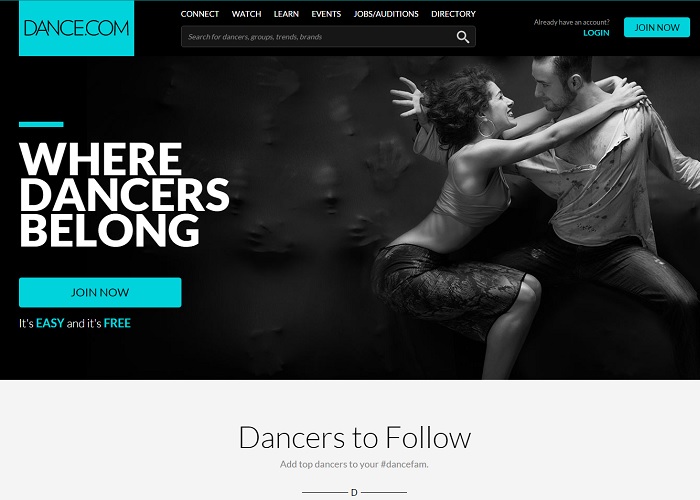
If you need online suggestions, check out Dance.com, BalletAlert, or look for community groups on Facebook. Dance.com is a brand new networking resource along the lines of Facebook, but for dancers. I'm not completely clear who they are catering to yet (professionals, organizations, or Maddie Ziegler wannabes), but you may find what you are looking for here. BalletAlert is an interactive forum of dance nerds. Whether looking for links to reviews of recent performances, discussing your favorite dancers, or digging into the history of ballet, this is a favorite of many. Just beware of falling into the pit of snark and negativity that sometimes runs rampant among certain posters. Lastly, if you are a Facebook junkie like me, use your search bar tool to seek groups catering to art in your city, organizations you love, or topics that interest you. As always, the internet provides a million and one resources if you know how and where to look.

The power of networking is more and more important as we grow more detached from in-person interactions. The Age of the Internet has given us access to most anything we seek. But, surprisingly, it has made it harder for us to actually access people. As I continue seeking ways to continue exploring my choreography and passing on my craft in New York City and beyond, I know that it is less likely to happen based off of cold-emailing and online submissions. My reality is that my network of friends and professionals that I have created and maintain will continue to help guide me on my path of sharing my art worldwide as a dance professional.

(Don't forget to check out my new podcast on the Premier Dance Network & iTunes!!!!)

3.13.2016

How to Come Back After an Injury


I have been living between New York City and Philadelphia for nearly 2 months at this point. And while I am still working hard on finding stable teaching and choreographic work, it has allowed me plenty of time to ease myself back into shape with my favorite NYC ballet teacher, Nancy Bielski, as well as trying some new instructors and dance styles (I just tried Gaga at the Mark Morris Dance Center) to expand my scope of the scene up here. While I have been getting a great many questions about what I'm auditioning for or where I am performing, I've found it nearly impossible to explain my situation. In fact, I don't really know what my situation is and where the performing part of my career is leading me. For a long time, I tried to force myself back into shape after suffering such a severe injury in Oakland nearly 2 years ago. At times, I went about this in the appropriate ways. But at other times, even with 13 years of dancing professionally behind me, I fell down a path that was not most conducive to repair. I found it difficult to appropriately strengthen a body damaged by years of wear and tear and a mind weakened by too many daunting situations in too short a period of time.

The inspiration for this post? The other day I found that one of my former students had posted three photos of herself on her Facebook account. Initially, I was cheerful to see this talented student posting some photos. But I quickly realized that these images, which included big jumps and extreme extensions, had been taken only one day after returning from nearly 6 months off due to injury. Granted, this student is a child, I was mortified to think that she had spent so much time off in order to return healthy to dance and out of pain. Whether she was motivated to post these photos online out of excitement or ego, I'm actually glad that this happened. Not only did this allow me to intervene to keep this dancer on the right path. It reminded me that I (ripe into my 30's) have committed such acts of excitement, even if I didn't post images of it online.

There is no guidebook for returning from an injury. Every injury is different and every person's body will react differently to therapy, conditioning, and exercises. But what I have learned is that there is truly an appropriate way to come back from a long-term injury. After your doctor has given you the OK to return to class, you must resist the urge to jump into class full force. Getting the green light to return to dance doesn't mean that the work of recovery is over. It means that you are in a safe place to start producing the building blocks of your technique.

My "barre" at the gym
After getting approval to start taking class again last May (after nearly a year off from taking full class), I started things off correctly. I feel that there is often a lot of pressure to take another's class the first few times that you start executing your plies and tendus. Not everybody is like me, but I always feel pressure to follow the instructors combinations to the T. Now, as a professional, I may alter a few things in class, I still tend to do things that I shouldn't be doing if I am taking somebody's class. For this reason, my first week back to class I prefer to find a space either in a studio, gym, or at home where I can start with some simple plies, tendus, and jetes. I focus this first week on remembering what it feels like to pull my inner thighs together, to support my spine with my core muscles, and beyond. By the end of this first week, I may progress to rond de jambes. But I am reluctant to push too fast, too soon because I want to remain healthy.

Posing for Instagram, but only working up to tendus this day
Once my first week has passed, I take a day or two off and continue to build on the structure of class. I add rond de jambe, rond de jambe en l'air, fondu, adagio, frappe, and grand battement exercises at a rate of one new exercise per day. If I feel that I need more strength, I may repeat a combination twice or refrain from moving forward to a new exercise until I feel ready. I try to resist the urge to add two combinations at a time. Again, this is all about building blocks. I focus on executing exercises properly with the correct muscle groups versus forcing my way through combinations without noting what muscle groups are initiating action. I know a great many dancers that move too fast in their progression towards being in shape, and what happens is they execute exercises using the incorrect muscles. Not that they don't know which muscles they should be using, but they haven't built enough strength in the right ones to avoid gripping superficial muscles. This often causes new pain or injury. At this point, feel free to enter somebody's classroom, but be sure to tell them that you are recovering from an injury. For me, I still like to work up to this point by myself, away from the pressure of any watching eyes. Keep in mind that it is completely appropriate to start adagio with your working leg at 45 degrees or to only perform fondu or frappe on flat for some time. Give yourself a pass at judgement and offer yourself some empathy towards health.

At this point, now that I can complete barre to a degree, I feel comfortable to finally enter a classroom. Again, after speaking with the teacher before class starts, I feel more at liberty to do things on my terms. For the next few weeks, I work my way towards jumps. Sometimes, I add one combination a day. Sometimes, I choose to only execute combinations like adagio once to allow my body to acclimate. The biggest part of this return game is to make sure that I am pushing myself along my own schedule without holding back everywhere because of fear or pushing too quickly out of impatience or excitement.

I am mostly reluctant to take any dance classes outside of the genre of ballet during my recovery period due to the structure provided by ballet class. Most classes in contemporary, jazz, musical theatre, hip hop, and beyond begin with a warm-up in center, followed by technique exercises and choreography. The structure of a ballet class gives you something to hold on to for starters (barre), a period of time between each exercise to analyze how your body is responding to information, and an easy opportunity to bow out when you have reached your maximum. Dance classes in other genres, at the beginning of a recovery period, can make it difficult to gauge when and where to stop and can potentially prolong recovery or result in new injury.

After I have progressed past center, I spend the most attention coddling my jumps. Throughout this past recovery period, I began to get in shape and then fell off the wagon due to my Core-ography project, traveling for work, and a lack of classes that inspired me. Now that I am in New York and back on track, it has taken me nearly one and a half months to finally finish class. Strength for jumps is the first thing to disappear after a long period off. And since there are so many different things involved in launching yourself into the air and because it is the end of class when your muscles are tired, jumps are the last thing to build back up. The last thing you want to do is jump straight into saut de chats or other large jumps, feel great on the way up, and realize that you don't have the strength to slow down the force of gravity in your landing. TAKE YOUR TIME. Perhaps, start doing a few combinations holding onto the barre. Then, progressively move forward at your own pace. This time around, I spent nearly two weeks only working through petite allegro.

One of the biggest issues in recovery is excitement to get back in class. Whether you missed moving your body, you are responding to end of class adrenaline, or you just can't let go of that ego, don't wait for the instructor to stop you or, worse, your body. Be reasonable and keep your long-term goals in sight. Dancing feels amazing for the mind, body, soul, and ego. But nothing creates more emotional injuries than a continuous stream of physical ones. As I continue to work myself back into what I consider performance shape, when people ask me what I'm auditioning for or where I'm performing I tell them this. I am getting back in shape for me and so that I can fully show my choreography when creating and instruction when teaching, since this is what I'm focusing on. If I feel healthy enough to perform again, then so be it. But this time, I'm getting in shape for me. Not for my ego. Not for the applause of live audiences or for likes on social media. Now that I finally have access to the tools to potentially perform again, I'm pacing myself and doing things on my body's terms and in my own time.

Working on some choreography at the gym
 (Follow me on Instagram: https://www.instagram.com/bkerollis/)

12.15.2013

In the spirit of the holidays - 2013 edition

I am in the middle of Nutcracker craziness and am having trouble finding time to do my normal everyday activities between rehearsals, shows, and traveling. With that said, I am currently sitting in a laundromat and still want to share some joy with my viewers. During this time last year, I made a festive list of my favorite moments while freelancing throughout the year. I am going to continue this time-honored tradition by presenting my 13 favorite moments of the year 2013 for all of my readers to enjoy.

Elizel & me rehearsing Seiwert's Monuments(Photo: Marco Gutierrez)
1. As I have said in the past, the most valuable experiences in my career, aside from a few specific moments, have been making connections with people. At the beginning of the year, I had the chance to dance with Elizel Long, former Rambert Dance Company member, for three months in Alaska. While we knew each other from the season prior, we had relatively no interaction due to visa problems that sent her home to South Africa after the first few days of the season. This year was quite different. At first, we were tentatively nice to each other, but within weeks we had become regular dance partners and great friends. It is not often that you bond with somebody as strongly and quickly as we did, but it was a magical three months that we got to spend and dance together. Book ending the year, I got to revisit Jessie Tretter, an old friend and partner from last year. I returned to Rochester City Ballet to dance as the Cavalier in the company's The Nutcracker. Having the comfort of our previous friendship and getting to build on a new comfort we had in our partnering made this experience wonderful. Although it had been a year since we had seen each other and danced together, it felt as if we had spent the entire year developing our partnership. While these were the two strongest connections I made, there were many others that made this season memorable.

2. I have really gotten a chance to delve into my teaching this year. My partner and I have dreams of, one day, starting our own ballet academy. While I have taught master classes and substituted when I am available, this was the first year that I had the opportunity to work with students regularly for a period of time. While dancing with Alaska Dance Theatre, I taught regularly in the school. It was so fulfilling to see the explosion of growth these students had under my direction. After that, I took a job teaching regular open classes in Koresh Dance Company's school. I, even, stepped out of my comfort zone and started teaching contemporary classes.

3. Host familes - This year I had the opportunity to revisit two host families from last year. I spent 7 weeks with my Anchorage family and 3 weeks with my Providence family. There is nothing better than getting to revisit these connections and building on what was left before. Not only that, it is so much easier entering into a familiar home. There is less need for tip-toeing and adjustment. They both treated me great and I look fondly on these repeated experiences.

4. Auditioning for the Broadway workshop of Christopher Wheeldon's American in Paris and Starz's upcoming TV show, Flesh and Bone, have the potential to be life-changing experiences for me. I have always wanted to try out for Broadway productions, but I didn't know where to begin. When a friend called to tell me I should audition for the American in Paris workshop, I jumped at it. This chance opportunity forced me to dive into an unknown world and stretched my breadth as an artist. Although I wasn't selected in the end, I felt honored to receive a call back for something that I had never done before. A few weeks after this audition, that same friend (thank you Allison Walsh) had suggested a casting company contact me to audition for the upcoming television show, Flesh and Bone, on Starz. Again, I didn't get the part, but these two auditions have inspired me to start preparing for what may be a new career transition for me. We'll have to see what 2014 brings us!

5. I spend a lot of my time writing for this blog about my personal experiences and the knowledge that I have gained throughout my time freelancing. Aside from having this blog reach over 30,000 views in it's short 1 1/2 years of life, I have had my blogs posted in other online publications, received commissions to write articles for both Dance/USA and the American Guild of Musical Artists, and been asked to contribute to an article that will be published in the January edition of Dance Magazine.

6. Turning 30 was kind of a big deal for me. It was such a big deal that I wrote a blog about it. As I stated in that post, I set a goal to dance until I was at least 30 years old. Well, I'm very proud to say that I reached that goal and have exceeded it. Cheers to dancing well into my thirties!

7. Whenever I take class in New York City, I take from Nancy Bielski at Steps on Broadway. I've mentioned in previous blogs how she takes great care of me when I'm in her class. While spending two weeks working on a workshop that could potentially go to Broadway, I took Nancy's class each day to stay in shape and warm up for my day. In one of those classes, Nancy exclaimed that I had beautiful feet while giving me a correction. This may not seem like that big of a deal, but for me it was huge. Spending 7 years dancing in Pacific Northwest Ballet, the company of feet and legs, I always felt like I had the worst feet in the company. I've spent the last few years working on the way that I use my feet, and being away from the speed of Balanchine classes (although I do miss them) has given me time to focus on the articulation of the foot a bit more. Hearing this from somebody that I really respect meant a great much to me. I will take that compliment, put it in my pocket, and carry it with me wherever I dance.

8. One thing that most ballet dancers despise is improv-ing. We like to be told what to do. The moment that most of us are told to make things up as we go, we freak out. After a few years experiencing more improv than I did dancing in a big ballet company, I feel like I really got a hang of it this year. Starting with taking the former artistic director of Alaska Dance Theatre's Gaga-esque warmups, which were based in improv, I started receiving compliments for my work. Upon my return home, I auditioned for the renowned, improv-based production of Sleep No More. A majority of the 30 minute audition was improv. Although I didn't get a call back, the director of the audition pulled me aside afterwards and told me that he was really impressed with me and enjoyed watching me. Lastly, in the audition for the workshop that I was a part of in #7 of this post, we had to do a long improv section. My experience and performance helped me land the gig.

Working w/Fidel Orrillo in Rochester (Photo: Josephine Cardin)
9. Getting the opportunity to return to Rochester City Ballet for Nutcracker a few weeks ago was really special for me. I got to revisit my partnership with my Sugar Plum from last year. Old friendships grew stronger and new friendships were forged. I loved getting the chance to again work with the company's fabulous ballet master, Fidel Orrillo. Fellow ballet mistress, Beth Bartholomew, and artistic director, Jamey Leverett were also greatly helpful and kind. Performing with a live orchestra, sharing the stage with great dancers, and feeling like I was a part of a community made this a very special experience for me.

10. During my time dancing with Barak Ballet, we took our warmup classes at the Westside School of Ballet. While the classes were great, it was the wild cast of characters that really made this a memorable experience. First and foremost, Patricia Neary. This lady is a former Balanchine Ballerina, Balanchine repetiteur, and former director of Geneva Ballet, Zurich Ballet, and La Scala. Patricia takes class nearly every morning. She stands at barre with a heater to warm her 71 year old bones. Once center comes, she puts on her pointe shoes and continues to execute combinations with flair and style. Beyond a few drop-ins from ballet companies, former So You Think You Can Dance finalists, and younger students, the cast of characters continues. There was an Asian lady who is getting up there and still wearing her pointe shoes. She performs each combination in every other group, even if there are well over 10 tries across the floor. There was another woman who won't come down off of releve...ever. She told me she has to wear heels because she is short. There are people that arrive late in flip flop high heels. Dancers who perform wild pirouettes at barre in between combinations while using the piano as their barre. Foundation dripping off of a face that was nowhere close to the color of it's applier. More plastic surgery than you could ever imagine (it is Los Angeles). And my lovely host mother. Throw in about 17 of us professional dancers for the creation of a new ballet company and you have a wild zoo of characters. Ill be revisiting this zoo next week when I perform with the Ventura County Ballet Company.

11. A milestone in my year took place over a few days in October. Patricia Neary, Nader Hamed, and a well-known dance critic (and good friend) told me that it is time for me to rejoin the world of company life, all within days of each other. The universe couldn't have screamed any louder. And the validation that I have not only been able to maintain my technique, but continue to improve mostly on my own, means more to me than imaginable.

12. Watching the students of the Draper Center for Dance Education perform in Rochester City Ballet's run of The Nutcracker. I don't know what is in the water at this school, but the students are wildly impressive. Not only do they have beautiful bodies, steely technique, and personality that shines. They are so well trained and rehearsed that they move as one. The synchronization of the students of this school could kick the asses of nearly every company's corps de ballet in the country.

In the studio creating with Amy Seiwert
13. Lucky number 13. Perhaps, my favorite experience while freelancing over the past year was having a work created on us by Amy Seiwert for a program with Alaska Dance Theatre. Before this experience, I had danced one of her works when I first left Pacific Northwest Ballet. Although I had danced her choreography, I never actually got to work with her. Not only was her process interesting and her choreography challengingly stellar, she was so kind to us as dancers. As I have grown into an experienced dancer, nothing is more important than being respected in a studio, whether in a stressful situation or not. Ms. Seiwert only had 2 weeks to meet us, show us her style, create a 20 minute, piece, and clean it. At no point did she ever place the stress of this time crunch upon us dancers. Amy lived up to and exceeded all of my wishes and expectations in working with her.

What was your favorite moment of the 2013 dance season, personal or as an audience member?

7.20.2012

Continuing to better your technique in open class or on your own

I was taking a particularly good open ballet class from Natalia Charova at Koresh Dance Company's school this morning. I was given a lot of attention and a handful of corrections, when a particular thought crossed my mind. It isn't very frequent that open class teachers give me more than one correction during a class. If a freelancer takes class at a school, they are typically overlooked because it is the teacher's responsibility to give more to their students than a professional. But if a professional dancer only has the option to take open classes, how do they continue to improve themselves as a dancer?

My last week has been extremely busy, from teaching to rehearsals to going up to NYC to audition for Sleep No More. I didn't realize that this topic would become my next post, but I should have seen it coming after class on Wednesday. Most of the classes I have been taking since becoming a full-time freelancer have been open classes. When a professional dancer enters an open class, it can take a while to establish a relationship with the teacher. These open class teachers, in most situations, appear to give dancers space as a gesture of respect and acknowledgement of their time put in and talent. Some dancers like to receive corrections, some are just trying to take a class that is a change from their regular company class, and others just want to be in a safe environment where they can warm up as they wish. As a dancer comes to class more often, teachers tend to test the waters and see how each particular dancer wants to take their open class.

Now, the reason that I should have seen this topic coming is because I went to Steps On Broadway to take a warm up class before my audition. I took from one of my favorite teachers, Nancy Bielski. I have been taking from Nancy since the days I thought I would become a Broadway dancer. This was well before I fell in love with ballet (maybe at the age of 15). I was particularly driven to make it professionally and would push myself to the front of her class, perhaps when I shouldn't have been. I remember her specifically pulling me aside and telling me that there are professionals in class and that I should be more respectful. I am sure she doesn't remember this, as we have only really connected in the past year. But that is besides the point. I was spending a few weeks in NYC this past October doing a gig with Avi Scher & Dancers at the Guggenheim (stay tuned for an experience report in an upcoming blog) and began taking Nancy's class regularly for that time. From day one, she quickly and effectively offered me corrections. After that first class with her in years, she pulled me aside to see who I was and where I danced. Ever since that conversation, I have been greatly impressed by her memory. Each time I have returned to her class, even if it has been months, she remembers my name and keeps on me throughout the entire class. That is one thing that I really appreciate about Nancy. From the start, she doesn't hold back when it comes to correcting dancers. I feel that she realizes how important it is for a dancer to keep growing well beyond their formal training. I walked into class this past Wednesday and, right as class got underway, I was given a direct correction in plies, "Barry...when you are in 4th position you have to pull your left hip back, even with the right." Then, again, in our first tendu combination, she walks up to me and says, "You have to fix this and then I'll leave you alone for a bit." I began to think to myself, "Wow! It has been so long since I have been corrected. I can't believe that I've been doing this on my own. How do I realize what I need to work on if I don't have a set of eyes looking directly at me." And there the basis for this post was created.

As a freelance dancer who doesn't have a regular artistic director/ballet master/teacher that knows who you are and what you need in order to grow as a dancer, how do you make sure that you are continuing to perfect your art? I feel that it really depends on who you are as a dancer. The simple but not always practical answer is to go straight up to the teacher and say, "I like to be corrected." I don't know any dancer that has done that the first or second time they have met a new teacher. I am one of those dancers that enjoys being constructively corrected. When I enter a new classroom, instead of verbally stating this, I imply with my body language that corrections are important to me. I don't hang out in the back for each combination. Instead, I stand as close to the front as possible, in plain sight of the teacher. If the teacher does offer me a correction, I nod my head or verbally acknowledge the note. Then, I try to work on that correction right away so the teacher sees me doing it. This shows the teacher that I am comfortable and accepting of corrections. If I really just want to warm up in a class, I will hang out in the back of the room for combinations and offer others a chance to be in the foreground.

If you aren't lucky enough to find a teacher that is comfortable correcting professionals or if you are giving yourself your own class at times, how do you continue getting better? I've toyed around with this idea a lot in the past few months. I have always approached class with the thought that I shouldn't just be warming up, but I should be bettering my form. When I start class, I usually have a general thought continuously flowing through my head. Something along the lines of, pull my inner thighs together to close any air showing between the legs, or hold my core but leave the natural curve of my lower spine, or reach my limbs as far away from my core as possible without distorting my placement to create a longer line. I take one idea and use that as my focus throughout the entire class. I am not so focused on the idea that I can't analyze other things that need to be fixed. But if I start with that foundation, at least I'm always working on something. Dancers can use this method on their own for a period of time, but eventually they will need to have a set of outside eyes to watch them. Another educated dancer or teacher can give you new ideas to use as your foundation correction for class.

Another important tool that I have utilized as a dancer that often has to rely on myself to continue improving is Youtube. If I need inspiration as a choreographer, I will look at footage of choreography by some of my favorite choreographers. I realized that I can do the same thing if I need to find inspiration to better my skills. I have learned that watching dancers that inspire me offers a new look at my own dancing. If I watch a dancer performing online and see that I am really impressed by the execution of their pirouettes, I'll watch the video multiple times to evaluate how they are performing the feat. The next time I get into a studio, I try to mimic what they have done. Of course, this method requires true knowledge of technique, as a dancer doesn't necessarily want to emulate a choreographically stylized version of a step. But if a dancer doesn't have access to another pair of eyes, they can use other tools to remind themselves of corrections that may not have come to mind while they were working on their own.

There are many ways that dancers can better themselves in an environment that doesn't have a leader to guide you on a path of bettering your technique. The above ideas should be very helpful to any dancer, in a company or freelancing. Of course, there are surely other ways to improve yourself that I haven't listed or explored. So, if you have any other ideas that I have forgotten or haven't thought about, please feel free to share them in the comment box below.